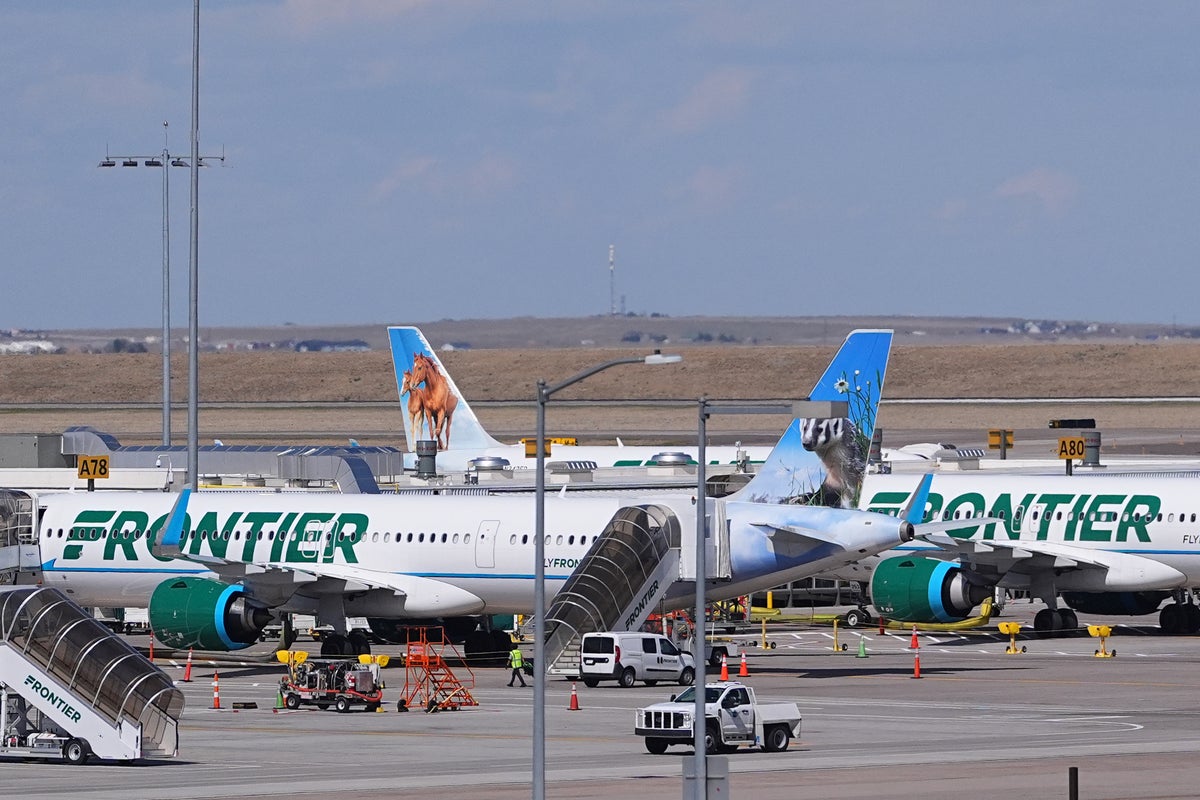
The news coming out of Denver International Airport (DIA) regarding the man fatally hit by a Frontier plane is gut-wrenching and complicated. It’s the kind of story that stops you in your tracks because it feels so preventable yet so inevitable in a system this massive. Officials have confirmed that the individual who ended up on the runway died by suicide. This isn't just a tragic loss of life; it’s a glaring spotlight on the holes in airport perimeter security and the mental health crises that often hide in plain sight at our nation's busiest hubs.
When you look at the mechanics of how this happened, the questions start piling up. Denver International is one of the largest airports by land area in the world. Its vastness is its defense, but as we saw in this instance, that space can also be a vulnerability. A person somehow breached the perimeter, made it onto an active taxiway or runway, and was struck by a Frontier Airlines jet. The pilots likely didn't even see him until it was far too late. It’s a nightmare scenario for everyone involved—the family of the deceased, the flight crew, and the passengers who were just trying to get to their destination.
Security Gaps at the Perimeter
We spend billions on TSA checkpoints. We take off our shoes, toss our water bottles, and subject ourselves to body scanners. Yet, the external boundaries of many major airports remain surprisingly accessible to someone with enough determination. The Denver incident proves that while we're hyper-focused on what people bring into the terminal, we might be neglecting the miles of fencing and remote access points that surround the airfield.
Airport security isn't just about screening luggage. It's about maintaining a sterile environment. Once someone is on the tarmac, they're in a high-stakes zone where physics and heavy machinery don't allow for mistakes. A Boeing 737 or an Airbus A320 moving at taxi speeds doesn't stop on a dime. The kinetic energy involved is massive. When a human body meets an aircraft, the outcome is never anything but catastrophic.
I’ve talked to ground crew members who describe the airfield as a "city that never sleeps." It’s loud, it’s chaotic, and there are blind spots everywhere. If a person is wearing dark clothing or moving with purpose, they can easily blend into the industrial backdrop of the airport at night. This isn't a movie where sensors go off and sirens wail immediately. Sometimes, the first sign of a breach is the tragic event itself.
The Mental Health Crisis in Transit Hubs
We have to talk about why this happens at airports. Hubs like DIA, O'Hare, or Hartsfield-Jackson aren't just transit points; they're magnets for people in crisis. There’s something about the anonymity of a crowd and the high-stress environment of travel that can push someone over the edge. While officials have categorized this specific death as a suicide, it highlights a broader trend of airports becoming the backdrop for mental health emergencies.
Aviation experts and psychologists have noted that airports represent a "non-place." You’re between where you were and where you're going. That state of limbo can be incredibly isolating. In the Denver case, the fact that a person chose a runway as their final point of contact with the world suggests a level of desperation that the current airport infrastructure isn't equipped to handle. We have police and security, sure, but do we have enough behavioral detection officers? Probably not.
The Denver Medical Examiner’s office has been clear about the cause of death. By putting a name to the tragedy—suicide—they've shifted the conversation from a freak accident to a systemic failure of support. It’s uncomfortable to discuss, but it’s necessary if we want to stop it from happening again.
Why the Frontier Flight Crew is Also Impacted
People often forget the "second victims" in these scenarios. The pilots and the ground crew who were operating that Frontier plane didn't sign up to be part of a fatality. The trauma of being behind the controls of a vehicle that takes a life is profound. Aviation is built on the foundation of safety. Every checklist, every radio call, and every light on that dash is designed to prevent harm. When that system is bypassed by someone intent on self-destruction, it leaves the professionals involved with a heavy burden of guilt and "what ifs."
Frontier Airlines has had to manage the aftermath not just for their brand, but for their people. It’s a heavy lift. The passengers on that flight likely felt a bump or heard a noise, unaware that their journey was being redirected by a human tragedy. It’s a stark reminder that our lives are intertwined in ways we don't always acknowledge.
Reevaluating Airport Land Use
Denver International Airport sits on 53 square miles. To put that in perspective, that’s larger than the island of Manhattan. Patrolling that much fence line is an astronomical task. Most airports use a combination of chain-link fences, barbed wire, and occasionally motion sensors or CCTV. But in many areas, the "perimeter" is just a suggestion.
If you look at the geography of DIA, it’s surrounded by flat plains. It’s easy to think that the distance alone would keep people out. It doesn't. We need to move toward smarter fencing—thermal imaging that can distinguish between a coyote and a person, and AI-driven surveillance that alerts security the moment a perimeter is breached. Relying on physical barriers alone is a 20th-century solution for a 21st-century problem.
What This Means for Future Travel
Will this change how you fly? Probably not. The odds of your plane hitting a person on the runway remain incredibly low. But it should change how we view airport safety. We should be demanding that airports invest as much in their "outer shell" as they do in the "inner core" of the terminal.
The aviation industry is incredibly good at learning from disasters. Every plane crash leads to a new safety protocol. This death at DIA should lead to a total audit of how people access the airfield. We can't just shrug it off as a sad, isolated incident. It's a data point. It’s a warning.
If you’re someone who spends a lot of time in airports, start paying attention to the edges. Notice where the fences look old. Look at how easy it might be for someone to slip through a gate left ajar by a distracted contractor. Safety is everyone's business, and it starts with realizing that the "sterile area" isn't as sterile as we’d like to believe.
If you or someone you know is struggling, there are resources available. The 988 Suicide & Crisis Lifeline provides 24/7, free, and confidential support. You don't have to navigate the darkness alone.
The path forward for Denver and other major airports involves a mix of better technology and more compassionate intervention. We can't build walls high enough to stop a determined soul, but we can certainly make it harder for a tragedy to unfold on a runway. It’s time to stop treating perimeter security as an afterthought. Check the fences. Monitor the feed. Pay attention to the person sitting alone in the terminal who looks like they've reached the end of their rope. That’s how we actually save lives.