For thirty-one years, time in the Japanese economy moved like amber. Prices stayed stubbornly flat or drifted downward, a phenomenon that sounds like a shopper's dream until you understand what it actually means for a society: wages locked in place, businesses paralyzed by caution, and a quiet, creeping stagnation that felt like living underwater. People grew old waiting for inflation. They built their entire financial lives around an extraordinary, unprecedented experiment: money that cost nothing to borrow.
Then came the morning when the air changed.
Meet Hiroshi. He runs a third-generation tofu shop in a quiet corner of Kyoto. For decades, Hiroshi’s grandfather and then his father operated under a simple law of nature: tomorrow will cost the exact same as yesterday. A block of silken tofu was two hundred yen in 1995; it was two hundred yen in 2005, and stubbornly, stubbornly, it hovered near there through 2015. But silence has a price. When you do not have inflation, you do not have growth. You have a museum.
By the time Hiroshi took over the stainless-steel vats and wooden presses, the world outside his tiny shop window was beginning to fray. Soybeans imported from abroad suddenly arrived with price tags that made his stomach drop. Energy bills to fire the massive cauldrons climbed month by month, driven by global shocks that crossed oceans and breached Japan’s carefully guarded economic shores. For the first time in his adult life, Hiroshi faced a terrifying choice. He could absorb the losses until his family business bled dry, or he could break an unwritten social contract and raise his prices.
He raised them. And he was not alone. Across the archipelago, from the automated noodle bars of Shinjuku to the sprawling shipyards of Kobe, the seal broke.
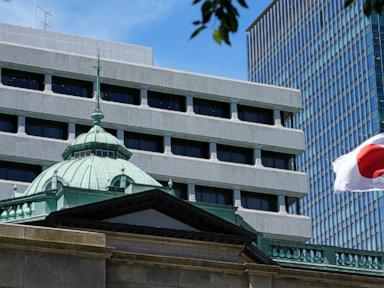
To understand why the Bank of Japan recently pushed its benchmark interest rates to a height not seen in thirty-one years, one must understand the psychology of a ghost. For three decades, Japan wrestled with deflation. It was an economic condition so deeply entrenched that central bankers threw every tool at it, dragging interest rates into negative territory, buying up corporate bonds, and printing trillions of yen in an effort to jump-start a sleeping engine.
They wanted inflation. They prayed for it. Moderate inflation is the grease in the gears of commerce; it encourages people to spend today rather than tomorrow, knowing that goods will cost more later. It allows companies to raise wages, which in turn fuels more consumption. But Japan got stuck in a trap. When prices never rise, people stop expecting them to. They hoard cash under floorboards or in zero-yielding bank accounts, waiting for a tomorrow that looks identical to yesterday.
Then the global wave hit. Supply chains fractured. Commodity prices surged worldwide. Imported inflation finally breached Japan's borders, driven not by domestic wage growth or vibrant consumer demand, but by the raw, unsparing cost of imported fuel and food. Prices began to climb. At first, it felt like a relief—a sign of a pulse. But as the months dragged on, the inflation turned predatory. It eroded household purchasing power faster than wages could possibly adjust. The very thing the central bank had spent a generation trying to create had arrived, but it wore a cruel face. It was the wrong kind of inflation: expensive imports pushing up the cost of living while incomes lagged behind.
To defend the currency and rein in the runaway cost of living, the central bank had to make a historic turn. They stepped away from the era of ultra-loose monetary policy. They raised interest rates.
To an observer in New York or Frankfurt, a rate hike sounds mundane—a dry line item on a financial news ticker. But in Japan, it is a tectonic tremor. For over thirty years, borrowers could take out loans with the comforting certainty that interest rates would remain practically non-existent. Corporations gorged on cheap debt, sometimes hoarding cash rather than investing because borrowing cost almost nothing. Homebuyers secured mortgages at rock-bottom fixed rates, resting easy in a financial climate that seemed permanently frozen.
Now, the thaw has begun, and the water is rushing in fast.
Consider what happens to a neighborhood when the cost of money changes.
Take Yumi, a thirty-four-year-old graphic designer living in Yokohama. Two years ago, she and her husband took the plunge and bought a modest apartment, locking in a variable-rate mortgage because the bank advisors smiled and assured them that rates were never going anywhere. Why would they? Japan had been anchored at zero or below for longer than Yumi had been out of grade school.
Now, every month when the statement arrives, the arithmetic of her family’s life shifts slightly. The bank takes a little more. It is not catastrophic yet—not an eviction notice or a sudden bankruptcy—but it is a heavy, persistent friction. It is the sudden disappearance of the buffer room. The family dinners out drop from twice a month to once. The piano lessons for their daughter are reconsidered.
Multiply Yumi by millions. Across Japan, households are doing the math of a new reality. For decades, savers were punished; keeping money in a bank account earned you virtually nothing. Now, higher interest rates offer a glimmer of return on savings, a rare piece of good news for retirees living on fixed incomes. But for the working class, the sandwich generation, and small business owners, the higher cost of borrowing acts as a heavy brake on an economy that was only just beginning to find its stride.
Thirty-one years. Let that number sink in.
Thirty-one years ago, the internet was a newborn curiosity, the bubble of the late eighties had only recently burst, and a generation of young men and women entering the workforce had no idea they were stepping into a multi-decade economic twilight. Children born when Japan’s rates were last at this level are now raising children of their own. They have never known a world where paying interest on a loan required real sacrifice, nor have they known a healthy, organic inflationary cycle driven by rising productivity rather than imported panic.
This is why the current moment carries such profound emotional weight. It is not merely a technical adjustment by technocrats in suits behind mahogany desks in Chiyoda. It is the official death of an economic era.
The mechanics behind the shift are brutal in their simplicity. As central banks in the United States and Europe aggressively raised rates to fight their own inflation post-pandemic, global capital fled Japan in search of higher yields elsewhere. The yen weakened dramatically, tumbling to historic lows against the dollar.
A weak yen sounds great for Toyota exporting cars, but for an island nation that imports nearly all its fossil fuels and a massive share of its food, a cratering currency is a national emergency. Every drop in the yen’s value made the gasoline in the car and the wheat in the bakery more expensive. The cost of living was rising faster than wages, squeezing families from both sides.
To stop the bleeding, the Bank of Japan had to act. By raising rates, they signaled to the world that the yen matters, that stability has a floor, and that the era of free money is officially over.
Imagine waking up from a thirty-year medically induced coma. Your muscles are stiff; the light hurts your eyes; the sounds of the street are jarringly loud. That is Tokyo right now. The economy is blinking against the harsh light of reality.
For decades, Japan was praised for its social harmony and stability, but that stability was purchased at the cost of dynamism. Now, the bandage has been ripped off. The transition will not be gentle. Companies that survived only because credit was free will face a reckoning. Inefficient businesses propped up by friendly banks and zero-percent loans will finally face the music.
Yet, beneath the anxiety, there is a strange, cautious pulse of vitality. Wages are finally moving. For the first time in a generation, major corporations are announcing meaningful pay hikes during the annual spring wage negotiations. Workers are standing up and demanding more because they can no longer afford to stay quiet. The old social contract is broken, yes, but the vacuum is being filled by something raw, urgent, and human.
Back in his Kyoto tofu shop, Hiroshi wipes down the stainless steel counter at the end of a long day. His legs ache. His utility bills are higher than they were last year, and the bank loan he took out to upgrade his press now carries a slightly heavier burden.
But as he counts the day's receipts, he notices something else. His customers are still coming. They complain about the price of everything—the rice, the rent, the transit—just like everyone else in the city. Yet they buy the tofu. They appreciate the craft. They understand that in a world where everything is shifting, some things are still worth preserving.
Hiroshi turns off the shop lights, locks the heavy wooden door, and steps out into the cool Kyoto evening. The streets are quiet, lit by the amber glow of vending machines and streetlamps. The economy is changing around him, grand and impersonal, dictated by central bankers and global markets. But life goes on, measured not in basis points or benchmark rates, but in the simple rhythm of work, family, and survival.
The thirty-one-year high is just a number on a screen. On the ground, it is the sound of a country waking up.