The coffee in Nicosia still tastes the same on both sides of the rusted oil drums. It is thick, dark, and boiled in a copper pot with a layer of foam that clings to the porcelain. If you sit at a cafe on Ledra Street, you can hear the clink of backgammon pieces drifting through the humid air. But if you walk fifty paces north, the music changes. The language changes. The currency changes.
For fifty-two years, this has been the rhythm of a fractured island. If you found value in this post, you should check out: this related article.
To the outside world, the Cyprus conflict is a geopolitical file gathering dust in the archives of the United Nations. It is a line on a map, a buffer zone patrolled by blue-helmeted soldiers who have spent generations watching grass grow through the asphalt of an abandoned international airport. It is a stalemate so frozen that it has become invisible.
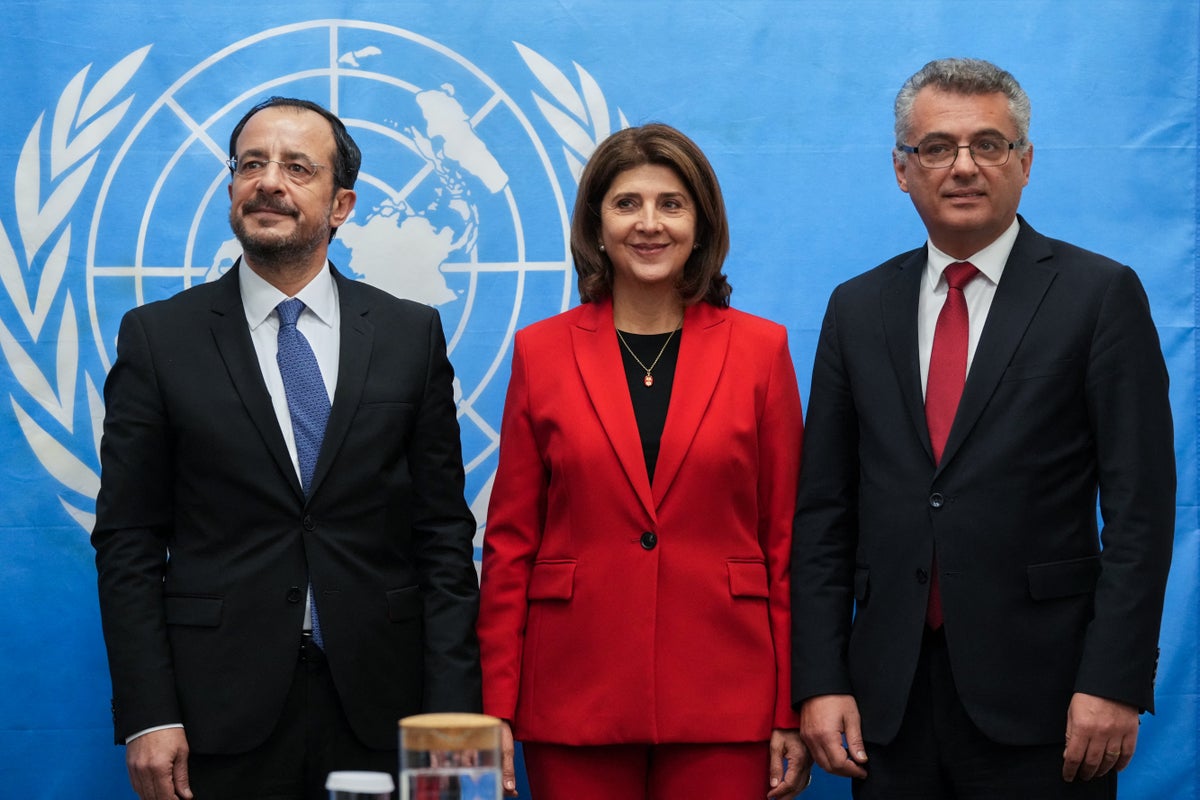
But stalemates are never truly frozen. They rot. They erode families, memories, and the very soil underfoot. Now, the United Nations is quietly circulating a new blueprint, an ambitious and perhaps final diplomatic framework designed to dissolve the borders that have defined this island since 1974. It is an attempt to rewrite a narrative of separation before the people who remember a united Cyprus are gone entirely. For another perspective on this event, refer to the latest coverage from USA Today.
Consider Eleni. She is a hypothetical composite of the thousands of women who fled their homes in the north during the hot summer of 1974, carrying nothing but a ring wrapped in a handkerchief and a key to a front door she would not see again for decades. For thirty years, she lived just five miles from her childhood bedroom, unable to cross the line. When the checkpoints finally opened in 2003, she walked back across. She found another family living in her house. They offered her coffee. She drank it in her own kitchen, a guest in her own life, speaking through an interpreter to people who had been displaced from the south.
This is the human calculus of Cyprus. It is not a mathematical problem to be solved with border adjustments or federal revenue-sharing percentages. It is a psychological labyrinth.
The division of the island is preserved in amber inside the UN Buffer Zone, a strip of no-man's-land that slices through medieval Venetian walls, agricultural fields, and sun-bleached villages. In Varosha, once the premier luxury resort of the Mediterranean, high-rise hotels stand like hollow teeth against the turquoise sea. Clothing from 1974 still hangs in the closets of rotting apartments. Car dealerships still hold brand-new, half-century-old vehicles covered in a thick shroud of dust.
Time stopped here, but the world kept moving.
The new United Nations initiative acknowledges a grim reality: the old formulas have failed. For decades, the goal was a bi-zonal, bi-communal federation. But every round of talks—most notably the Annan Plan in 2004 and the collapse at Crans-Montana in 2017—ended in recrimination. The Greek Cypriots feared a framework that would allow foreign troops to remain on their soil permanently. The Turkish Cypriots feared being outnumbered and politically marginalized in a unified state.
So the walls stayed up.
But the status quo is changing in dangerous ways. In recent years, the rhetoric from Ankara and the northern administration shifted toward a two-state solution, a permanent partition that would institutionalize the division forever. This is the nightmare scenario for those who still dream of a unified island. A permanent partition would turn the internal boundary into a hard international border, cementing geopolitical rivalries right on the edge of Europe.
The UN blueprint attempts to break this deadlock by shifting the focus away from grand constitutional theories and toward immediate, tangible integration. It approaches the conflict not as a legal dispute, but as an economic and social ecosystem that has been artificially choked.
The plan introduces a phased model of shared governance, but its real teeth lie in the immediate economic incentives. It proposes a joint management framework for the vast natural gas reserves discovered off the southern coast of the island. Money has a way of softening old ideological stances. By tying the island’s energy wealth to a cooperative political structure, the international community is betting that prosperity can succeed where identity politics failed.
Furthermore, the blueprint outlines a mutual demilitarization schedule, a massive reduction of foreign troops, and a property compensation fund backed by international donors. It addresses the emotional core of the dispute by creating a truth and reconciliation commission modeled after South Africa’s transition, aiming to document the thousands of people who went missing during the intercommunal violence of the 1960s and the invasion of 1974.
But plans on paper look very different when they hit the dirt of Nicosia.
Walk down the Green Line today, and you see a generation that has known nothing but separation. To a twenty-year-old in the south, the north is a strange, unrecognized territory visible only as a massive Turkish flag painted onto the side of the Pentadaktylos mountains, illuminated at night to serve as a constant reminder of who controls the horizon. To a twenty-year-old in the north, the south is an economic powerhouse that excludes them from the global stage, forcing them to rely entirely on a patron state across the sea.
Trust is the scarcest commodity on the island. It cannot be imported by the UN. It cannot be bought with natural gas revenues.
The tragedy of the Cyprus stalemate is that it is comfortable enough to ignore. There are no bombs falling today. There are no snipers on the roofs. The tourists sunbathe on the beaches of Ayia Napa, just a short drive from the barbed wire, completely oblivious to the tragedy of the landscape. It is a peaceful conflict, which makes it the hardest kind to solve. The urgency is gone, replaced by a slow, numbing resignation.
The UN diplomats know that this might be the last roll of the dice. The generation that remembers living together—the Greeks and Turks who shared weddings, harvests, and neighborhoods—is dying out. When they are gone, the memory of a united Cyprus dies with them. All that will remain are two separate peoples who view each other not as estranged neighbors, but as historic enemies.
The blueprint is currently sitting on desks in Athens, Ankara, and the two sectors of Nicosia. Leaders are analyzing the clauses, weighing the political risks, and preparing their public statements. There will be press conferences. There will be finger-pointing.
But the real test will happen away from the cameras. It will happen when the people of Cyprus look across the barbed wire and decide whether the fear of the unknown is greater than the pain of a permanent scar. The concrete barriers have stood for fifty-two years. They will not fall because of a well-drafted document. They will fall only when the people living in their shadow decide that a shared future is worth the terrifying work of forgiveness.