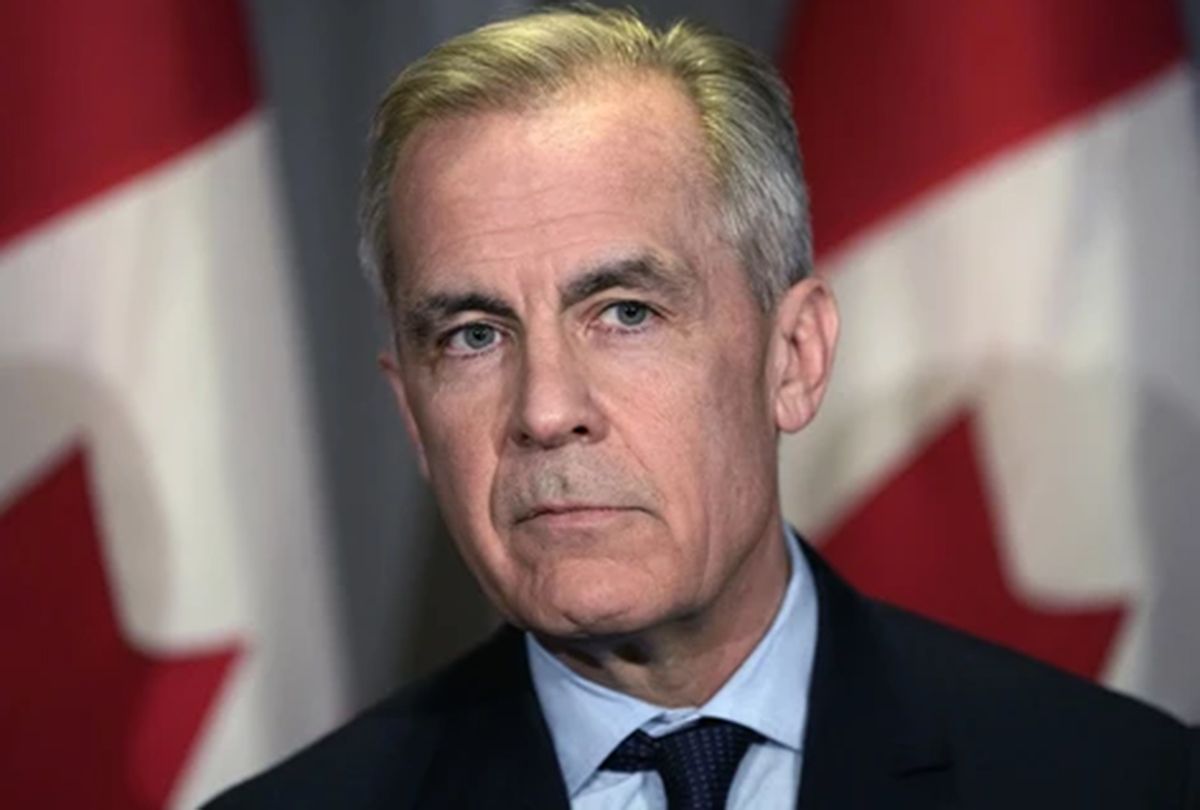
The headlines are carbon copies of a tired script. "Strategic ties." "Progress reviewed." "Bilateral synergy." If you read the official readouts of the meeting between Prime Minister Narendra Modi and Prime Minister Mark Carney, you would think we are witnessing a geopolitical masterstroke.
You are being fed a fantasy.
The consensus view—the one being peddled by the mainstream press and the polite diplomatic circles in Ottawa—is that this meeting marks a "reset" after the disastrous freeze of the Trudeau years. The narrative suggests that by swapping a drama teacher for a central banker, Canada has suddenly unlocked the secret code to the Indo-Pacific.
It hasn't. In fact, the very premise of the India-Canada "strategic partnership" is built on a foundation of sand. I have spent two decades watching these trade delegations fly across the world, burning carbon and taxpayer cash, only to return with "Memorandums of Understanding" that aren't worth the recycled paper they are printed on.
This isn't a reset. It’s a desperate attempt by Canada to remain relevant in a world where India has already moved on.
The Banker’s Delusion
Mark Carney is a man of the spreadsheet. He looks at India and sees 1.4 billion consumers and a 7% GDP growth rate. He thinks he can technocrat his way into a trade deal that has eluded his predecessors for twenty years.
But India isn't a spreadsheet.
The "lazy consensus" argues that Canada’s pension funds are the perfect match for India’s infrastructure needs. The logic goes like this: Canada has the capital, India has the projects, so the marriage is inevitable.
This ignores the brutal reality of the Indian regulatory environment. I’ve seen institutional investors lose their shirts trying to navigate the "Single Window Clearance" that actually has twelve panes of bulletproof glass. While Carney talks about "investment stability," New Delhi is busy building the Atmanirbhar Bharat (Self-Reliant India) wall. India doesn't want Canadian capital on Canadian terms. They want technology transfers and domestic manufacturing.
Carney’s background at the Bank of England and the Bank of Canada is actually his greatest weakness here. He believes in the globalist, rules-based order. Modi believes in a multi-polar world where the rules are rewritten to favor the rising powers of the Global South. They aren't even playing the same sport, let alone the same game.
The Khalistan Elephant Is Still in the Room
Every mainstream article mentions "security concerns" or "diaspora issues" as a footnote. They treat it like a PR hurdle.
It is not a hurdle; it is the track.
The fundamental disconnect between Ottawa and New Delhi isn't about trade quotas or visa processing speeds. It is about a foundational disagreement on the definition of sovereignty. Canada views the activities of certain diaspora groups through the lens of free speech and domestic politics. India views them as a direct threat to national integrity.
The "insider" secret that no one wants to admit is that no amount of smiling handshakes in New Delhi will fix this. The Canadian political structure is mathematically beholden to specific voter blocs in suburban Ontario and British Columbia. Carney cannot "fix" the India relationship without committing political suicide at home, and Modi cannot "soften" his stance without appearing weak to his domestic base.
What we are seeing is "theatre of the absurd." Both leaders are performing for their respective audiences while the actual diplomatic machinery remains jammed with the rust of mutual suspicion.
The Myth of the "Strategic" Energy Partner
"Canada is an energy superpower," the pundits scream. "India needs energy. It’s a match made in heaven!"
Stop. Look at the data.
India is currently the world’s largest laboratory for the energy transition, not because they are "green," but because they are pragmatic. They are currently doubling down on Russian oil because it’s cheap and domestic solar because it’s controllable.
Canada’s energy sector is hamstrung by its own regulatory paralysis. By the time Canada builds a pipeline or an LNG terminal to export to the East, India will have already finished its nuclear expansion and built out its green hydrogen grid. The window for Canada to be India’s "energy savior" closed five years ago.
If Carney thinks he can use the "Energy Card" to extract concessions on labor mobility or professional certifications, he is hallucinating. India is already looking past the West for its energy security. They are looking at the Middle East and Russia. Canada is, at best, a Plan C.
The Talent War: Canada is Losing the Leverage
For years, the "bridge" between the two nations was the flow of Indian students and tech workers to Canada. The standard view is that this is a win-win.
I’ve seen the internal metrics of the tech firms in Bengaluru and Hyderabad. The "brain drain" isn't what it used to be. The highest-tier Indian talent is increasingly staying home to build unicorns in a market that is growing three times faster than Canada’s.
What Canada is getting now is a massive influx of "degree-mill" students who are being sold a lie about permanent residency. This has created a housing crisis in Brampton and Surrey and a diplomatic crisis in New Delhi. India is actually annoyed that Canada is devaluing the "Indian Brand" by middle-manning low-quality education.
Instead of a "strategic tie," the migration issue has become a strategic liability. Carney’s challenge isn't how to get more people; it’s how to stop the relationship from being defined by a broken immigration system that treats Indian youth as a revenue stream for failing Canadian colleges.
Stop Asking the Wrong Questions
The media asks: "When will we see a Comprehensive Economic Partnership Agreement (CEPA)?"
That is the wrong question. A CEPA between a protectionist giant and a high-cost, high-regulation middle power is a pipe dream.
The real question is: "Does Canada have anything India actually needs that they can't get elsewhere for cheaper?"
Right now, the answer is a sobering "not much."
- Pulses and Potash? India is diversifying its supply chains to Africa and domestic production.
- Tech? India’s SaaS ecosystem is already rivaling Silicon Valley; they don't need Kitchener-Waterloo.
- Education? Australia and the UK are pivoting faster and with less political baggage.
The Harsh Truth of the "Bilateral" Review
When Modi "reviews progress," he is politely checking the pulse of a patient that is currently on life support. For India, Canada is a Tier-2 concern. India’s focus is on the QUAD, the US-China rivalry, and its leadership of the Global South.
Canada, under Carney, is desperately trying to "get back into the room." But you don't get into the room just by showing up with a better resume than the last guy. You get into the room by offering something indispensable.
The Strategy for Survival
If Canada wants to actually disrupt this cycle of failure, Carney needs to stop acting like a Prime Minister and start acting like a Venture Capitalist.
- Abandon the CEPA: Stop wasting years on a broad trade deal that will never pass the Indian lobby. Focus on "Micro-Deals" in niche sectors like small modular reactors (SMRs) or specialized agri-tech.
- Decouple Trade from Diaspora Politics: This sounds impossible, but it is the only way. Create an independent trade commission that operates entirely outside the noise of the House of Commons.
- Admit the Power Imbalance: Canada needs India more than India needs Canada. The sooner Ottawa stops lecturing and starts listening, the sooner actual "progress" might occur.
The meeting in New Delhi wasn't a breakthrough. It was a photo-op designed to give the illusion of momentum. If you want the truth, look at the trade volume, not the press releases. The numbers don't lie, but politicians do.
Stop waiting for the "Strategic Partnership" to save the Canadian economy. It’s not coming. The world has changed, and Canada is still trying to use a 1990s map to navigate a 2026 landscape.
Forget the "reset." We need a complete replacement of the hardware. Until that happens, these bilateral talks are just expensive lunches in high-security zones.
Go look at the trade balance data for the last quarter. That is the only "review of progress" that matters. Everything else is just noise.