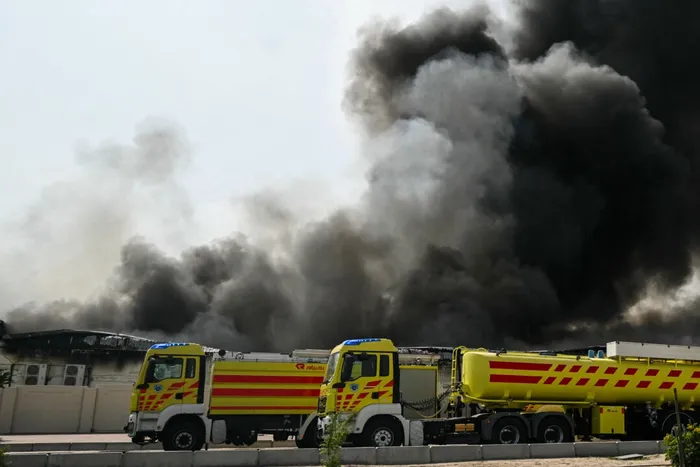
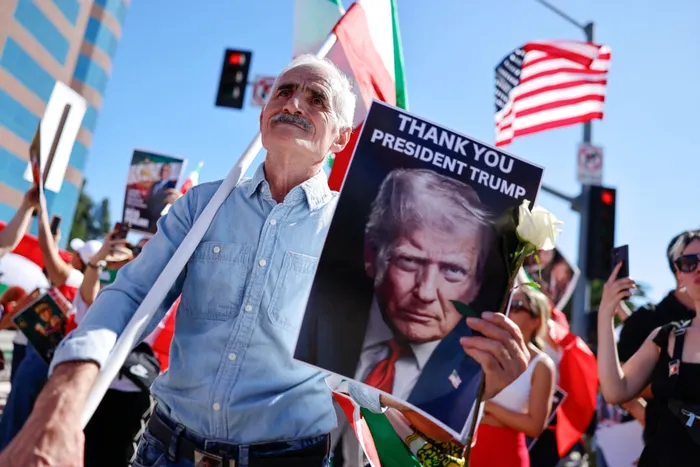
Donald Trump has spent decades refining a specific brand of rhetorical architecture. It is a structure designed with no back doors, only revolving ones. On Saturday, as U.S. and Israeli assets initiated a high-intensity bombardment of Iranian military and nuclear infrastructure, the President released a pre-recorded address that did more than just announce a military operation. It provided a masterclass in preemptive blame-shifting and victory-claiming that may leave the American public—and the global community—wondering exactly where the mission ends and the campaign trail begins.
By framing the strikes as both an "inevitable necessity" and an "opportunity for the Iranian people," Trump has effectively insulated himself from the potential fallout of a prolonged conflict. If the regime in Tehran collapses under the weight of "Operation Epic Fury," the President will claim the ultimate foreign policy win of the century. If the situation spirals into a messy, asymmetric regional war that drains U.S. coffers, he has already laid the groundwork to blame a "failed" Iranian populace or "weak" international partners who failed to seize the moment he provided. Recently making waves recently: Finland Is Not Keeping Calm And The West Is Misreading The Silence.
The Strategy of the Pre Recorded Message
The use of a pre-recorded video address on Truth Social, rather than a live press conference from the Situation Room, is not a coincidence of scheduling. It is a tactical choice. Veteran analysts recognize this as a way to control every inflection, every word, and, most importantly, the timing of the narrative. By the time the video aired, the B-2 bombers had already completed their first runs over the Fordow and Natanz enrichment facilities.
This delay allowed the White House to observe the initial Iranian response before the public had even heard the President's justification. It creates a vacuum where the administration can selectively release information that fits the pre-packaged rhetoric. In the video, Trump describes the Iranian nuclear program as being "obliterated," a term he used during previous strikes in June 2025. However, intelligence assessments from late last year suggested that while the program was "significantly degraded," it remained far from dead. By using absolute language in a recorded format, the President creates a reality that his supporters accept as fact before the first independent damage assessment can even be drafted. More insights regarding the matter are explored by NPR.
Victory by Definition
Trump’s definition of victory is fluid. In his address, he set a high bar: the "annihilation" of the Iranian navy and the "razing" of their missile industry. These are measurable military objectives. Yet, he simultaneously pivoted to a much more abstract goal: the "freedom of the Iranian people."
This shift is crucial. Military objectives can fail; equipment can be replaced, and bunkers can be rebuilt. But "freedom" is a moving target. By urging the Iranian people to "take back their country," Trump has outsourced the most difficult part of the mission—regime change—to a domestic population currently facing a brutal internal crackdown. This is the ultimate political exit ramp. If the Islamic Republic survives the week, the President can argue that he did his part by "opening the door," but that the Iranian people were not ready to walk through it.
The Imminence Argument
The legal justification provided by the administration mirrors the 2020 strike on Qasem Soleimani. Trump cited "indicators" of an "imminent" Iranian attack on U.S. interests. This is a recurring theme in his tactical playbook: strike first, then define the "imminent threat" using classified information that may never see the light of day.
Critics point to a May 2025 Defense Intelligence Agency assessment stating that Iran was still a decade away from a viable long-range missile capable of hitting the U.S. homeland. Trump’s claim that these weapons could "soon reach the American heartland" stands in direct opposition to his own intelligence community’s findings. For a veteran journalist, this isn't just a discrepancy; it’s a deliberate escalation of the threat profile to bypass Congressional oversight and the War Powers Act.
Managing the Escalation Ladder
The real danger in the current strategy lies in the "Illusion of Control." The administration’s assumption appears to be that Iran is a rational actor that will choose to absorb a heavy blow rather than risk total destruction. This ignores the logic of a cornered regime. As the Supreme Leader’s death is reported by Israeli sources, the power structure in Tehran enters a state of high-stakes volatility.
- Asymmetric Retaliation: Iran’s primary strength is not its air force, which is largely obsolete, but its ability to disrupt global trade through the Strait of Hormuz.
- Proxy Activation: Groups in Lebanon, Yemen, and Iraq have already begun signaling a shift from "restrained retaliation" to open hostility against U.S. assets.
- Cyber Operations: We have already seen increased activity targeting Israeli and U.S. infrastructure since the June strikes.
Trump’s rhetoric suggests a "12-day war" or a "short intervention," a preference shared by his National Security Strategy to avoid "forever wars." But history is littered with short interventions that lasted twenty years. By claiming the Middle East is "no longer the dominant focus" of U.S. policy, the President is trying to fight a war while simultaneously announcing his intention to leave it. This creates a dangerous paradox for military planners who must prepare for a sustained campaign while their Commander-in-Chief is already shopping for a "mission accomplished" banner.
The Economics of Maximum Pressure
Behind the missiles is a backdrop of economic collapse. Treasury Secretary Scott Bessent recently touted the success of the "maximum pressure" campaign, crediting it with the failure of major Iranian banks and the subsequent hyperinflation that sent protesters into the streets.
The administration views the military strikes as the final "kinetic" push needed to topple a house of cards. But as any analyst who watched the Arab Spring knows, an economic collapse followed by a power vacuum does not automatically result in a stable, pro-Western democracy. It more often results in a civil war that draws in every regional power.
A Gamble Without a Safety Net
The President has effectively "gone it alone," bypassing the United Nations and traditional European allies who still cling to the wreckage of the 2015 nuclear deal. Even within his own party, the support is not monolithic. While some applaud the "decisive action," others are quietly concerned that the President has no plan for the "day after."
In the recorded message, Trump spoke of a "20-point plan" for regional security. Yet, the details remain opaque. We are seeing a high-stakes gamble where the chips are American service members and global market stability. The President has left himself enough room to claim he was the "peace-maker" who took the hard path, or the "warrior" who was let down by the very people he tried to help.
Ask the State Department for the specific metrics of success in "Operation Epic Fury" and you will likely get a different answer than what you hear from the Mar-a-Lago press pool. The gap between those two answers is where the next decade of Middle Eastern history will be written.
Would you like me to analyze the specific shifts in U.S. Treasury sanctions that preceded these strikes?