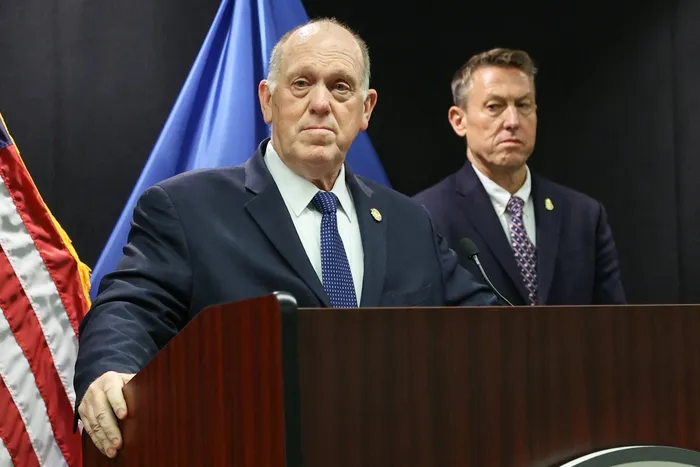
Tehran has signaled a definitive end to the era of the diplomatic power broker. By appointing Mohammad Baqer Zolghadr as the new Secretary of the Supreme National Security Council (SNSC), the Iranian leadership is not just filling a vacancy left by the assassination of Ali Larijani; it is fortifying the bunker. Zolghadr, a hardline veteran of the Islamic Revolutionary Guard Corps (IRGC), takes the helm of Iran’s most powerful security body at a moment when the Islamic Republic is facing its most existential threat since 1979.
The transition from Larijani to Zolghadr marks a structural pivot from "negotiation-first" to "survival-at-all-costs." While Larijani was an insider who knew how to speak the language of Western diplomats—even while masterminding domestic crackdowns—Zolghadr is a product of the IRGC’s "Irregular Warfare" and "Ramazan Headquarters." He does not seek a seat at the table; he seeks to collapse the table on his enemies.
The End of the Larijani Doctrine
Ali Larijani was the regime’s ultimate polymath. He was a philosopher, a nuclear negotiator, and a political chess player who could bridge the gap between reformists and the deepest echelons of the security state. His assassination on March 17 in an Israeli strike near Tehran stripped the regime of its most capable crisis manager.
Larijani had been the de facto leader since the killing of Supreme Leader Ali Khamenei on February 28. In those chaotic weeks, he attempted to maintain a semblance of statehood while the IRGC launched retaliatory waves of "Operation True Promise 4." He was the only man left who could arguably have brokered a ceasefire. With his death, the pragmatists have been silenced.
The appointment of Zolghadr, confirmed by President Masoud Pezeshkian but dictated by the new Supreme Leader Mojtaba Khamenei, suggests that the "Larijani Doctrine" of tactical flexibility is dead. In its place is a rigid, military-led command structure that views any diplomatic overture as a fatal weakness.
Who is Mohammad Baqer Zolghadr
To understand the future of the Middle East, one must look at Zolghadr’s resume. He is not a career civil servant. He is a Brigadier General who spent the 1980s in the blood-soaked trenches of the Iran-Iraq War.
- IRGC Pedigree: He served as the deputy commander-in-chief of the IRGC for eight years and headed the IRGC Joint Staff.
- Security Enforcer: As Deputy Interior Minister for Security under Mahmoud Ahmadinejad, he was instrumental in militarizing the police force.
- Judicial Fixer: His decade-long stint in the judiciary wasn't about law; it was about "crime prevention"—a euphemism for the systematic dismantling of political dissent.
Zolghadr is a founder of Ansar-e Hezbollah, the plainclothes vigilante group used to terrorize protesters. He is a man who views the state as a battlefield and the population as a demographic to be managed. His son-in-law, Kazem Gharibabadi, represents Iran at international organizations in Vienna, ensuring the family’s reach extends into the nuclear debate, but Zolghadr’s own ideology is rooted in the "Tale of Western Estrangement," a book he authored that treats Western culture as a pathogen.
The Strategic Reality of the SNSC
The Supreme National Security Council is the nervous system of the Iranian state. It is where the military, the intelligence services, and the presidency collide to set foreign policy. In theory, the president chairs it. In reality, the Secretary—Zolghadr—runs the shop.
Zolghadr’s first task is to stabilize a chain of command that has been shredded by precision strikes. Since late February, Iran has lost its Supreme Leader, its top security chief, and several high-ranking IRGC commanders. The government is currently operating in a state of "murky" leadership, with Mojtaba Khamenei rarely appearing in public and Pezeshkian functioning as little more than a bureaucratic frontman.
By placing a "General's General" in the SNSC, Tehran is signaling to Washington and Tel Aviv that the time for "back-channeling" is over. Zolghadr’s experience in irregular warfare suggests that Iran will likely lean harder into asymmetric tactics: cyber warfare, maritime disruption in the Strait of Hormuz, and the activation of sleeper cells across the region.
The Impossible Choice
There is no "moderate" path left for the Islamic Republic. The ongoing war, which has already claimed over 1,300 lives within Iran, has pushed the regime into a corner. If they negotiate, they risk appearing broken to their remaining regional proxies. If they continue the current missile exchanges, they risk the total collapse of their remaining infrastructure, including the Bushehr and Natanz facilities.
Zolghadr was chosen because he won't blink. He is a man comfortable with the "logic of the martyr." His appointment is a message to the Iranian people as well: the January 2026 crackdowns, which Larijani reportedly masterminded, will likely look mild compared to what a Zolghadr-led security apparatus is capable of executing.
The world is watching a regime transform into a pure military junta. The veneer of a clerical republic is thinning, replaced by a command-and-control center overseen by the IRGC’s old guard.
Would you like me to analyze the specific IRGC factions currently vying for influence under Zolghadr’s new mandate?