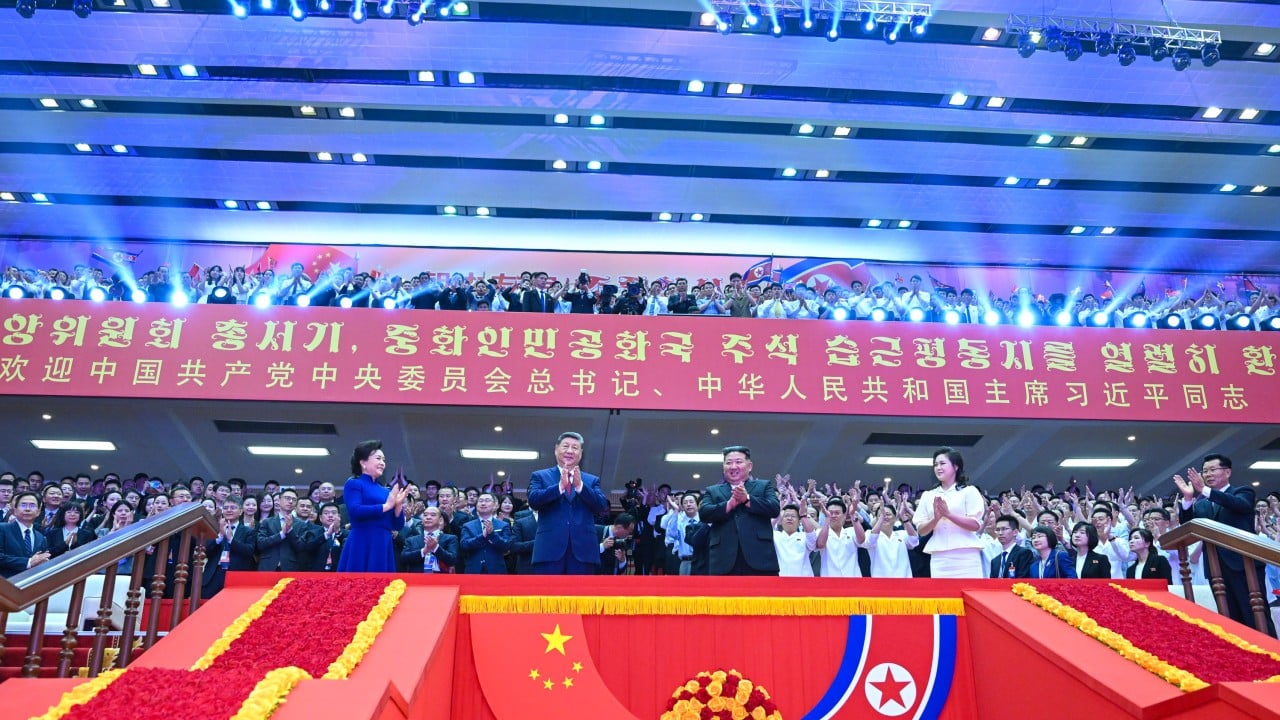
World leaders have spent the first half of 2026 lining up to visit Beijing. Over a dozen heads of state flew to China in the opening months of this year alone, waiting for their turn to shake hands with Xi Jinping. Yet, on June 8, 2026, the script flipped completely. Xi boarded a plane for his first overseas trip of the year, landing in Pyongyang for a high-stakes, two-day summit with Kim Jong Un.
It is the first time Xi has set foot in North Korea in seven years.
If you think this is just a routine photo-op celebrating socialist brotherhood, you're missing the real story. On the surface, the state media reports from both nations read like a predictable script. They talked about opening a "new chapter" in ties, expanding agricultural trade, and boosting military coordination. They smiled at a gymnasium performance and toasted to the 65th anniversary of their 1961 bilateral friendship treaty.
But beneath the pomp and giant portraits in Pyongyang's main square lies an intense geopolitical chess match. Xi isn't visiting because everything is perfect. He is there because Beijing is deeply anxious about Kim's unpredictable new friendships, and China wants its leverage back.
The Russian Elephant in the Room
Let's look at what actually triggered this sudden travel itinerary. Ever since the conflict in Ukraine escalated back in 2022, Kim Jong Un and Russian President Vladimir Putin have been getting cozy. Kim took his famous armored train to Vladivostok in 2023, and Putin returned the favor with a trip to Pyongyang in 2024. That alliance isn't just on paper. Intelligence estimates floating around Western and Asian defense ministries indicate that thousands of North Korean servicemen have been caught up in European frontline logistics and combat operations, with significant casualties reported by April 2026.
This booming Moscow-Pyongyang axis makes Beijing incredibly uncomfortable.
China likes having North Korea as a buffer zone against US forces stationed in South Korea, but it hates unpredictability. A nuclear-armed neighbor that is financially and militarily beholden to Moscow is a neighbor that China can no longer fully control. If Kim feels backed by Putin's military machine, he might pull stunts that force a US military surge right on China's doorstep. By flying to Pyongyang right after hosting Donald Trump and Vladimir Putin for separate summits in Beijing last month, Xi is reminding Kim exactly who holds the real checkbook.
What Each Side Actually Wants
To understand where this "new chapter" is heading, you have to look past the diplomatic pleasantries and examine the cold, hard leverage. The economic realities tell a very lopsided story.
China remains North Korea's absolute economic lifeline. Even with all the secret deals happening between Pyongyang and Moscow, Beijing handles the overwhelming majority of North Korea's foreign trade. In 2025, trade between China and North Korea jumped over 25 percent to hit roughly $2.7 billion. Kim needs this pipeline to keep his regime afloat, especially when it comes to shipments of rice, construction materials, and fertilizer.
Here is the breakdown of the hidden agendas driving this week's meetings.
The Chinese Playbook
- Reassert dominance over Russia: Xi wants to show that Moscow cannot replace Beijing as North Korea's ultimate patron.
- Keep the region quiet: China is dealing with a delicate economic balancing act at home and ongoing friction regarding Taiwan. The last thing Xi wants is Kim setting off a crisis that draws more American aircraft carriers to the region.
- Resume economic influence: Opening flight and train lines means Chinese tour groups can head back into North Korea, giving Beijing a direct faucet of cash they can turn on or off based on Kim's behavior.
The North Korean Playbook
- Normalize the nuclear status: Kim wants China to accept North Korea as a permanent nuclear weapons state, just like Russia tacitly has.
- Secure immediate aid: Pyongyang needs food security and energy supplies without giving up an ounce of its military independence.
- Play the giants against each other: By keeping options open with both Moscow and Beijing, Kim avoids becoming a puppet to either.
The Nuclear Standoff Nobody Mentioned
Notice what was completely absent from the official state media readouts this week? The word "denuclearization."
Just days before Xi landed, Kim made a highly publicized visit to a plant producing weapons-grade nuclear material, boasting that production capacity had doubled over the last five years. That wasn't an accident. It was a deliberate message to Beijing: our nuclear program is non-negotiable.
This puts China in a bizarre paradox. Publicly, after Xi met with US President Donald Trump last month, Washington claimed both leaders confirmed a shared goal of a denuclearized Korean peninsula. But in Pyongyang, Xi didn't press the issue. Beijing realizes that pushing Kim too hard on his nuclear arsenal will only drive him faster into Putin's arms. So instead, Xi offered "unwavering support" and focused heavily on practical economic cooperation like medical infrastructure, tech exchanges, and agriculture.
The Changing Balance of Power
If you're tracking how power shifts in East Asia, stop looking at Western capitals and start watching the diplomatic traffic between Asian neighbors. Kim Jong Un did give Xi something significant during this trip: total vocal alignment on China's core security issues. Kim explicitly backed the "One China principle" regarding Taiwan and ramped up aggressive rhetoric against Japan following diplomatic meetings earlier this spring.
But don't mistake compliance for submission. Kim is approaching Beijing with more confidence than he has had in a decade. With Moscow offering military technology in exchange for munitions, and Beijing offering economic shields to prevent regime collapse, the North Korean leader has successfully turned a weak hand into a winning geopolitical hedge.
To see where this goes next, keep a close eye on the volume of freight trains crossing the Yalu River over the next three months. If we see a massive influx of Chinese raw materials and the immediate return of state-sanctioned Chinese tourism, it means Xi successfully bought back his influence. If the border remains tightly managed while North Korean military assets keep flowing toward Russian logistics channels, then Beijing's expensive trip to Pyongyang didn't buy nearly as much loyalty as Xi hoped.