Two decades pass. Memories fade. People forget the dust, the smoke, and the heavy silence that fell over New York City in September 2001.
You see images on anniversary broadcasts. You watch clips of falling towers and grieving families. Then you go back to scrolling your phone.
But for some, the tragedy never stopped unfolding.
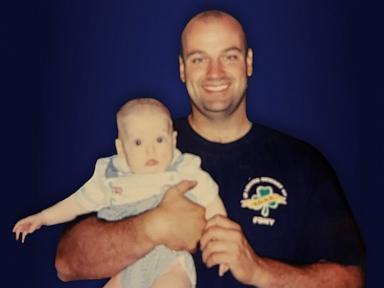
Arthur John Illgen knew this better than most. As a firefighter's son, he lived inside the shadow of the disaster long after the rescue teams went home. His father responded to Ground Zero, breathing in toxins that eventually claimed his life years later. That loss hits differently. It's not a historical footnote. It's a kitchen table with an empty chair.
Instead of letting grief turn into quiet despair, Arthur did something radical. He drove across America with a heavy piece of World Trade Center steel resting in the back of his truck.
Most news outlets covered the basics of this journey and moved on. They missed the deeper cultural weight of what it means to physically haul collective trauma across thousands of miles of divided highways. You need to look closer at this story because it reveals how ordinary people shoulder national wounds when institutions fall short.
The Weight of Memory on Asphalt
Picture the bed of a pickup truck. It usually carries lumber, camping gear, or tools for a weekend project.
Arthur's truck carried a mangled beam salvaged from the twin towers. That piece of twisted steel weighed hundreds of pounds. It held jagged edges, rust, and microscopic traces of pulverized concrete from lower Manhattan.
Driving across state lines with an artifact like that changes things. Gas station attendants stop sweeping and stare. Police officers pull you over just to salute. Strangers walk up in parking lots, touch the cold metal, and start crying without saying a word.
This wasn't a PR stunt. Arthur didn't have a corporate sponsor or a film crew trailing his bumper. He funded the trip out of his own pocket. He spent months stopping at small towns, VFW halls, and fire stations across the country.
Why do this? Because grief needs physical space. Modern life moves too fast. We mourn for twenty-four hours online and then expect society to function normally. Arthur forced people to slow down. He handed them a tangible piece of history that couldn't be scrolled past or muted.
What Most People Get Wrong About Post-9/11 Healing
Society treats trauma like an acute injury. You get hurt, you bleed, you get stitches, and eventually, the scar heals.
That model fails completely when dealing with catastrophic loss on a national scale.
When emergency responders inhaled toxic air at Ground Zero, the clock started ticking on a slow-motion catastrophe. First responder illness didn't make headlines the way the initial collapse did. It happened quietly in suburban bedrooms and hospital wards years down the road.
Arthur's journey brought visibility to those invisible casualties. When he dropped off pieces of steel at firehouses along his route, he wasn't just dropping off scrap metal. He was delivering a message. He was telling local communities that the men and women who died years after the towers fell were still victims of that exact same Tuesday morning.
You rarely hear politicians talk about the long tail of tragedy. They prefer clean narratives with neat beginnings and ends. Real life doesn't work that way. The children of first responders live with chronic health anxiety, missing birthdays, and empty holidays.
Arthur's cross-country trek exposed the gap between official remembrance and lived reality. Memorials in big cities feel distant. A monument in Manhattan is tourist-heavy and guarded. A piece of steel sitting on the grass outside a rural volunteer fire department in Kansas feels intimate. You can touch it. You can feel the cold reality of it against your palms.
The Logistics of Grief
Hauling structural steel across state lines sounds simple until you try doing it.
You need heavy-duty suspension. You need straps that won't snap when you hit a pothole on Interstate 80. You need a vehicle capable of towing dead weight without burning out its transmission.
Arthur planned every stop carefully. He coordinated with local fire departments months in advance. He didn't want fanfare. He wanted quiet handoffs.
Think about the emotional toll of that drive. For months, he sat behind the wheel listening to the hum of the engine with a piece of the worst day in American history sitting right behind his head. Every single person he met wanted to tell him their story. They wanted to recount where they were when the planes hit. They wanted to share their own grief, treating Arthur as a proxy for the entire city of New York.
That requires an immense amount of emotional stamina. Most people break down after hearing two or three heavy stories. Arthur listened to thousands. He absorbed the collective sorrow of a nation one roadside conversation at a time.
Why This Story Still Resonates Today
We live in a cynical era. Everything feels transactional. We assume people only do things for social media clout, book deals, or fundraising campaigns.
Arthur's journey proves that human motives can still be pure. He didn't write a bestseller about the trip immediately. He didn't monetize his route. He simply drove because he felt an obligation to honor his father and every other family shattered by that day.
When you look at how communities received him, you see a different side of America. Pundits love to talk about polarization. They tell you that people in big cities and small towns have nothing in common anymore.
A rusted beam from the World Trade Center proved them wrong.
Farmers in the Midwest, cops in the South, and teachers on the West Coast all gathered around the same piece of metal. They bowed their heads. They remembered. They stood together without arguing about politics.
That unity is fragile. It shouldn't take a national tragedy or a piece of wreckage to remind us how to connect. But sometimes, physical objects act as anchors for our shared humanity.
If you ever find yourself near a small-town fire station that received one of those steel fragments, go look at it. Don't take a selfie. Don't rush. Just stand there and think about the miles it traveled in the back of a truck, carried by a son who refused to let the world forget his father's sacrifice.