The Middle East just lost its longest-serving anchor of stability—or its most stubborn architect of chaos, depending on who you ask. Ali Khamenei is dead. His passing isn't just a headline. It's a seismic shift that's already ripping through the borders of neighboring countries. If you thought the region was volatile before, you haven't seen anything yet.
On February 28, 2026, a joint U.S.-Israeli strike targeted a high-level meeting in Tehran. By the next morning, the Iranian government did something nobody expected: they admitted he was gone. Since then, the streets of Baghdad, Karachi, and Beirut have turned into a pressure cooker. We aren't just looking at a local transition of power. We're looking at a regional identity crisis that's spilling over in the form of mass protests, targeted violence, and a desperate scramble for what comes next.
Blood on the streets of Karachi and Baghdad
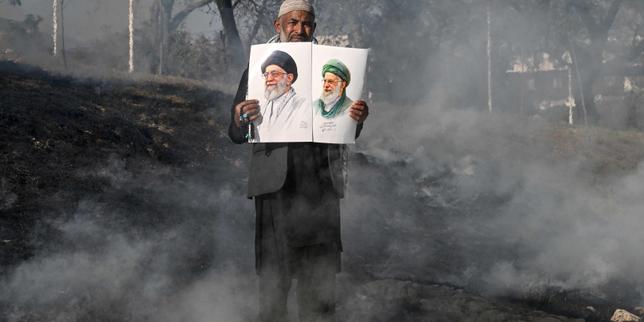
While Tehran is locked under a 40-day mourning period, the real fire is burning outside Iran's borders. The "Axis of Resistance" is grieving, and it’s doing so with fire and stones. In Karachi, Pakistan, the situation spiraled out of control within hours of the announcement. Protesters didn't just march; they breached the outer wall of the U.S. consulate. At least 22 people are dead in Pakistan alone after security forces opened fire to prevent a total takeover of the diplomatic compound.
Iraq is arguably in a worse spot. Prime Minister Mohammed Shiaa al-Sudani declared three days of national mourning, but that didn't stop the militias. Hundreds of protesters, many waving the flags of Iran-backed groups like Kataib Hezbollah, tried to storm the Green Zone in Baghdad. They want blood. They see the assassination of Khamenei as a declaration of total war against the Shia world.
It’s easy to dismiss these as "the usual protests," but the scale is different this time. In the past, there was always a sense that Khamenei was the final arbiter who could pull the leash on these groups. Now, the leash is snapped. These militias are acting on raw instinct and a need for vengeance, making them more unpredictable than they've been in decades.
The celebration nobody wants to talk about
You won't see it on state-run TV, but not everyone is crying. In Syria, where the Iranian regime was the primary muscle keeping the previous status quo alive before the 2024 shifts, people actually took to the streets to celebrate. I've seen reports of drivers honking their horns and people handing out sweets. For them, Khamenei represented the boots on their necks.
Even within Lebanon, the mood is split. While tens of thousands of Hezbollah supporters are weeping in the southern suburbs of Beirut, others are celebrating in private. They’re terrified of a civil flare-up, but they’re also hopeful. The death of the "Guide" feels like the end of an era of Iranian hegemony that many felt had overstayed its welcome.
The vacuum in Tehran and the Mojtaba factor
Inside Iran, the constitution says an 88-member "Assembly of Experts" has to pick a successor. In the meantime, a triumvirate including President Masoud Pezeshkian and Judiciary Chief Mohseni Ejei is supposed to keep the lights on. But let’s be real: the clerical process is a smokescreen for a massive power struggle between the Revolutionary Guard (IRGC) and the traditional clergy.
The name on everyone’s lips is Mojtaba Khamenei, the late leader's second son. He’s got the keys to the IRGC, but there’s a massive problem. Inherited power is what the 1979 Revolution was supposed to destroy. If the Assembly picks Mojtaba, they risk a total revolt from Iranians who don't want a new "Shah" in a turban.
Other contenders are circling like sharks:
- Alireza Arafi: The Deputy Chairman of the Assembly of Experts. He’s the safe, "company man" choice.
- Hassan Khomeini: The grandson of the original founder. He’s the reformist wildcard that the hardliners hate.
- The Military Junta: There’s a very real chance the IRGC just stops pretending and takes over directly, sidelining the clerics entirely.
What this means for your wallet and your safety
If you think this is just a "Middle East problem," look at the oil charts. The Strait of Hormuz is currently a ghost town. Maersk and MSC have already suspended passages. Iran has already retaliated by hitting tankers and targeting sites in the UAE and Bahrain. If the transition in Tehran gets messy—and it will—expect energy prices to spike globally.
The immediate risk isn't just a big war. It's the fragmentation of command. When a "Supreme Leader" dies, the local commanders of proxy groups often start making their own decisions. That means more "lone wolf" style militia attacks on U.S. bases in Syria and Iraq, and potentially more strikes on commercial shipping.
Don't wait for the dust to settle to understand the impact. Watch the IRGC's next move. If they bypass the Assembly of Experts to install a puppet, the internal protests in Iran will make the 2022 "Woman, Life, Freedom" movement look like a rehearsal.
Keep a close eye on the borders of Iraq and Lebanon over the next 48 hours. If the militias move from "protesting" to "mobilizing," we're looking at a regional conflict that no amount of diplomacy can fix. Check your travel advisories if you're anywhere near the Gulf, and honestly, keep an eye on the gas pump. The era of the "Great Balance" is over.