The water off Jeju Island does not welcome you. It waits.
In the dead of winter, the surface of the Yellow Sea turns the color of wet slate, the temperature plunging close to freezing. Most human skin freezes into numbness within minutes in such depths. Most human lungs panic at the thought of a breath withheld beneath ten meters of crushing pressure.
Yet, a few hundred yards off the volcanic shore, a small buoy bobs in the swells.
A sharp, haunting whistle cuts across the wind. It is the sumbosu—the signature breath-releasing sound of the Haenyeo, Jeju’s legendary free-diving grandmothers. One by one, women well past the age where society expects physical retirement break the surface, spit seawater from their masks, and toss their catches into floating wooden tubs. They are seventy. They are eighty. Some are approaching ninety.
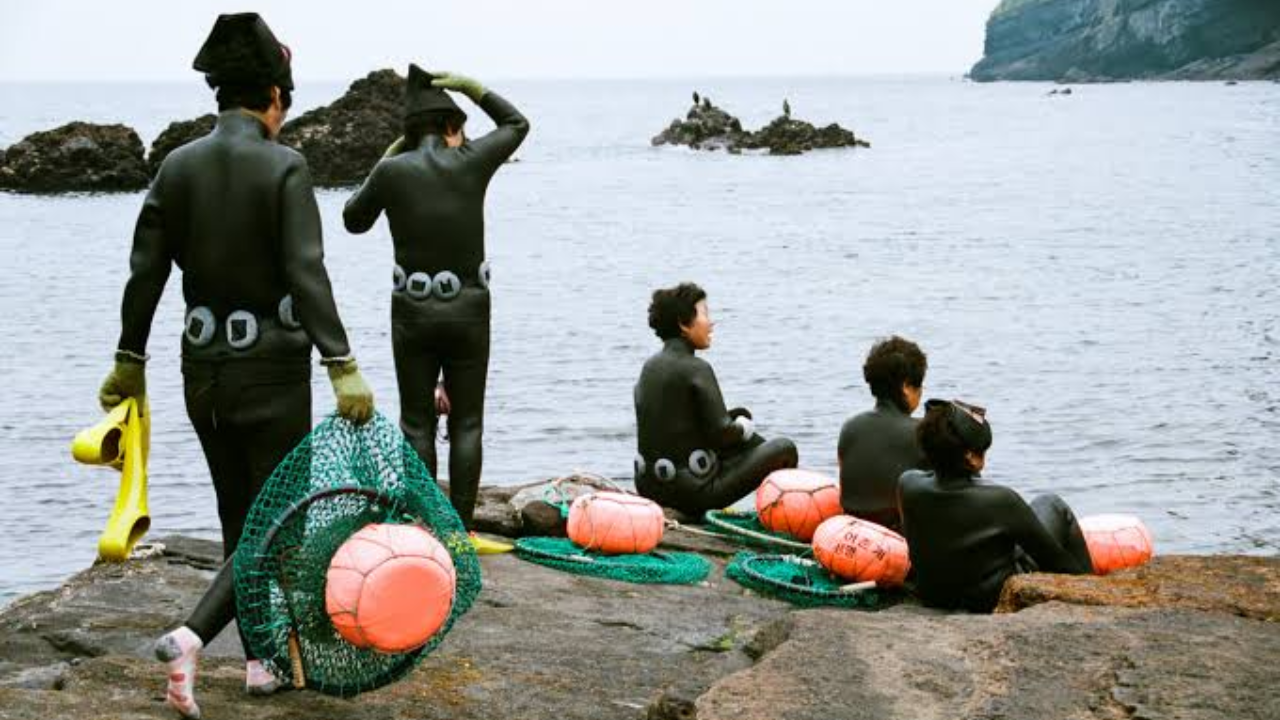
They carry no tanks. They wear no modern thermal wizardry. They carry only a lead-weighted belt, a net, a small harvesting tool, and a lifetime of adaptation that modern medicine still struggles to fully map.
To understand how these women survive the freezing abyss, you have to strip away the clinical detachment of physiology textbooks and look at what happens when human biology is pushed to the absolute edge by necessity.
The Anatomy of Defiance
For centuries, the gender roles on Jeju Island were inverted by necessity. Heavy taxes levied by mainland dynasties made farming the rocky volcanic soil a losing battle. The sea, however, was vast, untamed, and rich with abalone, sea urchins, and octopus. The men, historically conscripted into military service or lost to treacherous typhoons, left an economic vacuum.
The women stepped into the freezing water.
At first, they dove in nothing more than cotton tunics. Hypothermia was a constant, ruthless companion. Many did not survive past middle age. But evolution does not wait for generations to pass when survival demands an immediate answer; instead, the human body bends under extreme environmental pressure, forging micro-adaptations in real-time.
Consider what happens to the human body at ten meters down. The pressure doubles. Air spaces in the body compress. Blood surges toward the core to protect the vital organs—a primitive mammalian dive reflex shared by marine mammals like seals and whales.
In most people, this reflex is a clumsy, short-term emergency measure. In the Haenyeo, it is a masterclass in biological efficiency.
Decades of daily immersion have re-engineered their vascular systems. Their blood vessels constrict more rapidly and efficiently in cold water, shielding their brains and hearts from the biting frost while rationing oxygen to the rest of the body. Their resting metabolic rates adjust, and their bodies develop a unique metabolic resilience against thermal shock.
Science calls this cold adaptation. The Haenyeo simply call it Tuesday.
A Day in the Life of the Deep
Imagine standing on the black basalt rocks of Jeju at five o'clock in the morning. The wind whips salt spray across your face. It is March, and the air bites with a lingering winter frost.
Sun-ok is seventy-four years old. Her face is deeply weathered, mapped with lines carved by decades of sun, salt, and relentless wind. She moves with a practiced, economical grace, pulling on a black neoprene wetsuit—a relatively recent concession to modern comfort, adopted only in the latter half of the twentieth century. Before the 1970s, they dove in raw wool, shivering on the shore before plunging back into the blackness.
She checks her tewak, the orange styrofoam ball that marks her position on the surface, attached to a net where her harvest will go.
"The sea tells you what kind of day it will be," Sun-ok says, her voice raspy, shaped by a lifetime of swallowing salt water and holding air against immense pressure. "If you fight it, it breaks you. If you listen to it, it lets you take what you need."
She steps to the edge. There is no hesitation. No second-guessing.
She drops.
Beneath the surface, the chaos of the world above vanishes. There is only the rhythmic creak of the ocean, the filtered blue-grey light fading into shadow, and the absolute, disciplined control of her own internal clock. She stays down for two minutes. Sometimes three. At depths where nitrogen narcosis and oxygen starvation loom like silent predators, her mind remains clear. She locates an abalone clinging desperately to a rock crevice, slips her blade beneath its shell with a swift, practiced motion, and tucks it into her net.
When her lungs begin to burn—that primal, screaming command from the brain demanding air—she does not panic. Panic consumes oxygen. Panic kills. Instead, she kicks upward, breaking the surface with that singular, life-affirming whistle.
That sound is her declaration to the world: I am still here.
The Vanishing Horizon
The tragedy of the Haenyeo is not that they are weak. It is that their world is running out of time.
For generations, the knowledge was passed down through a strict hierarchy. Daughters learned from mothers, starting as muljil apprentices around age eleven, slowly graduating from shallow rock pools to the deeper, deadlier zones as their lung capacity and confidence matured. It was an ecosystem of shared wisdom, oral traditions, and profound respect for the marine environment.
Today, the shore is quiet.
Walk through the coastal villages of Jeju, and you will notice the absence of young faces in the drying shacks. The daughters and granddaughters of the Haenyeo grew up in a modernized South Korea—a land of skyscrapers, digital economies, and university degrees. They chose offices over ocean floors. Why freeze in the dark when you can sit in a heated classroom?
The average age of a working Haenyeo today is well over seventy. UNESCO inscribed the culture on its Intangible Cultural Heritage list in 2016, recognizing the extraordinary social customs, ecological awareness, and feminist history embedded in their daily labor. But an inscription in a ledger cannot keep an ancient tradition alive when the last practitioners hang up their weighted belts for good.
There is a quiet grief in this transition. The grandmothers know they are the final chapter of an unbroken line that stretches back centuries. When they look out at the water, they see a mirror of their own resilience—and an empty horizon where the next generation should be.
The Last Breath
Back on the shore, Sun-ok empties her net onto the rocks. The abalone gleam in the pale morning light, slick with ocean brine. Her hands are pruned, red, and shaking slightly as the adrenaline fades and the cold finally begins to seep back into her bones.
She peels off her wetsuit, wrapping a thick towel around her shoulders, and sits on a low stone wall facing the sea.
She has spent her entire life negotiating with an element that asks for no quarter. She has watched friends fail to surface. She has felt the crushing weight of the water test every fiber of her physical and mental endurance. And yet, she smiles—a quick, tight motion that crinkles the corners of her eyes.
The sea does not care about our modern anxieties. It does not care about deadlines, or notifications, or the frantic pace of the world above. It simply rises and falls, indifferent and eternal.
The grandmothers of Jeju understood this better than anyone. They did not conquer the ocean. They simply learned how to belong to it. And as the sun finally breaks through the grey clouds, warming the dark stone of the shore, the water grows calm once more, waiting for the next descent.