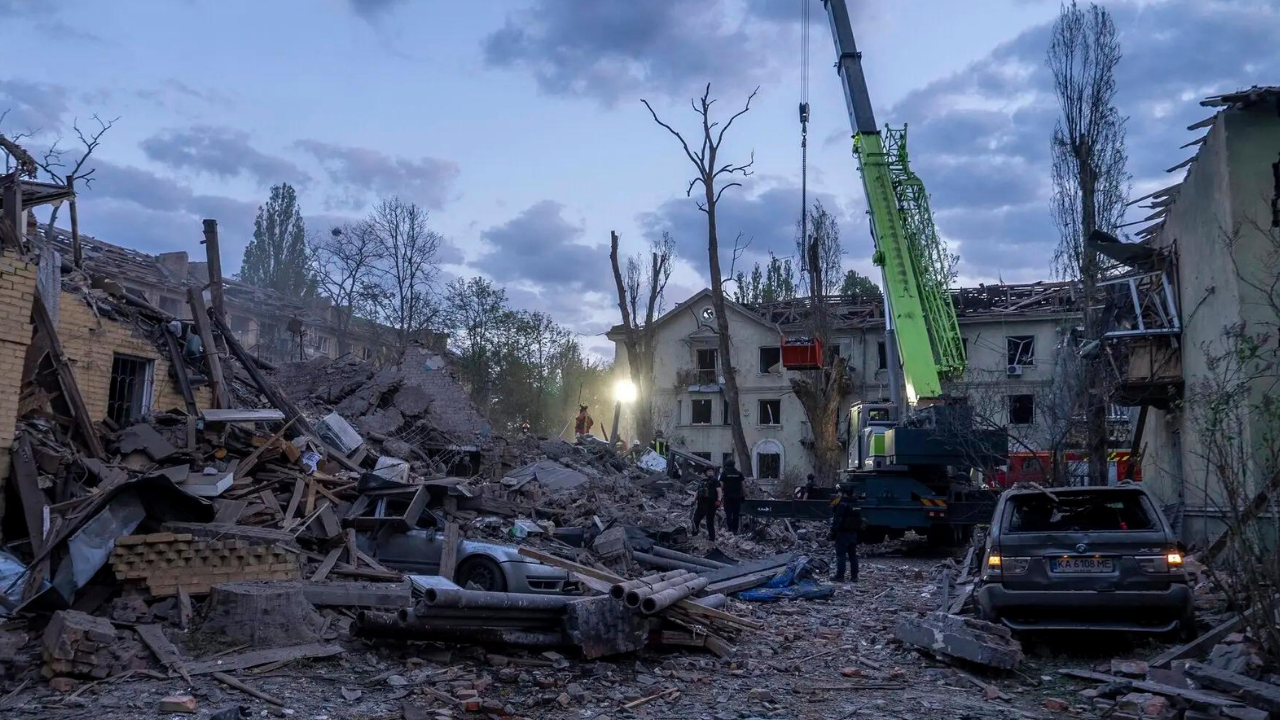
Russia is preparing for massive strikes against Ukraine's energy facilities, weaponizing geography, frost, and centralized infrastructure to break civilian endurance. This strategy relies on predictable technical vulnerabilities inherent to post-Soviet power grids. Moscow aims to exploit every fragile transmission node, transformer yard, and thermal plant remaining across the country.
The Anatomy of a Grid Under Siege
Power grids are naturally fragile beasts. When you concentrate high-voltage distribution into massive, centralized hubs, you create single points of failure. Soviet-era infrastructure design prioritized heavy industrial output over decentralized resilience.
Every major substation acts as an anchor for entire metropolitan zones. Take Kyiv or Kharkiv. If you drop heavy ordnance onto a transformer yard, you do not just cut the lights. You sever the water pumps, disable the district heating pumps, and halt the sewage systems.
Military planners in Moscow understand this cascading effect better than anyone. They mapped these vulnerabilities years ago, often using commercial satellite data and legacy engineering blueprints available in open archives. When a barrage of cruise missiles and loitering munitions hits a thermal power station, the damage extends far beyond scorched metal. It fractures the thermal inertia of an entire city.
The logistics of repair complicate matters further. You cannot pick up a three-hundred-ton step-down transformer at a local hardware store. These components require months of specialized manufacturing, precise transport logistics, and heavy crane operations. By targeting items with long replacement lead times, the attackers force a structural deficit that defenders struggle to outpace.
Defensive Engineering in Real Time
Ukraine has not stood still while its grid takes a beating. Engineers and technicians perform miracles under fire, stringing temporary lines and wrapping critical substations in gabions filled with sand and rock.
Protection falls into three distinct tiers.
- Physical hardening: Sandbags, concrete blocks, and steel mesh cages designed to detonate shaped charges prematurely before they can pierce critical transformer walls.
- Passive decentralization: Shifting smaller, containerized generators and localized microgrids closer to hospitals, water facilities, and essential services.
- Air defense layering: Positioning mobile gun teams, electronic warfare units, and Western-supplied surface-to-air missile systems directly along known cruise missile flight corridors.
Yet physics imposes harsh limits on these measures. You cannot encase an entire multi-acre electrical yard in concrete without suffocating the cooling systems. Transformers generate immense heat during standard operation. They require massive airflow. Block that airflow to stop shrapnel, and the transformer overheats and fails on its own. Engineers must balance the risk of incoming kinetic strikes against the certainty of thermal self-destruction.
The Psychological Dimension of Energy Warfare
Destroying kilowatt-hours is merely the mechanism. The real target is the collective will of the population.
When temperatures drop below freezing and apartments lose heat, daily life turns into an endurance test. Water pipes freeze and burst. Elevators freeze mid-shaft. Elevating the cost of survival for ordinary citizens is a calculated maneuver to force political capitulation from the top down.
History offers grim parallels. Strategic bombing surveys from the Second World War onward consistently demonstrate that targeting civilian utilities rarely produces immediate political surrender. Instead, it breeds a hardened resentment. People adapt. They string extension cords to neighborhood warming stations, pile layers of wool indoors, and continue working by generator power.
Even so, endurance has a finite boundary. The cumulative exhaustion of continuous night alarms, freezing living rooms, and disrupted sanitation strains societal cohesion. The operators running the control rooms work under conditions of extreme stress, rotating shifts while knowing their own homes might be dark when they finally clock out.
The Geopolitical Supply Chain Bottleneck
Keeping the lights on requires hardware that Ukraine cannot produce domestically in sufficient quantities. The international community scrambles to ship transformers, circuit breakers, and high-voltage cables across borders from Poland and Romania.
This creates a secondary logistical theater. Every piece of heavy electrical equipment moving west to east is a high-value target in transit. Warehouses holding spare parts face constant threat of long-range strikes.
International donors pledge billions in aid, but cash does not conduct electricity. The bottleneck is manufacturing capacity. Major global manufacturers in Europe, Asia, and North America build large-scale grid components to order. A waiting list of twelve to eighteen months is standard during peacetime. In a high-attrition conflict, procurement agencies must scavenge global surplus markets, acquiring decommissioned equipment from other nations and retrofitting it to match Ukrainian voltage specifications.
Grid operators coordinate daily with international partners to track spare inventory. It is an unglamorous logistics war fought in spreadsheet cells and shipping manifests, just as critical to national survival as the artillery duels on the front lines.
Surviving the Deep Cold
As the heating season progresses, the margin for error shrinks toward zero. Every successful interception by air defense buys another week of warmth, while every missed target plunges another district into darkness.
The resilience of the system now depends on redundancy, improvisation, and the sheer grit of the utility crews who drive out to patch high-voltage lines while the air raid sirens still wail. They work by flashlight in sub-zero winds, tightening bolts and splicing cables, knowing the next wave could arrive before the weld has even cooled.