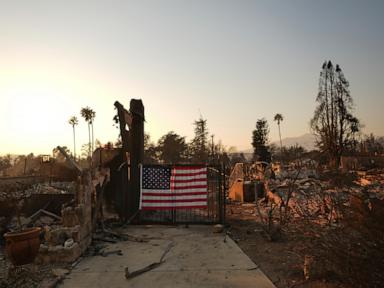
The narrative around wildfire settlements is broken. It is a story of victimhood sold by personal injury attorneys and bought by a public that doesn't understand how capital flows. The standard headline laments that survivors "could face another blow" on their payouts. This suggests that a settlement is a gift being snatched away.
It isn't.
A wildfire settlement is a cold, hard mathematical liquidation of liability. If you lost a home, you aren't just fighting a utility company; you are fighting the physics of insurance subrogation and the brutal reality of tax law. The "blow" isn't a surprise. It is the inevitable result of a system where survivors are the last to get paid, yet the first to be used as props for legislative posturing.
The Subrogation Trap You Ignored
Here is the secret the "victim" articles won't tell you: Your insurance company is your biggest predator in a settlement.
When a utility like PG&E or PacifiCorp settles for billions, the public thinks that money goes to rebuilding kitchens and replanting orchards. It doesn't. A massive chunk of that "recovery" belongs to the insurance companies through a process called subrogation.
If your insurer paid you $400,000 to rebuild your house three years ago, they have a legal right to "step into your shoes" and claw back that $400,000 from any settlement you win. You are effectively a collection agent for Farmers or State Farm, working for free while your lawyer takes 33% of the gross.
I have watched families celebrate a $1 million settlement offer, only to realize that after the lawyer takes $333,000 and the insurance company takes their $500,000 "reimbursement," the family is left with $167,000. That doesn't buy a 2,000-square-foot home in 2026. It barely buys the permits and the debris removal.
The "lazy consensus" says we need bigger settlements. I say we need a total moratorium on subrogation in mass tort disasters. Until the law prioritizes the uninsured loss over the corporate reimbursement, the survivor is just a middleman for a bank transfer between a utility and an insurer.
The Tax Man Does Not Care About Your Tragedy
The IRS is not a charitable organization. Most survivors assume that because they lost everything, the money they receive to replace it is "tax-free."
Wrong.
While payments for physical personal injury or sickness are generally non-taxable under Section 104(a)(2) of the Tax Code, most wildfire payouts are categorized as property damage or emotional distress. If your settlement exceeds your "adjusted basis" in the property—which is common if you bought your home thirty years ago—you are looking at a capital gains hit.
Even worse is the treatment of "emotional distress" damages. Unless those damages originated from a physical injury (like a burn), they are fully taxable. If you get $200,000 because you watched your life's work turn to ash and now have PTSD, the government treats that money like a Christmas bonus.
The strategy most survivors use is "involuntary conversion" under Section 1033. This allows you to defer the tax if you reinvest the money in "similar" property within a specific timeframe. But here is the catch: In a post-wildfire economy, construction costs have spiked 40% to 60%. You can't rebuild "similar" for the same price. You are forced to spend more than you received just to avoid a tax bill you shouldn't owe in the first place.
The Lawyer’s Percentage Is a Tax on Misery
Personal injury firms are currently the only people getting rich off wildfires.
They use a contingency fee model that made sense for individual car accidents but is predatory in the context of a $10 billion utility settlement. When a utility’s liability is a foregone conclusion—when the equipment failure is documented and the negligence is a matter of public record—why are survivors still paying 30% to 40% in legal fees?
In these "megatorts," the heavy lifting is done by a few lead counsels. The "satellite" lawyers who sign up 500 local families are often just processing paperwork. They aren't "litigating" in the traditional sense; they are managing a queue.
If you are a survivor, you shouldn't be looking for a "compassionate" lawyer. You should be looking for a fee-cap advocate. The fact that state bars haven't capped fees at 15% for admitted-liability disasters is a professional failure of the highest order.
The Myth of the "Made Whole" Doctrine
Lawyers love to quote the "Made Whole" doctrine. It’s the idea that an insurance company shouldn't get their subrogation money until the victim is fully compensated for their losses.
It sounds great in a courtroom. It is a fantasy in a settlement.
Settlements are, by definition, a compromise. If you lost $2 million and the utility settles for $1 million, you aren't "whole." But the insurance company will argue that their $500,000 payout was a "liquidated" amount that must be paid first.
I’ve seen mediation sessions turn into a three-way brawl where the utility sits back and laughs while the victim and their own insurance carrier fight over the scraps. The utility doesn't care who gets the money, as long as the total check stays the same.
To win, you have to stop thinking about "justice" and start thinking about "allocation." If you aren't aggressively litigating against your own insurance company’s right to subrogate, you aren't actually litigating your case.
Stop Asking if the Payout is Fair
"Is this settlement fair?" is the wrong question. It’s never fair. It’s a settlement because both sides are afraid of what a jury might do.
The right question is: "How much of this money is actually mine?"
If you want to survive the settlement, you need to execute a three-point plan that defies the standard "wait and see" advice:
- Audit the Basis: Hire a forensic accountant before you sign the settlement release. You need to know your property's adjusted basis to the penny, including every renovation you did since 1994. This is your only shield against the IRS.
- Aggressive Subrogation Defense: Tell your lawyer that if they don't get your insurance company to waive or significantly discount their subrogation lien, you will fire them. Most insurers will take 50 cents on the dollar just to close the file, but your lawyer won't push for that unless you make it a condition of their fee.
- Segregate the "Physical" Damages: Every dollar of your settlement should be justified as "physical injury" or "property replacement" to the maximum extent allowed by law. If your lawyer puts it all in a "general damages" bucket, they just handed 30% of your net to the federal government.
The "blow" survivors face isn't coming from the fire. It’s coming from the paperwork. The tragedy isn't that the money is low; it’s that the system is designed to filter that money through three different corporate layers before it ever reaches a person who actually needs a roof over their head.
Quit waiting for the utility to "do the right thing." They won't. Quit expecting your lawyer to be your hero. They are a businessman. The only person who is going to protect your recovery is you, and you do that by being the most difficult, informed person in the room.
Burn the victim mindset. Become a creditor.