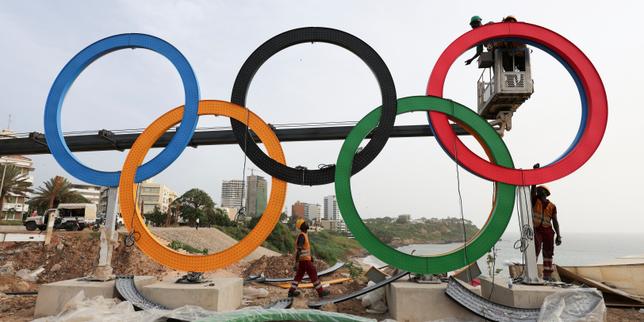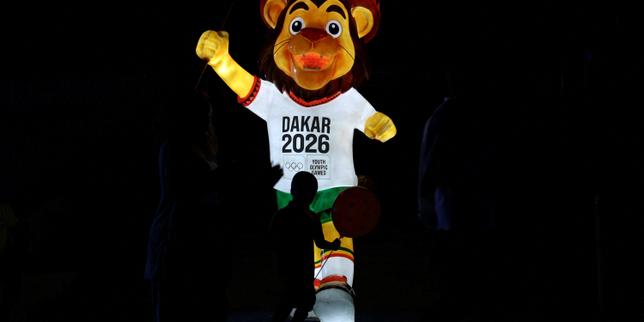
The paint on a freshly poured concrete walkway smells sharp, almost sweet, under a humid Atlantic breeze. Walk along the coast toward Diamniadio or cast a glance across the dense neighborhoods of Dakar and you can taste the expectation in the salt air. A continent is watching. Young sprinters, swimmers, wrestlers, and table tennis hopefuls from across the globe are converging on Senegal for the Youth Olympic Games, the first Olympic event ever staged on African soil. For years, officials spoke of this moment as proof that Africa does not merely supply the world’s marathon champions and football stars; it can build the track, host the world, and write the opening ceremony on its own terms.
Then came the anger.
Not a sudden explosion from nowhere, but a slow, heavy simmer that rises the way heat rises off corrugated iron roofs at two in the afternoon. Resentment. Frustration. A sharp, gnawing question asked in living rooms, taxis, market stalls, and university courtyards: Who is this party actually for?
In the weeks leading up to the opening of the Youth Olympic Games in Senegal, the tension around the event has grown harder to ignore. While international broadcasters frame the Games as an uplifting milestone for youth and global unity, many people on the ground see a widening gap between glittering international prestige and everyday domestic reality. Delays in certain venues, soaring public costs, questions over contracting and transparency, displacement or disrupted livelihoods around development zones, and the aching weight of youth unemployment and cost-of-living pressures have turned what was meant to be a celebration into a flashpoint.
To understand why anger swells right as the torches and banners prepare to rise, you have to look past the press releases. You have to look at what happens when a megaproject collides with real lives.
The Price of Being First
Hosting a global sporting festival is a high-wire act for any country, even wealthy nations with decades of experience absorbing overruns. For a developing economy carrying public debt and everyday household strain, the stakes feel magnified tenfold.
Consider a hypothetical scenario to see how the arithmetic of prestige works on the ground. Imagine a young bricklayer named Moussa living on the outer edge of the metropolitan area. For three years, he watches cranes rise, roads widen, and glass facades catch the sun. He wants the country to succeed; pride in home soil is real and deep. Yet when groceries cost more at the end of the month, when power cuts or transport bottlenecks still test his patience, and when clinic queues remain long, watching millions flow into temporary or specialized sporting infrastructure can feel like watching someone buy a tuxedo while the roof leaks.
That is not a fringe reaction. It is a predictable human response to visible inequality. When citizens see massive public spending tied to a brief window of international spectacle while basic domestic needs remain tight, anger becomes a form of self-defense. People worry they are paying for a postcard that will be mailed abroad while the bill stays local.
I have stood in crowds where excitement and skepticism share the exact same breath. You hear people clapping for the athletes one minute and muttering about contracts, prices, and priorities the next. It can be confusing—even unsettling—to watch a moment of genuine national pride get tangled up in distrust. Part of me understands the ambition behind bringing the Youth Olympic Games to Senegal. History matters. Representation matters. Being told for generations that world-class events belong somewhere else leaves a mark, and breaking that barrier carries real emotional weight.
Yet ambition without trust is fragile. When governments and organizers ask citizens to tighten their belts while promising a glorious tomorrow, patience wears thin.
What Sparked the Backlash
Anger rarely erupts over a single line item. It gathers force from overlapping grievances that reinforce one another like waves stacking up before a seawall.
First, there is the question of cost and economic strain. Hosting an Olympic-caliber event requires arenas, athlete housing, security, transport upgrades, and digital systems. Even when infrastructure is pitched as a long-term asset for the nation, critics and ordinary residents ask hard questions about opportunity cost. Could those funds have eased pressure on schools, hospitals, public transit, or small businesses? When inflation and job scarcity already pinch households, every headline about budget adjustments or expensive preparations hits a nerve.
Second, there are delays, rush jobs, and accountability fears. Megaprojects around the world are notorious for last-minute scrambles. In Senegal, concerns around timelines, readiness, and how contracts are awarded have fueled suspicion that speed and optics are overtaking careful public stewardship. Once people suspect that a few insiders profit while the public shoulders the risk, ordinary friction turns into moral outrage.
Third, there is the disconnect between global glamour and local lived reality. Think of a grand feast set on a long table outside a crowded courtyard. The music is loud, the lights are bright, and guests from afar arrive with cameras ready. If the neighbors inside the courtyard are hungry, or if they were pushed aside to clear space for the table, the music stops sounding festive. It starts sounding tone-deaf.
Let’s be clear: that feast image is a metaphor, not a literal description of the Games. The Youth Olympic Games are built around young athletes—teenagers chasing personal bests, trading pins, and experiencing international competition for the first time. Those young athletes deserve credit for their sacrifice and discipline. Blaming teenagers for political or economic grievances misses the point.
Still, metaphors help explain why emotions run so high. Symbols carry power. An Olympic flame is not just fire on a stand; it is a symbol of what a society values most at that exact hour.
The Invisible Stakes Beneath the Cheer
Why does anger at the opening of a youth tournament matter beyond Senegal’s borders? Because the Youth Olympic Games were created to be a bridge between tradition and the future—a showcase of energy, fairness, and possibility.
If the opening of the Games is shadowed by street-level frustration, protests, or deep public cynicism, the story told around the world changes overnight. Instead of a pure celebration of African youth excellence, the narrative splits into a tug-of-war between triumph and grievance.
Worse, public anger can sour something precious: legacy. A stadium that sits half-empty or underused after the closing ceremony becomes a concrete monument to missed potential. A youth program that feels disconnected from neighborhood sports clubs struggles to inspire the very kids it claims to uplift. True legacy requires local ownership. People protect and cherish what they feel included in; they resent what feels imposed on them.
There is also a quieter psychological cost. When young people in a host country feel excluded from the prosperity promised by a major event—or when they feel their everyday struggles are ignored in favor of international applause—disillusionment sets in. A generation that should feel lifted up can end up feeling like extras in their own city’s big moment.
But the real problem lies elsewhere, too. It lies in how leaders communicate when plans shift or costs climb. People can handle hard truths far better than polished spin. When officials speak in smooth generalities while citizens feel concrete squeeze, credibility erodes. Honesty doesn’t erase economic limits, yet candor builds a different kind of currency: respect.
Could This Moment Still Be Redeemed?
Anger is loud, raw, and exhausting. It can also be a warning flare rather than a permanent verdict.
Consider what happens next: once the opening ceremonies fade and competition begins in earnest, the spotlight shifts from speeches and ribbon-cuttings to human effort. A swimmer touches the wall. A runner crosses the line. Two young competitors shake hands after a tough match. Those moments are unscripted. No committee manufactures them.
To turn resentment into something constructive, organizers and public leaders have to prove that the Games are not a closed bubble. Transparency matters. Showing clearly how money is spent, ensuring local vendors and workers actually share in the economic activity rather than getting squeezed out, and opening access to young residents so they feel part of the event—not locked outside the gates—can lower the temperature.
Even more important is what happens six months and two years after the final medal is awarded. Will neighborhood courts get repaired? Will coaching pathways expand for boys and girls who will never stand on an Olympic podium? Will transport and urban upgrades genuinely serve daily commuters?
History judges megaprojects not by how bright the opening fireworks burn, but by what remains when the smoke clears.
I don’t pretend to have a neat formula that fixes economic anxiety overnight or wipes away years of frustration with a slogan. Anyone who claims a sporting event alone can cure deep structural pressures is selling a fairy tale. Yet I also know that human beings are capable of holding complicated truths at once. A citizen can be angry about rising prices and still cheer for a teenager wearing their country’s colors. A fan can demand accountability from officials and still hope the Games succeed for the next generation.
That tension is messy. It is uncomfortable. It is also very real.
The Echo Beyond the Stadium
Picture a teenager standing near a glowing screen or along a sunlit street in Dakar as the Games open—hands on hips, heart pounding, caught between pride in a historic first and the heavy weight of everything still left unresolved at home.
The whistle blows. The crowd roars. And out beyond the stadium walls, the city keeps breathing, waiting to see whether the light on the track will finally reach the dark corners of everyday life.