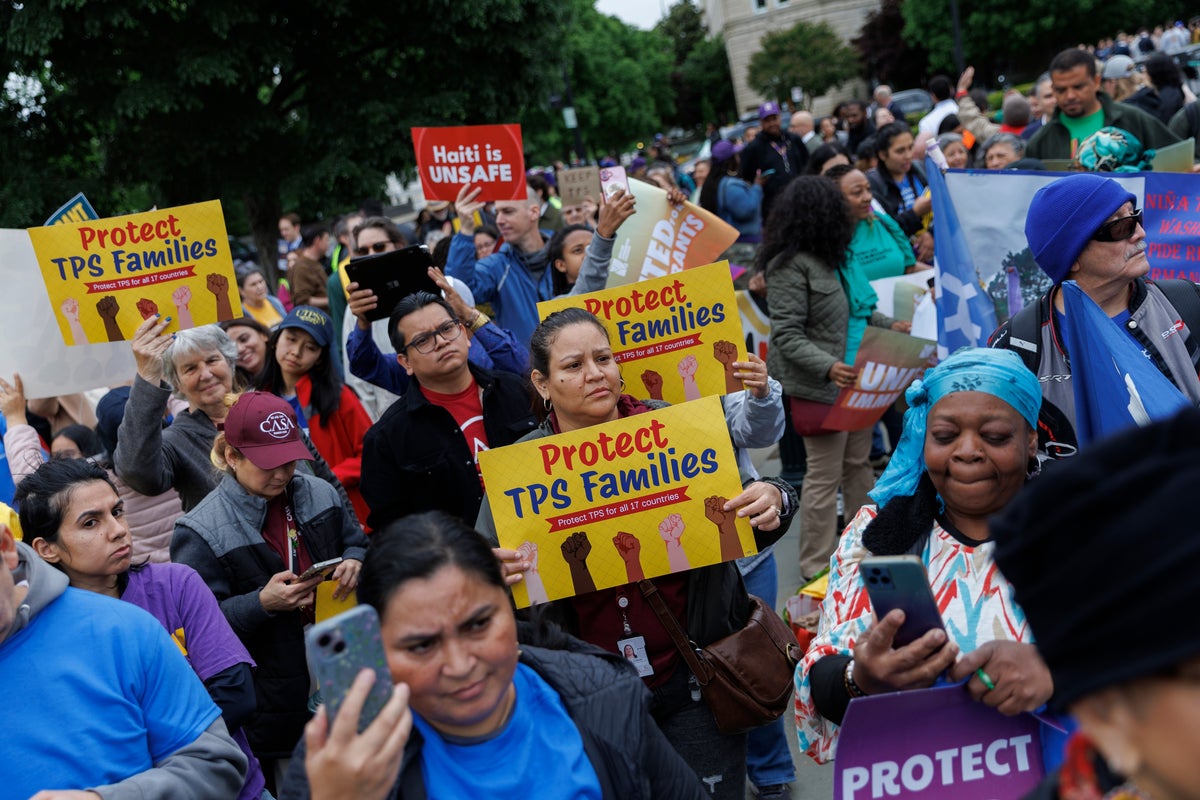
The screen doors in small-town Ohio don't slam the way they used to. They are shut with a quiet, deliberate care, as if any sudden noise might draw the wrong kind of attention.
In the late afternoon light, the kitchen of a modest frame house smells of fried plantains and strong coffee. A woman sits at the table, her fingers tracing the worn edge of a legal document. Outside, the world moves along its ordinary tracks—busses hiss to a halt at the corner, kids shout on their way home from school, and neighbors tend to their lawns. But inside, the air feels thin. The television in the corner plays muted news footage, a scrolling ticker of legal terms and political speeches that translates, in this room, directly into a cold tightening in the chest.
A few years ago, the anxiety was loud. It arrived in a burst of national headlines, late-night talk show monologues, and viral clips denouncing an entire community based on a bizarre, fabricated rumor about stolen pets. People laughed online. Late-night hosts made jokes. But for the families living inside the rumor, the punchline felt like a target painted on their front doors.
Now, the noise has faded, replaced by something far more permanent and institutional. The political theater of the past has hardened into the concrete reality of constitutional law. With the highest court in the country shifting the boundaries of executive authority, the abstract debates of Washington are arriving on suburban doorsteps, transforming vague political promises into enforceable mandates. The theater is over. The machinery is moving.
The Architecture of Uncertainty
To understand how a community braces for the unknown, you have to look past the campaign rallies and look instead at the architecture of the legal system. For decades, immigration law operated within a delicate framework of checks and balances. Decisions made by the executive branch were subject to rigorous scrutiny by federal courts, which frequently stepped in to halt sweeping, unilateral policy shifts.
That framework has cracked. Recent rulings from the Supreme Court have fundamentally recalibrated the balance of power, granting unprecedented deference to presidential authority and significantly lowering the legal barriers to mass enforcement actions.
Consider a hypothetical family—let us call them the Clervauxs—who arrived under a legally sanctioned humanitarian parole program. They paid their fees, cleared their background checks, and spent the last four years building a life. They bought a secondhand sedan. They paid taxes. Their youngest child speaks with the distinct, flat cadence of the American Midwest.
Under the old legal consensus, a sudden revocation of their status would trigger a prolonged legal battle. Federal judges would demand justifications, assess procedural fairness, and weigh the human cost against administrative goals. Today, those judicial guardrails are largely gone. The legal path has been cleared for an administration to alter the status of hundreds of thousands of people with the stroke of a pen.
This is not a matter of partisan speculation; it is a straightforward reading of the court’s changing jurisprudence. When the legal system decides that the executive branch has near-total discretion over enforcement and deportation priorities, the concept of permanent residency becomes an illusion. Security is replaced by a calendar where the pages turn too fast.
When Rhetoric Meets Real Estate
There is a distinct psychological toll that comes from realizing your existence is a political talking point. When public figures weaponize identity, the damage isn't just legislative. It changes the way people walk down the street.
In communities that found themselves at the center of the national spotlight, the initial reaction to hostile political rhetoric was often disbelief. It seemed too absurd to be dangerous. But absurdity is a poor shield against institutional power. The transition from a viral debate stage comment to a systemic policy shift happens quickly when the legal architecture allows it.
The real strain manifests in the quiet choices of daily life. Do you sign a new two-year lease on an apartment when you don't know if your status will survive the winter? Do you invest in expanding a small business, or do you keep your assets liquid, ready to be packed into a few suitcases at a moment's notice?
The local economy begins to reflect this collective hesitation. Main Street storefronts that were recently revitalized by immigrant entrepreneurs see a dip in long-term investments. Savings accounts grow while consumer spending drops. The invisible stakes of constitutional law are measured in these withheld decisions, in the quiet stagnation of towns that were just beginning to find their footing again.
The vulnerability is compounded by the fact that the legal mechanisms being debated are dense and difficult to navigate. The average person does not spend their evenings reading Supreme Court opinions or parsing the finer points of administrative law. They rely on a sense of ambient stability. When that stability vanishes, it creates a vacuum filled by rumor, anxiety, and a profound sense of isolation.
The Long Road to the Margin
The history of American immigration is often told as a linear story of progress, a steady expansion of inclusion. But those who study the law know it moves in cycles of contraction and expansion. We have been here before.
In the early decades of the twentieth century, sweeping legislative acts redefined who was allowed to belong, tearing apart established communities with a clinical efficiency that surprised contemporaries. Then, as now, the policy shifts were preceded by intense cultural rhetoric that framed specific groups as existential threats to the American way of life.
The difference today lies in the sheer efficiency of the modern state. The tools available for tracking, monitoring, and enforcing immigration policy are vastly more sophisticated than anything that existed in previous eras. Databases talk to each other across state lines. Digital footprints make anonymity impossible. When these tools are paired with a legal doctrine that minimizes judicial oversight, the potential scope of enforcement is unprecedented.
For the individuals watching the news from their living rooms, this historical context offers little comfort. It simply confirms their deepest fears: that the lives they have built are fragile, constructed on a legal foundation that can be dismantled by a shift in political winds.
The legal experts who spend their days advising these communities are running out of reassuring answers. In the past, an attorney could point to a precedent, a specific statutory protection, or a reliable judicial avenue for relief. Now, those consultations are marked by long pauses and honest admissions of uncertainty. The law itself has become a moving target.
The Final Accord
Night falls over the Ohio neighborhood, softening the sharp edges of the modest houses. The streetlights flicker on, casting long shadows across the pavement. Inside the house, the television is finally turned off, leaving only the quiet hum of the refrigerator and the distant sound of traffic.
The document on the kitchen table remains open. It represents years of work, of waiting in lines, of filling out forms, of hoping that compliance with the rules would yield a predictable result. But the rules have been rewritten by hands far removed from this kitchen, in grand marble halls where human lives are abstracted into legal doctrines and questions of jurisdictional authority.
The people living here will sleep fitfully tonight, caught between the memory of where they came from and the terrifying ambiguity of where they might be forced to go. They are not asking for pity, nor are they looking for grand political statements. They are simply waiting to see if the country they have chosen to call home will continue to choose them back, or if the legal machinery now set in motion will quietly erase the future they tried so hard to build.