The coffee in Beirut is never just coffee. It is a ritual of defiance. It is thick, bitter, and served in cups so small they seem to mock the enormity of the morning news. When the steam rises from the long-handled rakwe, it carries the scent of cardamom and the unspoken weight of everyone who isn't there to drink it.
Numbers are an anesthetic. We read them on tickers at the bottom of news screens and they wash over us like gray rain. Two thousand. It is a round number, tidy and clinical. It fits neatly into a headline. But two thousand is not a statistic when you are standing in the rubble of a southern suburb, smelling the pulverized concrete that clogs the back of your throat. Two thousand is a stadium of empty chairs. Two thousand is a city's worth of unread text messages, forever marked with a single, lonely checkmark.
The conflict between Israel and Hezbollah has always been framed in the cold language of geopolitics—strikes, interceptions, strategic depth, and deterrence. But look closer. Beneath the flash of the thermobaric explosion and the roar of the F-16 lies a more intimate geography.
The Anatomy of a Number
To understand how a nation reaches a tally of two thousand dead in the span of a few weeks, you have to look at the architecture of the ordinary. Imagine a woman named Farah. She is hypothetical, but her story is a mosaic of a dozen women currently grieving in the Bekaa Valley.
Farah lives in a house that her father built with money he earned driving taxis in West Africa. It is a sturdy house with jasmine climbing the trellis. When the "limited" operations began, the jasmine was in bloom. Then the leaflets fell. Then the sky turned into a furnace.
In the dry reports, Farah’s home is a "target." In reality, it is the place where she taught her son to tie his shoes. When the strike hits, the "collateral damage" isn't just the loss of life. It is the erasure of a family's history. The official count rises by four—Farah, her son, her sister, a neighbor. Four digits added to a ledger. But for those who remain, the number is infinite.
The Lebanese Ministry of Public Health keeps the tally, and the digits have climbed with a terrifying, mechanical rhythm. Each day, the briefing adds fifty, then eighty, then a hundred. The world watches the "iron" and the "fire," but it ignores the "dust." Dust is what remains of the middle class, the shopkeepers, and the schoolteachers who stayed because they had nowhere else to go.
The Calculus of the Sky
There is a specific sound to a modern war. It isn't just the boom. It is the constant, predatory hum of drones. It is a sound that lives in your teeth. For the people of Lebanon, the sky has ceased to be a source of weather and has become a source of judgment.
Consider the logic of the strike. The military objective is clear: decapitate leadership, destroy stockpiles, sever the lines of communication. It is a surgical metaphor. But surgery involves a sterile room and a willing patient. Here, the "patient" is a crowded apartment block in Dahieh.
When a missile strikes a residential high-rise, the physics are indifferent to who is inside. The pressure wave liquefies internal organs before the heat even arrives. The building doesn't just fall; it pancaked. Layers of life—kitchens, bedrooms, nurseries—are pressed into a single, dense slab of grief.
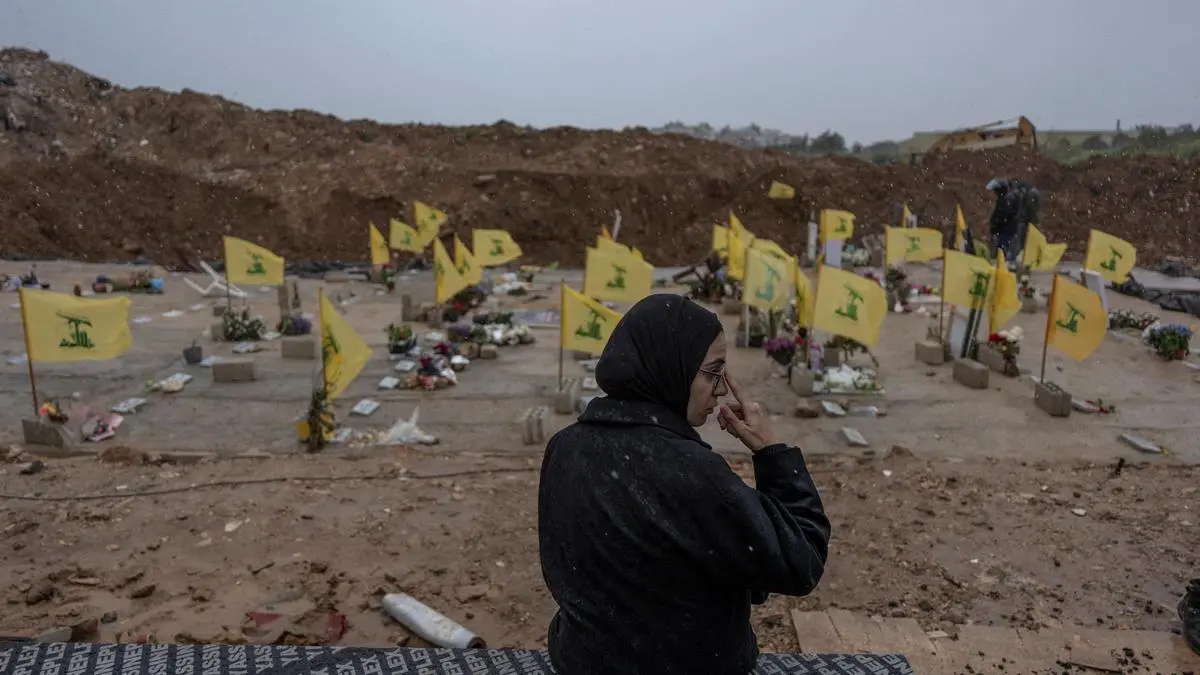
Search and rescue teams work with their hands. They find shoes. So many shoes. They find half-finished homework assignments. They find the two thousand.
The scale of this loss is staggering when compared to the country’s size. Lebanon is a small house with too many people in it. If you kill two thousand people in a nation of six million, the ripples touch every single person. Everyone is a cousin, a classmate, or a friend of the shadow.
The Invisible Stakes
We talk about the "Israel-Hezbollah war" as if it were a game of chess between two grandmasters. We focus on the rockets flying south and the bombs falling north. We analyze the "red lines" and the "rules of engagement."
But the rules of engagement have a funny way of ignoring the person standing in line for bread.
The real tragedy of the two thousand is the normalization of the impossible. We have become used to the idea that a sovereign nation can have its capital shaken daily. We have grown accustomed to the sight of smoke plumes over the Mediterranean. We see the official statements—"We are targeting terror infrastructure"—and we forget that infrastructure is often built into the side of a grocery store or beneath a family’s living room.
The cost is not just the lives lost today. It is the psychic fracture of a generation. What does a ten-year-old in Tyre become after watching his street turn into a crater? Rage is a renewable resource, and it is being harvested in the rubble of Lebanon every hour.
The Geography of Displacement
Beyond the dead, there are the living ghosts. A million people are on the move. They are sleeping in schools, in parks, and on the rocky beaches of the Corniche.
This is the hidden data point behind the two thousand. For every person killed, there are hundreds more whose lives have been effectively ended, even if their hearts are still beating. They have lost their farms in the south—olive groves that have been in their families for three hundred years, now scorched by white phosphorus or abandoned to the weeds. They have lost their businesses in the city.
They sit in the hallways of public schools, leaning against cold tiles, watching the news on their phones. They are waiting for the number to stop growing. But the number is hungry.
The international community speaks in the language of "de-escalation." It is a polite word. It sounds like turning down a thermostat. It does not capture the reality of a mother trying to identify her daughter by a piece of a dress. It does not reflect the terror of a father who has to decide whether to stay in his home and risk the bombs or flee to the street and risk the cold.
A Ledger of Lost Potential
If we were to open the ledger of the two thousand, what would we see?
We would see a young doctor who just finished her residency. We would see a grandfather who was the last person in his village who knew how to repair a specific type of water pump. We would see a teenager who dreamt of playing football in Europe.
These are not "operatives." They are the connective tissue of a society. When you tear that tissue, the body doesn't just bleed; it fails to function.
The war is often described as a necessity, a defensive measure, or a struggle for survival. Perhaps, on some strategic map in a basement in Tel Aviv or a bunker in Beirut, that makes sense. But on the ground, in the hospitals where the floors are slick with blood and the generators are screaming for fuel, the logic falls apart.
There is a limit to how much a human heart can process. We are built to mourn one person, or five, or maybe ten. We are not built to mourn two thousand. When the scale reaches this level, the brain shuts down. We stop seeing people and start seeing "the situation."
But the situation has a name. It has a face. It has a favorite song.
The Morning After
Eventually, the planes will stop. The rockets will cease their arc across the night sky. The diplomats will sign a paper and declare a new reality.
But for the families of the two thousand, there is no "after." There is only the silence where a voice used to be. There is the bedroom that will never be slept in again. There is the haunting realization that their loved one was part of a "round number" that the world used to measure the intensity of a conflict before moving on to the next one.
The coffee in Beirut is still being poured. The steam still rises. But the cups are smaller than ever, and the eyes of the people holding them are looking at something far beyond the rim. They are looking at the shadows. They are counting the empty chairs. They are remembering that before they were numbers, they were everything.
The sun sets over the Mediterranean, casting long, orange light over the scarred skyline. In the distance, another plume of smoke rises, a dark finger pointing at the sky. Another number is added. Another story ends. Another shadow joins the two thousand, waiting for a world that has forgotten how to see the human beneath the headline.