The sound of a flood isn't what you expect. It isn't a roar or a crash, at least not at first. It is a wet, persistent whisper. It is the sound of the Red River or the Saint Lawrence finding a microscopic hairline fracture in a basement foundation. It is the rhythmic thud of a neighbor’s generator struggling against a rising tide that doesn't care about property lines or provincial borders.
In Manitoba, the air still carries the sharp, metallic bite of a winter that refuses to quit. But underneath that cold, the ground is saturated. Imagine a sponge that has been soaked under a running tap for five months and then frozen solid. When the sun finally breaks through, that water has nowhere to go. It sits. It pools. Then, it begins to move.
The Geography of Anxiety
For those living in the floodplains stretching from the prairies to the Atlantic, spring isn't a season of rebirth. It’s a season of surveillance. You don't look at the budding trees; you look at the culverts. You watch the way the meltwater trickles down the driveway.
Take a person like "Marc," a hypothetical but deeply representative homeowner in Rigaud, Quebec. Marc doesn't check the weather app for the temperature. He checks the hydrographic stations. He knows that a two-degree shift in the weekend forecast can be the difference between a dry crawlspace and $40,000 in structural damage.
Canada’s geography is a beautiful trap. Our vast river systems are the veins of our economy, but in the spring, they become a liability. The "Red River Valley" sounds like a folk song until you realize the valley is essentially a shallow, flat-bottomed bowl. When the snow melts in the south—often in the United States before it melts here—the water flows north. It hits the frozen block of northern Manitoba and backs up. It’s a slow-motion car crash made of slush and silt.
The Mathematics of the Melt
The science of predicting a flood is a frantic race against variables that change by the hour. Meteorologists look at the "Snow Water Equivalent." This is a fancy way of asking: if we melted every inch of snow on the ground right now, how many millimeters of liquid would we actually have?
In some years, six feet of snow is dry and airy, posing little threat. In other years, like this one, the snowpack is dense and heavy. It is packed with the weight of late-season ice storms and freezing rain.
The Factors That Dictate Your Fate:
- The Frost Depth: How deep is the ground frozen? If the frost goes down a meter, the earth acts like concrete. The water can't soak in; it can only run off.
- The Rate of Melt: A "perfect" spring is a slow burn—above freezing during the day, below freezing at night. This keeps the runoff manageable. A sudden heatwave is a disaster.
- Spring Rainfall: This is the wildcard. If a heavy rain hits while the ground is still frozen and the rivers are already full of meltwater, the system collapses.
We often talk about "1-in-100-year floods" as if they are rare glitches. But that term is misleading. It doesn't mean it happens once every century. It means there is a 1% chance of it happening every single year. For a family that has lived in the same Quebec riverside cottage for thirty years, those odds are a terrifying roll of the dice.
The Invisible Stakes
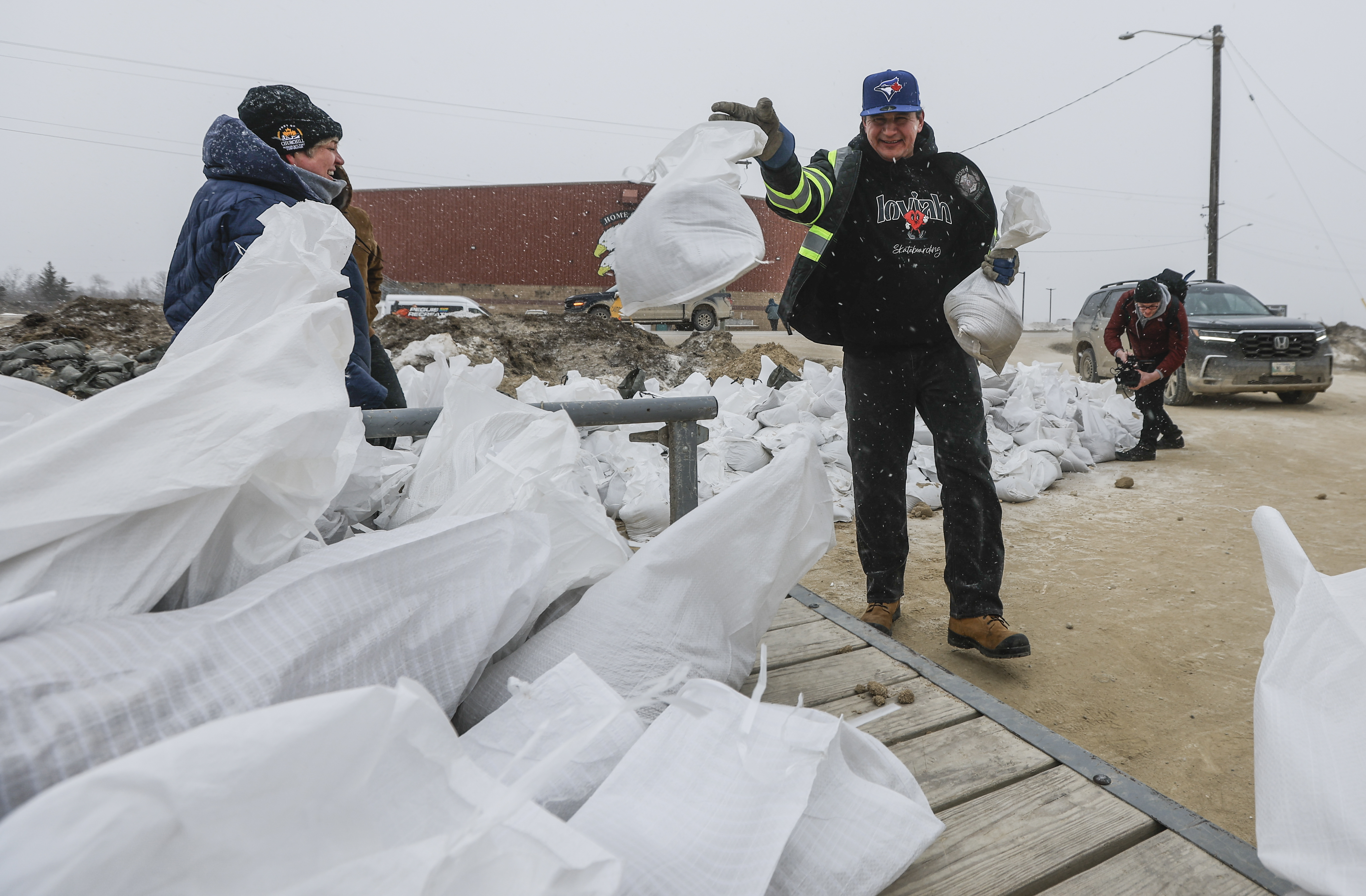
There is a specific kind of exhaustion that comes with sandbagging. It’s a dull ache in the lower back, yes, but it’s also a mental fog. You are fighting an opponent that never gets tired. You stack a wall of heavy, wet burlap sacks, and the river simply waits for a gap.
The government sends out bulletins. They talk about "mitigation strategies" and "disaster financial assistance." But those words don't capture the smell of a flooded basement. It’s a scent that stays in your nostrils for years—a mix of silt, fuel oil, and rotting drywall. It’s the smell of a life being dismantled.
In Quebec, the memories of 2017 and 2019 still haunt the communities along the Ottawa River. People who spent decades building a home were told, quite suddenly, that their land was no longer safe. The "human element" isn't just a statistic in a news report. It is the sight of a piano being hauled out to the curb, or the realization that your children’s height marks on the kitchen doorframe are now under two feet of murky water.
The Shifting Policy of the Plains
Out West, the approach is different, born of necessity and a long history of being underwater. The Red River Floodway—often called "Duff’s Ditch"—is an engineering marvel that protects Winnipeg by diverting water around the city.
But the Floodway is a zero-sum game. When you protect the city, you sometimes increase the water levels for the farmers and small towns upstream. It creates a tension between neighbors. Who gets saved? Whose back forty gets sacrificed so a suburban basement stays dry? These are the questions that aren't answered in the technical briefings. They are debated over coffee in community halls in Morris and St. Adolphe, where the stakes are measured in acres of unplantable mud.
The reality of 2026 is that the "spring thaw" is no longer a predictable event. Climate volatility has turned the seasonal cycle into a chaotic gamble. We are seeing "rain-on-snow" events that were once anomalies becoming the new standard.
The Quiet Resilience
Despite the fear, there is a strange, stoic rhythm to these weeks. In towns across the Maritimes and the Prairies, you see it. People checking on the elderly couple down the road to make sure their sump pump is humming. Volunteers showing up at the municipal garage to fill bags before the crest arrives.
There is no "winning" against a river. You only negotiate with it. You give it some space, you reinforce your borders, and you wait. You wait for the peak. You wait for the news that the ice jam three miles downstream has finally broken loose.
When the water finally recedes, the news cameras leave. The national headlines move on to the next crisis. But that’s when the real work begins. That’s when the "Marc" of the world has to peel back the sodden carpets and pray the mold hasn't reached the studs.
The weight of the river isn't just in the water itself. It’s in the uncertainty of the next year. It’s in the way a resident of the Gatineau Valley looks at a heavy grey cloud in April and feels their chest tighten. We live in a country defined by its water—our Great Lakes, our mighty rivers, our three oceans. Most of the year, that water is our pride. In the spring, we remember that we are merely guests on its banks.
The river always remembers where it used to flow. It has a long memory and a heavy footprint. As the sun sets over a swollen bank in southern Manitoba, the water continues its slow, methodical rise, inching toward the top of a makeshift wall, testing the resolve of everyone standing behind it.