A worn leather wallet sits on a dark mahogany table in a small office in São Paulo. Inside rests a fifty-dollar bill, slightly frayed at the edges. Thousands of miles away, in a bustling port terminal in Mumbai, a cargo ship burns heavy fuel, its captain waiting for clearance to move containers of steel. The freight will be priced, settled, and paid for using that exact same currency—or at least, an idea of it.
We forget that money is fundamentally an act of imagination. We treat it like weather, an unavoidable atmospheric condition that simply happens to us.
Meet Elena. (This is a hypothetical scenario designed to ground a complex economic truth in human routine). Elena manages purchasing for an agricultural cooperative in Argentina. Every morning, she watches the exchange rate between the Argentine peso and the United States dollar with a knot in her stomach. Her cooperative wants to buy tractors from Brazil. They want to sell grain to China. Simple trades. Direct transactions. Yet, before a single seed is planted or a single gear turns, Elena must first acquire dollars. She must trade her local currency for an American asset, just to turn around and pay a Brazilian manufacturer.
It is inefficient. It is expensive. It introduces currency risk that eats away at margins already razor-thin.
For decades, this detour was simply the cost of doing business. The global financial architecture was built after the smoke cleared from the Second World War, anchored in Bretton Woods, and cemented by the sheer industrial and military gravity of the United States. The greenback became the undisputed king of global trade. It was liquid. It was trusted. It was everywhere.
Cracks do not always appear as explosions. Sometimes they start as quiet whispers in smoky rooms.
The Coalition of the Ambitious
Consider what happens next. Over the past few years, the economic bloc known as BRICS—Brazil, Russia, India, China, South Africa, and now expanded to include several energy-heavyweights like Iran and the United Arab Emirates—has begun asking a subversive question. Why?
Why must a tanker carrying oil from the Persian Gulf to an Indian refinery be priced in New York? Why should two nations in the Global South rely on the currency of a nation thousands of miles away to settle accounts between neighbors?
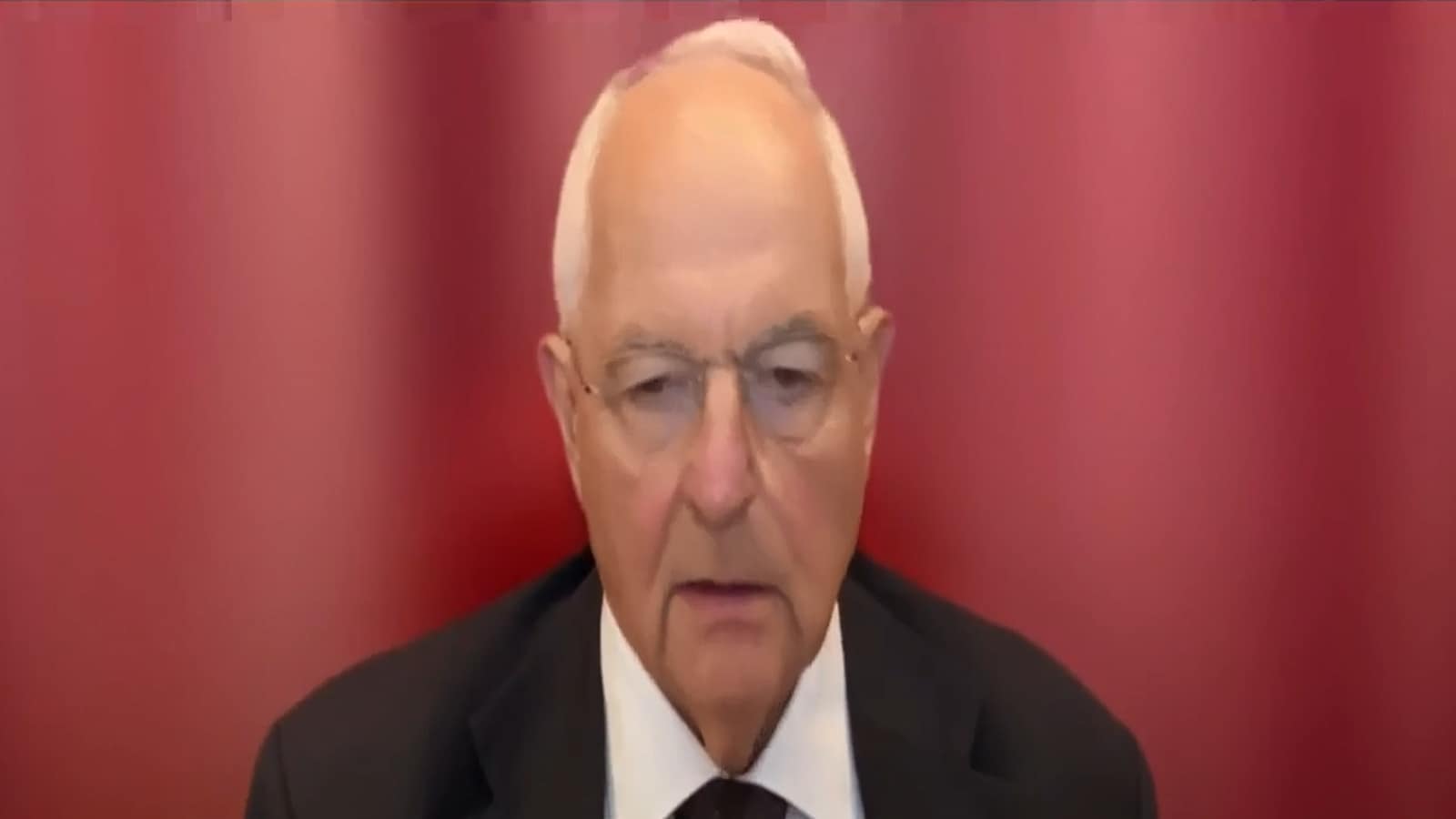
Martin Wolf, the veteran economic commentator, looked at these ambitious plans and offered a sobering dose of reality. BRICS can trade more in local currencies, he argued, but the dollar isn’t going away.
He is right. And he is missing the point.
The dominance of the dollar is not a permanent law of physics. It is a network effect. It is a habit. It is built on deep, liquid capital markets, a rule of law that investors trust, and the sheer inertia of global trade routes. When you want to buy billions of dollars worth of commodities, you need a currency that can absorb those massive flows without breaking a sweat. Most local currencies cannot do that yet. Try parking billions of rupees or rubles in a financial system with strict capital controls, and you will quickly understand why institutional investors hesitate.
So the dollar remains. But the architecture around it is shifting, grain by grain, dune by dune.
The Friction of Empire
Think about what happens when a currency becomes a weapon. This is where the human element turns sharp and cold.
When international financial plumbing—systems like SWIFT—can be turned off with the stroke of a pen in Washington or Brussels, nations without a voice in those capitals take notice. They feel vulnerable. They look at their foreign reserves, sitting in Treasury bonds, and they wonder: What happens if we fall out of favor?
This fear is the true engine behind the push for local currency settlements. It is not driven purely by economic optimization. It is driven by sovereignty.
When Brazil and China sign agreements to settle trade in reals and yuan, they are not destroying the dollar tomorrow. They are building a bypass. When oil producers start accepting non-dollar payments, they are creating a parallel lane on the highway.
Yet, building a bypass is easier than building a new city.
A truly global currency requires trust. Trust requires transparency. Transparency requires independent central banks, reliable courts, and open capital markets that political leaders cannot arbitrarily raid when convenient. Right now, many of the nations championing de-dollarization do not have these foundational pillars. China’s currency, the renminbi, remains tightly managed. Capital does not flow in and out of Beijing easily. Without that freedom, global investors will never hold massive troves of it as a safe haven.
The dollar’s throne is not guarded by force alone. It is guarded by the depth of American capital markets, where trillions of dollars move with friction-free ease.
The Long Decay of Habits
We look for dramatic turning points. We want history to happen like a movie, with a clear climax where the old king is dethroned in a single afternoon.
Real life is messier.
The dollar's decline, if we can even call it that, will not look like a crash. It will look like erosion. It will look like a slow drip of market share over decades. It will look like Elena in her São Paulo office finally being able to buy those tractors using a digital clearinghouse that bypasses New York entirely. It will look like regional trade blocs settling accounts in their own backyard currencies, while global commodity markets continue to use the greenback for heavy lifting.
Martin Wolf is correct that the dollar is not going anywhere anytime soon. The sheer gravitational pull of the American financial system is too strong. But pretending that nothing is changing is a failure of imagination.
The fifty-dollar bill in the leather wallet is still valid. It still buys things. People still trust it. But outside the window, the world is paving new roads, digging new canals, and learning how to speak to one another without waiting for permission from across the ocean.
The ledger is expanding. The monopoly is fraying. And the future belongs to a multipolar reality that no single currency can fully contain.