There is a specific kind of silence in a room where thousands of individual hairs are being glued, one by one, to the chin of a puppet no taller than a teacup.
It does not sound like progress. Progress hums with the high-pitched whine of server racks cooling themselves in climate-controlled vaults. Progress glows with the cold blue light of a monitor where an algorithm is currently chewing through terabytes of stolen pixel data, spitting out a smooth, frictionless approximation of a human smile in less than three seconds.
In Portland, Oregon, inside a sprawling warehouse that smells faintly of silicone, sawdust, and coffee grounds, progress sounds like a sculptor breathing softly through her teeth so she does not accidentally blow a tiny speck of lint onto a miniature wool sweater. Her name is Sarah, and she has spent the last four hours positioning a hand-knitted mitten that measures roughly the width of a postage stamp.
When Wildwood arrives on screens, bearing the distinct, bruised-apple aesthetic of the animation studio Laika, audiences will marvel at the fluidity of the movement. They will talk about the rendering. They will talk about the scale. What they will not see, because human eyes are poorly calibrated for miracles of stubbornness, is the bruised thumb of an animator who spent three days convincing a silicone fox to look hungry.
We live in an era that has declared war on friction. Every digital tool we are handed promises to smooth away the edges of creation. Why sculpt when you can prompt? Why spend ninety weeks building a physical forest out of painted foam, wire, and dried moss when a server farm can render a photorealistic woodland in the blink of an eye?
The answer is simple, terrifying, and profoundly human: because we can smell the difference.
Think about the last time you watched something that felt entirely slick. The lighting was perfect. The textures were mathematically exact. The motion was so smooth it bordered on liquid. And yet, ten minutes later, you felt nothing. You felt the chill of an empty room. You felt the terrifying vacuum of a process that required no human sacrifice, no sweat, no stubborn refusal to accept the easy way out.
Laika’s studio is an artifact of a dying mindset, or perhaps the seed of a stubborn resistance. Founded on the remnants of Will Vinton Studios and bankrolled by Nike co-founder Phil Knight—who seemingly looked at the endless expansion of digital convenience and decided to fund a fortress of handmade medieval absurdity instead—the studio operates on a principle that modern efficiency experts would call insane. They build things in real space.
When you watch their previous work—Coraline, ParaNorman, The Boxtrolls, Kubo and the Two Strings, Missing Link—you are looking at physical objects that exist in the physical universe. Gravity acts upon them. Dust settles in their tiny crevices. When a character's coat billows, it is because a human hand physically adjusted a tiny wire armature hidden beneath the fabric, photographed it, moved it a millimeter, photographed it again, and repeated that process twenty-four times for every single second of screen time.
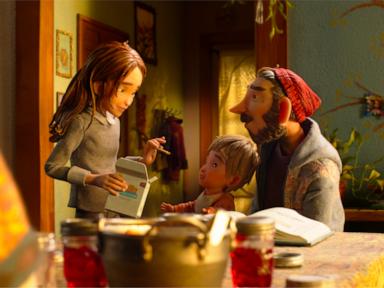
Now, look at Wildwood. Based on the dark, rich fantasy novel by Colin Meloy and Carson Ellis, the film tells the story of Prue McKeel, a girl who crosses over into a forbidden, magical wilderness outside of Portland to rescue her kidnapped baby brother. It is a story about being lost in the dark, about the terrifying weight of choices, about the things we break and the arduous labor required to put them back together.
It is fitting that a story about the tactile, messy reality of growing up is being told through a medium that demands the most absurd, punishing physical labor known to modern cinema.
Consider the mathematics of madness. A typical Laika feature takes roughly five years to make. During peak production, an animator might produce four seconds of usable footage in a week. If an animator has a bad day—if they are tired, if their hands shake, if the coffee hasn't kicked in—they might spend eight hours on a sequence that has to be entirely erased and restarted because the puppet's eyelid twitched with an unnatural frequency.
Compare this to the current panic sweeping through the entertainment industry. Every major studio is currently scrambling to integrate generative tools, promising investors that they can cut costs, shrink timelines, and bypass the messy, expensive reality of human artists. They talk about efficiency. They talk about scalability. They use words like ecosystem and optimization, as if movies were software patches deployed to satisfy quarterly earnings reports.
But art is not a software patch. Art is an argument with mortality.
When you look at a stop-motion puppet, you are looking at time made visible. Every imperfection in the clay, every fingerprint left behind in the silicone by an artist who was working a midnight shift, every slightly uneven stitch in a miniature coat—these are not flaws to be corrected. They are signatures. They are proof of life.
We are starving for proof of life. We are drowning in an ocean of synthetic perfection, where every image is so clean it has no grip on our memory. You cannot scrape your knee on a digital forest. You cannot feel the grain of a tree that was generated by a prompt.
When Laika’s artists built the world of Wildwood, they didn't just paint green onto a digital canvas. They built thousands of individual trees using real bark, lichen, and wire. They engineered mechanical rigs that allowed puppet faces to be 3D printed in color—a hybridization of old-school craft and new technology—yet every single face had to be hand-sanded, hand-painted, and manually swapped out frame by frame.
There is a moment in the production archives where you can see a craftsman carving a miniature crow's skull out of a block of resin no larger than a pea. Why? Because on a 4K screen, in the corner of a wide shot that will be on screen for precisely two seconds, a digital stand-in would have sufficed. An algorithm could have pasted a thousand crows into the background with zero variance.
Except they would look like numbers. And human beings, for all our flaws, possess an ancient, hardwired radar for the fake. We know when something has soul because we know what suffering looks like. We know that real things take time, take blood, take broken fingernails and ruined weekends.
When Prue steps into the deep woods in the film, she is entering a place governed by ancient, unforgiving rules. The forest does not care about her convenience. The creatures she meets are ancient, gnarled, and complicated.
The studio making the film operates under those exact same ancient, unforgiving rules. In an age where everything can be faked, they choose the hard way. They choose the way of dust, and sweat, and endless patience.
When the lights go down in the theater and the projector begins to roll, pay attention to the way the light catches the edge of a leaf. Notice how the fur on a crow's wing catches the gray, overcast Oregon light. That isn't math. That is human stubbornness captured on celluloid. It is a monument to the ridiculous, beautiful idea that some things are worth doing simply because they are hard, and because the world is a colder, flatter place without them.