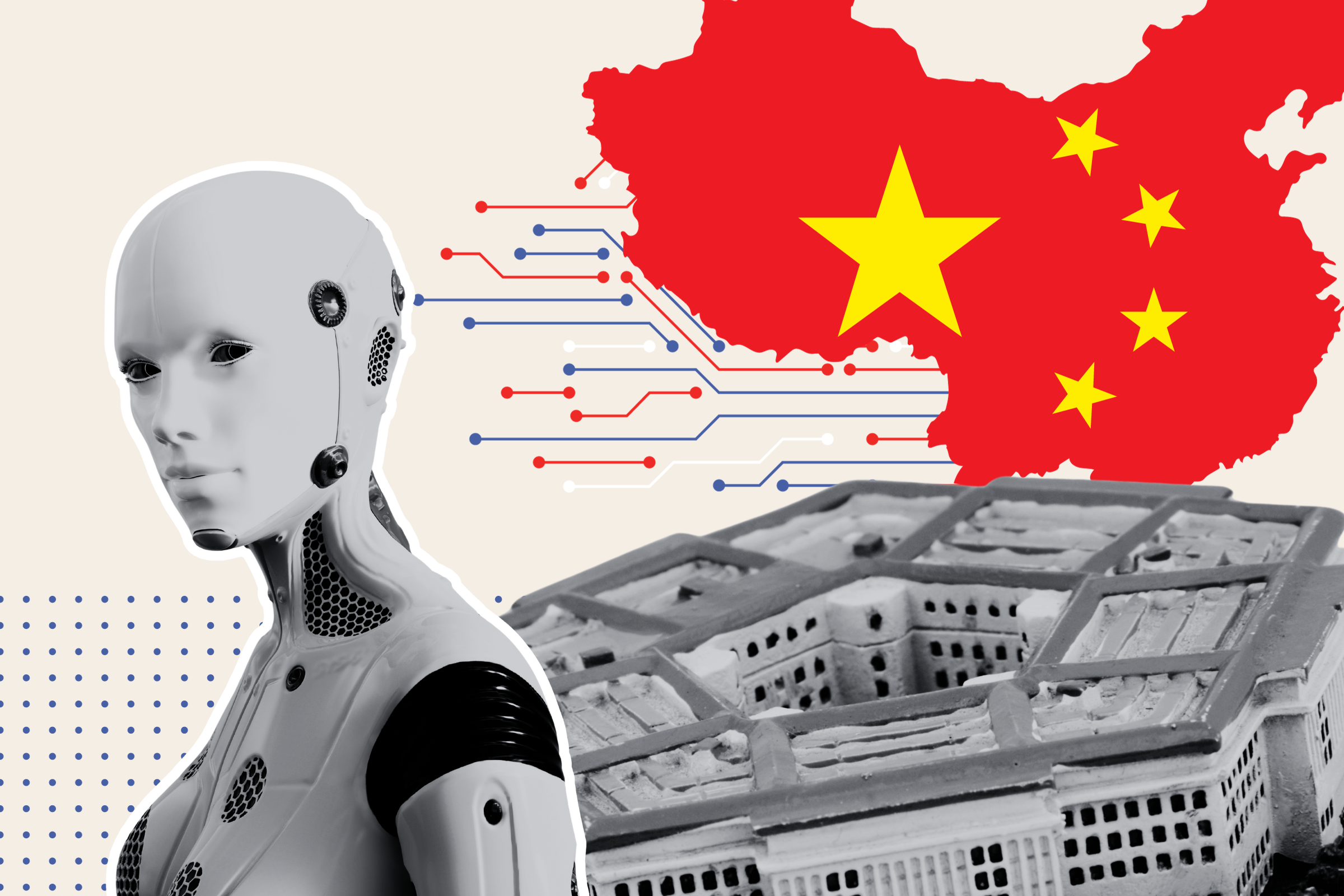
The Illusion of Containment
Washington’s latest crusade to "crack down" on Chinese firms using American AI models is a masterclass in geopolitical theater. It assumes that software is a physical commodity like oil or enriched uranium. It isn't. The moment an weights-available model hits a server in San Francisco, it is already in Beijing. Attempting to police the "exploitation" of open-weights models like Llama or Mistral is like trying to catch the wind with a butterfly net.
The administration’s vow to restrict access ignores a fundamental reality of the digital age: once the weights are public, the control is gone. Politicians are operating on a 20th-century hardware mindset in a 21st-century software world. They think they can embargo math. They can’t. Meanwhile, you can find related events here: Intel and the Brutal Reality of the 18A Gamble.
The Open Source Fallacy
The mainstream narrative suggests that by letting Chinese researchers download American-developed models, we are "handing over the crown jewels." This is a lazy, surface-level take.
Innovation in AI is no longer about who owns the base model; it’s about who has the compute to fine-tune it and the proprietary data to make it useful. By restricting Chinese access to these models, we aren't starving their industry. We are forcing them to build their own foundations. History shows that when you back a tech giant into a corner, they don't give up—they build a better, independent stack. Look at Huawei’s resilience after the 5G bans. To understand the complete picture, check out the detailed analysis by The Next Web.
If we cut off the flow of American open-source software, we destroy our own soft power. We lose the ability to set the global standards for how these models are built, governed, and aligned. We are effectively handing the "Standard Oil" of the 21st century to our rivals on a silver platter by telling them they aren't allowed to play in our sandbox.
The Compute Gap Is the Only Real Wall
Let’s stop pretending that a JSON file full of parameters is the threat. The real bottleneck isn't the model; it’s the H100s.
If the administration actually wanted to hinder Chinese AI development, they would stop worrying about "exploitation" of software and double down on the hardware blockade. But software? Software wants to be free. Trying to regulate who can run an open-weights model is an unenforceable bureaucratic nightmare that only serves to stifle American developers who now have to jump through compliance hoops to release a research paper.
I’ve seen dozens of startups paralyzed by the fear of "export controls" on code that is literally already on GitHub. It’s a compliance tax on the good guys that the bad guys simply ignore.
Why the "Leakage" Argument Is Dead Wrong
Critics argue that "leakage" of these models accelerates Chinese military AI.
Imagine a scenario where the U.S. successfully blocks every Chinese IP from accessing Hugging Face. Does the PLA stop their research? No. They use VPNs. They use shell companies in Singapore. They use the thousands of mirrors already existing worldwide.
The "leakage" has already happened. The weights for Llama 3 are on every corner of the internet. Spending political capital and taxpayer money to "crack down" on this is a performative waste of resources. It’s security theater for voters who don't understand the difference between a chip and a compiler.
The Cost of Isolationism
When we restrict "Chinese exploitation" of U.S. AI, we are actually creating a fragmented global ecosystem. This is the "splinternet" realized.
- Talent Drain: The brightest minds in AI are global. If we create a hostile environment for international collaboration, those minds will stay in Shanghai or move to Dubai.
- Standardization Failure: If the East builds on one set of protocols and the West on another, American companies lose the "first-mover" advantage in global software integration.
- The Feedback Loop: Open source thrives on a global feedback loop. When a researcher in Shenzhen finds a way to make a model 10% more efficient, that discovery eventually flows back into the global repo. Cut that tie, and we are only blinding ourselves.
The "People Also Ask" Delusion
People ask: "Can the government stop China from using AI?"
The answer is a hard no. You can’t stop a country with a billion people and a massive manufacturing base from running code.
People ask: "Should AI models be classified as weapons?"
This is the most dangerous question of all. If we classify weights as munitions, we kill the American tech edge. We turn every developer into a potential arms dealer.
The real question should be: "How do we innovate so fast that it doesn't matter if they have our models from last year?"
The Brutal Truth
The U.S. government is scared. They are scared because they realized that in the AI era, the traditional levers of power—tariffs, sanctions, and borders—are increasingly irrelevant.
By attacking "exploitation" of models, they are admitting they've lost the ability to compete on merit. They are trying to legislate their way back to 2015. It won't work. Every hour spent drafting a new restriction on software access is an hour not spent building the power plants and data centers needed to maintain a real lead.
Stop trying to guard the gates of a fence that has no walls. The only way to win the AI race is to run faster, not to try and trip the person in the lane next to you while you’re both moving at the speed of light.
Build. Deploy. Repeat. Everything else is just noise for the evening news.