Everyone in Washington is popping champagne over a press release.
Donald Trump announces a deal with Denmark to expand the American military footprint in Greenland, and the foreign policy establishment immediately falls over itself to declare a historic strategic victory. The mainstream coverage reads like a stenographer's transcript of a Pentagon briefing. More troops. Bigger runways. Countering Russia and China. Securing the High North.
It is a masterclass in lazy consensus. And it completely misses the plot.
While defense contractors celebrate another multi-billion-dollar slush fund for pouring concrete on permafrost, the United States just walked into a classic geopolitical trap. Expanding hard military infrastructure in Greenland right now is not a stroke of strategic genius. It is an expensive, Cold War-era reflex applied to a twenty-first-century economic and technological conflict.
Washington is fighting the last war with twentieth-century hardware while Beijing and Moscow quietly rewrite the rules of Arctic dominance using icebreakers, subsea cables, and supply chain monopolies.
The Mirage of the Greenlandic Fortress
To understand why this deal is fundamentally flawed, you have to look at what the United States already possesses—and what it actually lacks.
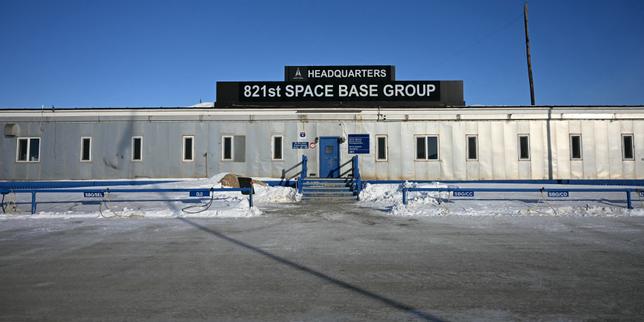
Under the 1951 Defense of Greenland Agreement, the U.S. already holds sweeping legal authority to operate military installations on the island. Pituffik Space Base (formerly Thule Air Base) sits 750 miles north of the Arctic Circle, housing the 12th Space Warning Squadron and providing critical ballistic missile early warning and space surveillance. We never needed a flashy new diplomatic victory to put radar dishes on the ice. We already had the keys to the house.
What this new expansion actually represents is mission creep disguised as deterrence.
I have spent two decades watching defense conglomerates and Beltway think tanks manufacture threats to justify massive infrastructure boondoggles. I have seen the Pentagon blow billions on forward operating bases in extreme environments where the cost of logistics alone bankrupts the strategic value of the asset. In the High North, nature is the primary adversary, and it charges a steep tax.
Building and maintaining expanded military facilities in Greenland requires overcoming extreme logistical friction:
- Permafrost degradation: Climate shifts are actively destabilizing existing Arctic foundations. Pouring new concrete and laying extended tarmac on thawing permafrost requires specialized thermosyphon cooling systems that cost exponentially more than standard construction.
- The fuel-to-tooth ratio: Every gallon of jet fuel, every spare part, and every crate of rations must be shipped in during a narrow summer sea-lift window or flown in at astronomical expense.
- Severe personnel attrition: High-latitude deployments carry brutal psychological and physical tolls, driving up healthcare, rotation, and retention costs across branches already struggling to meet recruitment targets.
By committing to a massive physical expansion, the U.S. is locking itself into a permanent, high-burn maintenance liability. Meanwhile, our adversaries are laughing all the way to the bank because they understand a simple truth that escapes Washington: you do not need a military base to control a region if you own its infrastructure and its commerce.
Asymmetry on Ice
Look at the actual balance of power in the Arctic. If you ask a room full of defense pundits who is winning the High North, they will point to F-35 deployments and bomber task forces. Ask a maritime logistics expert or a naval architect, and you will get a very different answer.
Russia operates a fleet of more than forty icebreakers, including nuclear-powered behemoths like the Arktika class that can smash through ice nearly ten feet thick year-round. China, despite having zero Arctic coastline and declaring itself a "near-Arctic state," has rapidly constructed heavy polar icebreakers like the Xue Long 2 and is actively building nuclear-powered variants.
The United States Coast Guard? We are limping along with two aging polar icebreakers—the Polar Star, commissioned in 1976, and the medium-duty Healy. Our Polar Security Cutter program is years behind schedule and billions over budget.
"Projecting power in the Arctic without heavy icebreakers is like trying to run a global navy without aircraft carriers. You can build all the runways in Greenland you want; if you cannot keep the sea lanes open, your bases are just isolated islands waiting to be starved out."
This is the asymmetry the mainstream media completely ignores. While the U.S. boasts about expanding stationary targets on Greenlandic rock, Russia is militarizing and monetizing the Northern Sea Route—a shipping lane that cuts transit times between Asia and Europe by up to forty percent compared to the Suez Canal.
China is not trying to invade Greenland with paratroopers. Beijing is funding dual-use research stations, financing deep-water ports, and locking up long-term off-take agreements for critical minerals across the globe. You cannot shoot down a predatory infrastructure loan with a surface-to-air missile. You cannot deter a rare-earth processing monopoly with an infantry battalion.
Dismantling the "Resource Rush" Fallacy
Whenever Greenland hits the front page, the coverage inevitably pivots to rare earth elements. The narrative goes like this: Greenland sits on massive deposits of neodymium, praseodymium, dysprosium, and terbium—the exact minerals needed for F-35 fighter jets, wind turbines, and electric vehicles. Therefore, expanding our military presence secures our supply chain.
This is pure magical thinking.
Having minerals in the ground means nothing if you cannot extract, refine, and process them economically. Greenland is one of the most hostile mining environments on earth. There are virtually no roads connecting its towns. There is no centralized power grid. Environmental regulations enforced by Nuuk—the self-governing Greenlandic capital—are notoriously strict, as evidenced by the 2021 ban on uranium mining that effectively killed the massive Kvanefjeld rare earth project.
Even if a Western mining consortium somehow managed to pull raw ore out of the Greenlandic bedrock at a competitive price, where would it go? To China.
China controls roughly 85 to 90 percent of global rare earth refining capacity. Putting more American soldiers in Pituffik does not build a single solvent-extraction processing plant in Texas or California. It does not solve the permitting bottlenecks that paralyze domestic mining in North America. It is a military solution to an industrial policy failure.
What Everyone Is Getting Wrong About Greenland
When news like this breaks, the public naturally asks a predictable set of questions driven by surface-level headlines. Almost every single one of those questions rests on a broken premise.
Did the U.S. just buy Greenland?
No, and pretending this is a step toward sovereignty is a dangerous delusion. Greenland is an autonomous territory within the Kingdom of Denmark, governed under the 2009 Self-Government Act. Under that law, the roughly 56,000 residents of Greenland—not Copenhagen, and certainly not Washington—hold the legal right to declare full independence via referendum. Treating Greenland like a real estate transaction between Washington and Copenhagen alienates the very people whose consent is required for long-term stability. If Washington pushes too hard, it will accelerate the Greenlandic independence movement, potentially kicking both Denmark and the U.S. out of the driver's seat entirely.
Does an expanded U.S. base stop Chinese aggression in the Arctic?
Only if you define aggression as a 1940s-style amphibious landing. China's Arctic strategy operates below the threshold of armed conflict. Beijing uses scientific diplomacy, commercial fishing fleets, satellite ground stations, and telecom infrastructure to gain leverage. In 2018, the Pentagon had to intervene behind the scenes to stop a Chinese state-owned firm from financing three airports in Greenland. That threat was neutralized with diplomatic pressure and alternative financing, not troop deployments. Expanding a military base does nothing to stop Beijing from buying influence in Nuuk through economic investment.
Is Denmark actually getting a good deal here?
Copenhagen is playing a delicate survival game. Denmark has chronically underinvested in its own Arctic defense capabilities—famously relying on the Sirius Dog Sled Patrol to monitor vast stretches of northeast Greenland—while failing to meet NATO's two percent GDP defense spending target for years. By handing Washington an expanded military footprint, Denmark is essentially outsourcing its territorial defense burden to the American taxpayer while buying political goodwill in the White House. Copenhagen gets security on the cheap; Washington gets the bill.
The Uncomfortable Truth About Hypersonics and Space
Let's be fair and acknowledge the one area where Greenland genuinely matters to modern warfare: ballistic and hypersonic missile defense, alongside low-Earth orbit (LEO) satellite tracking.
As Russia and China deploy fractional orbital bombardment systems and maneuverable hypersonic glide vehicles, polar trajectories become the primary flight paths for strategic strikes against the North American homeland. Over-the-horizon radar upgrades and upgraded space-domain awareness sensors in Greenland are non-negotiable for maintaining early warning deterrence.
If the U.S.-Denmark deal were strictly limited to hardening digital infrastructure, deploying distributed autonomous sensor networks, and upgrading satellite ground stations, it would be a smart, targeted investment.
Instead, we are seeing the bloat of traditional force posture. We are talking about expanding physical footprints, airstrips, and troop capacities that create juicy, static targets for modern precision-guided munitions. In an era of hypersonic weapons and long-range cruise missiles, concentrating high-value military assets in a few fixed Arctic bases is an invitation for decapitation strikes in the opening hours of a conflict.
The Contrarian Blueprint for Real Arctic Dominance
If Washington actually wanted to win the High North instead of winning a news cycle, it would tear up the traditional Pentagon playbook and execute an asymmetric strategy focused on economics, mobility, and local alignment.
1. Kill the Mega-Base Model; Build Distributed Sensor Meshes
Stop pouring billions into permanent, crewed mega-bases that require massive logistical tails. Shift capital toward hardened, unmanned, autonomous systems. Deploy networks of low-power radar arrays, acoustic underwater hydrophones along the GIUK (Greenland-Iceland-UK) gap, and persistent drone surveillance that can operate through the polar night without requiring a small city of support personnel.
2. Treat Icebreakers Like Aircraft Carriers
Redirect the billions earmarked for Greenlandic concrete straight into domestic shipyards. Invoke the Defense Production Act if necessary to accelerate the construction of heavy and medium polar icebreakers. Freedom of navigation means nothing if you are locked out of the water nine months of the year. Without surface presence, diplomatic claims over Arctic shipping lanes are unenforceable paper tigers.
3. Weaponize Development Finance in Nuuk
If we want to keep Beijing out of Greenland, we have to beat them at their own game. Instead of sending generals, send the U.S. International Development Finance Corporation (DFC) and the Export-Import Bank. Fund Greenland's civilian airports, undersea fiber-optic cables, hydroelectric projects, and sustainable fisheries. Tie Western capital directly to Nuuk's economic self-sufficiency so Greenlanders never feel forced to take predatory loans from Chinese state-owned enterprises.
4. Fix the Midstream Supply Chain at Home
Stop pretending Greenlandic mines will save the American defense industrial base this decade. Use federal loan guarantees and price floors to build rare earth separation and magnet manufacturing facilities inside the United States and allied nations like Australia and Canada. Once the Western midstream refining bottleneck is broken, Greenlandic ore will naturally flow westward without needing a single Marine stationed on the ice to guard it.
The Cost of Blindness
There is an obvious downside to this contrarian approach: it does not produce great photo ops.
You cannot cut a ribbon on a quiet subsea fiber-optic loan or an unglamorous solvent-extraction chemical plant in Texas and call it a sweeping geopolitical triumph. It takes years to bear fruit, requires painstaking coordination across civilian agencies, and lacks the immediate macho appeal of planting a flag and expanding a military base.
Politicians love concrete and uniforms because they look decisive on television. Strategists hate them when they distract from the real levers of power.
By celebrating an expanded military footprint in Greenland as the ultimate checkmate in the Arctic, Washington is mistaking presence for leverage. We are building an expensive fortress on the edge of the world while our adversaries quietly buy up the roads, the ports, and the supply chains that actually govern the future.
Keep your concrete. Build the icebreakers, own the refining capacity, and buy the infrastructure—or get used to watching China and Russia run the Arctic from the comfort of our shiny new base on the ice.