Shadow Over the Danube
Silence has a specific texture in the villages along the Danube Delta.
For centuries, the soundscape of places like Plauru—a tiny Romanian hamlet sitting directly across the water from Ukraine—consisted of rustling reeds, the distant hum of fishing boats, and the sharp cries of herons. Nighttime brought darkness so complete you could see the Milky Way stretched out like a dusted highway.
Then came the sky-demons.
They do not sound like jet engines or majestic machines of war. They sound like lawnmowers. Weak, sputtering, persistent lawnmowers bouncing overhead in the dark.
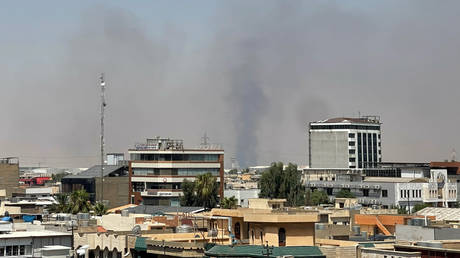
For months, villagers lived with a terrifying reality: watching light shows of anti-aircraft fire just a few hundred meters away across the river in Izmail, Ukraine. They watched Iranian-designed Shahed drones rain down on grain silos. They felt their own windows rattle. They found scorched debris in their fields when the sun came up.
Romania, a member of the most powerful military alliance in human history, was forced into a surreal posture. NATO’s eastern flank was watching a war through a pair of binoculars, praying the fire wouldn't cross the fence.
Until the night it did, and the silence broke for good.
The Geography of Anxiety
To understand why a small unmanned aircraft tumbling out of the night sky matters so deeply, you have to look at a map through the eyes of a border farmer.
Romania shares a 400-mile border with Ukraine. At the Danube, the line separating safe, treaty-protected Western Europe from a devastating war of attrition is sometimes less than half a mile of murky water.
When Russia began targeting Ukrainian grain ports to choke off exports, those border towns became the front line of an economic siege. Drones started skimming the Romanian shoreline to bypass air defenses.
Imagine sitting in your living room in a small town. You are a NATO citizen. You have been told, repeatedly, that every inch of your territory is protected by an ironclad guarantee. Yet, as you sit watching TV, the low drone of a weapon designed to murder human beings echoes above your roof.
It drops. It explodes in a field two miles away.
Is it an attack? An accident? A rogue navigational error?
The technical term used by military strategists is "spillover." But "spillover" is a cold word for a hot piece of shrapnel embedded in a pasture where cattle graze.
The Moment the Trigger Was Pulled
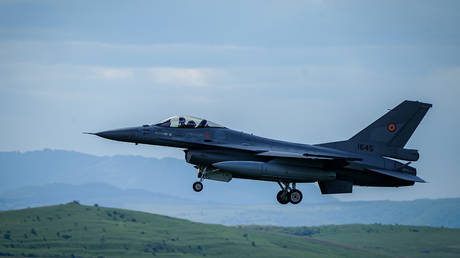
For over a year, the response was a agonizing dance of diplomacy and caution. Romanian radar would track incoming incursions. F-16 fighters or Spanish Eurofighters stationed in the country would scramble, rising into the black to escort the rogue objects out of the sky or monitor their descent. RO-Alert warning messages would flash on civilian phones at 2:00 AM, instructing villagers to take cover in makeshift shelters or cellars.
The policy was restraint. No nation wants to be the spark that turns a regional war into a continental nightmare. Intercepting a drone over populated areas carries the risk of falling debris hitting homes. Intercepting it too close to the border risks firing weapons across an international boundary.
But restraint has an expiration date, especially when passive monitoring turns into an untenable hazard.
When Romanian forces finally engaged and shot down a drone within their sovereign airspace, the air shifted. F-16s locked on. The command was given. The strike was clean.
Down it came.
It was not a declaration of war. It was a line drawn in the mud of the Danube.
What Lies Beneath the Metal
It is easy to get lost in the military nomenclature. We talk about radar cross-sections, kinetic intercepts, airspace sovereignty, and protocol adaptations.
Strip away the geopolitical jargon, and the situation boils down to a fundamental human truth: people just want to feel safe in their own beds.
Consider a hypothetical resident of Plauru—let’s call him Mihai. Mihai isn't a politician. He doesn't read high-level strategic intelligence briefings. He knows the land because his family has farmed it for three generations. For Mihai, NATO isn't a collection of treaties signed in Brussels; it is the concrete reality of whether he can sleep through the night without wondering if a rogue wing is going to tear through his roof.
When the military finally took down that drone, it sent a message to the high-level strategists in Moscow and Brussels, sure. But more importantly, it sent a message to Mihai.
It meant someone was watching. It meant the border wasn't just a line on a piece of paper—it was real.
The Edge of the Line
The downing of a single drone doesn't solve the broader crisis. The conflict across the river rages on. Grain ports will still burn, and the night air over the river will still carry the bitter smell of combustion.
Navigating this reality requires living on a permanent tightrope. Fire too readily, and you risk escalation. Fire too late, and you risk the safety of your own citizens.
The sky over the Danube is no longer quiet, and it likely won't be for a long time. The herons still fly over the reeds, but now they share the dusk with fighter jets patrolling the edge of the free world.
The line held tonight. Tomorrow, the sun will rise over the river, the fishermen will push their boats into the water, and everyone will keep listening to the sky.