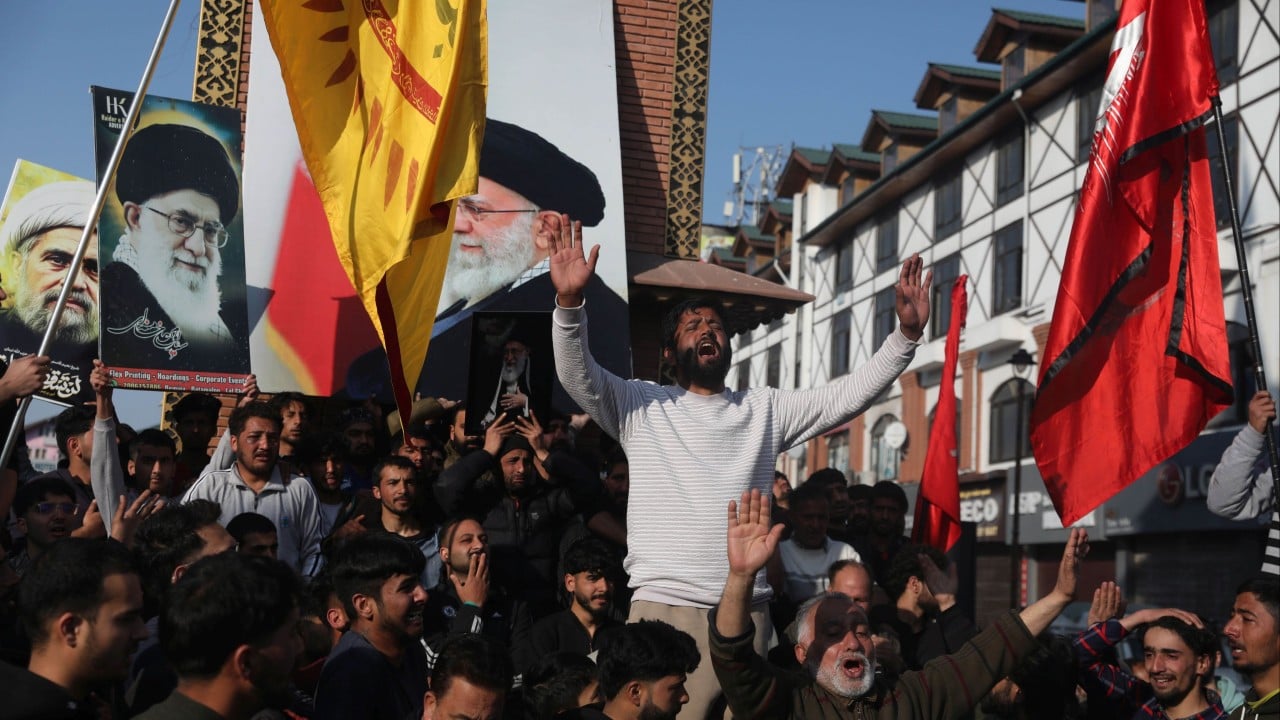
The term "war crime" has become the duct tape of international relations—sticky, cheap, and used to cover up holes in actual strategy. When the Iranian Ambassador to the UN stands before a microphone to denounce US-Israeli strikes, he isn't citing law. He is performing liturgy. We are witnessing the total devaluation of the Geneva Conventions in real-time, and the media is complicit by treating these accusations as legal developments rather than PR stunts.
Most analysts look at the rubble and ask if a crime was committed. They are asking the wrong question. The real question is why we still pretend that 20th-century legal frameworks can contain 21st-century asymmetric warfare. The "lazy consensus" suggests that if we just scream "international law" loud enough, the missiles will stop. They won't. In fact, the more we hyper-ventilate over "war crimes," the less those words actually mean.
The Asymmetry Trap
Modern conflict is no longer a game of state-on-state chess played on a clearly defined board. It is played in the "gray zone." When an Iranian-backed proxy operates out of a civilian apartment block, or when a precision strike hits a dual-use facility, the legal definitions of "proportionality" and "distinction" don't just blur—they dissolve.
Standard military ethics rely on the Principle of Proportionality. In formal terms:
$$L \le V$$
Where $L$ is the anticipated loss of civilian life and $V$ is the military advantage gained.
The problem? No two actors agree on the value of $V$. To a state facing an existential threat, $V$ is infinite. To an ambassador at the UN, $V$ is zero. This isn't a legal disagreement; it’s a fundamental breakdown of shared reality. When the Iranian mission calls a strike a "war crime," they are exploiting a loophole in the Western psyche that demands every tragedy have a specific villain and a court-ordered remedy.
Why the UN is a Theatre of the Absurd
The UN Security Council was never designed to deliver justice. It was designed to prevent World War III. By dragging every tactical strike into the General Assembly for a "war crime" debate, we are effectively asking a broken thermometer to fix the weather.
I’ve spent years watching how these diplomatic cables are drafted. They aren't written by human rights lawyers; they are written by communications specialists. They know that the phrase "war crime" triggers a specific set of SEO keywords and media cycles. It forces the opponent to spend 48 hours in a defensive crouch, explaining "collateral damage" to a public that has no stomach for the math of war.
The Myth of Universal Jurisdiction
We love to talk about the International Criminal Court (ICC) as if it’s a global sheriff. It isn’t. It’s a voluntary club. The United States isn't a member of the Rome Statute. Israel isn't a member. Iran isn't a member.
Calling for an "international investigation" into these strikes is like asking a vegan committee to regulate a steakhouse. It provides a moral high ground for the speaker, but it yields zero accountability for the victim. It is "performative justice"—a way to look busy while the world burns.
If you want to understand the current escalation, stop reading legal briefs. Start reading logistics reports. The "war crime" narrative is a tactical smokescreen used to delay the inevitable shift toward total regional realignment. It’s a stalling tactic, nothing more.
Collateral Damage is a Feature, Not a Bug
The harsh reality that no one at the UN wants to admit is that in modern urban warfare, "war crimes" (by the strict, 1949 definition) are mathematically unavoidable. If you fight in a city, civilians die. If you hide assets among civilians, you are inviting their death.
The Iranian Ambassador knows this. The Israeli commanders know this. The US State Department knows this.
The accusations are a form of "Lawfare"—the use of law as a weapon of war. By framing every strike as a criminal act, Iran and its allies seek to paralyze the decision-making process of Western democracies. They know that a democracy has to answer to an electorate that cares about "war crimes," whereas an autocracy only has to answer to its internal security apparatus.
Stop Asking if it’s Legal
People often ask: "Can the UN actually do anything about these attacks?"
The answer is a brutal, honest no. The UN can pass resolutions. It can issue "strongly worded" condemnations. It can even refer cases to the ICC, which will then issue warrants that will be ignored by anyone with a functional air force.
We are stuck in a cycle of "outrage-as-policy."
- A strike occurs.
- The "War Crime" label is applied by the victim/proxy.
- Media outlets run the headline without checking the legal threshold.
- The UN holds a session where everyone says the same thing they said in 1974.
- Nothing changes on the ground.
The Cost of Crying Wolf
The danger of this rhetorical inflation is that when a genuine, massive-scale atrocity occurs—the kind that actually warrants the term—the world has already tuned out. We have reached a state of "outrage fatigue." If everything is a war crime, then nothing is.
If you are a policymaker or a citizen trying to make sense of the Middle East, stop looking for the "criminal." Look for the "incentive."
- Iran’s incentive is to use the UN to isolate Israel and the US diplomatically.
- Israel’s incentive is to degrade the proxy network before it becomes an existential threat.
- The US’s incentive is to maintain a balance of power without getting sucked into another decade-long desert quagmire.
None of these incentives are governed by the Geneva Conventions. They are governed by the brutal logic of power.
The Counter-Intuitive Truth
The most "pro-human" thing we could do is stop using the phrase "war crime" for every tactical exchange. It’s a bold claim, but hear me out. If we stripped away the legal theatre, we would be forced to deal with the political and strategic reality of the conflict. We would stop waiting for a judge to save us and start looking for a diplomatic exit ramp that doesn't rely on the fantasy of international prosecution.
The Iranian Ambassador isn't looking for justice; he’s looking for leverage. He wants you to feel a specific type of moral revulsion that leads to political paralysis. Don’t fall for it.
The status quo is a graveyard of "unpunished" crimes because the law was never the point. The point is survival. In the Middle East, "illegal" is just another word for "losing."
Accept the reality of the theater, or get off the stage.