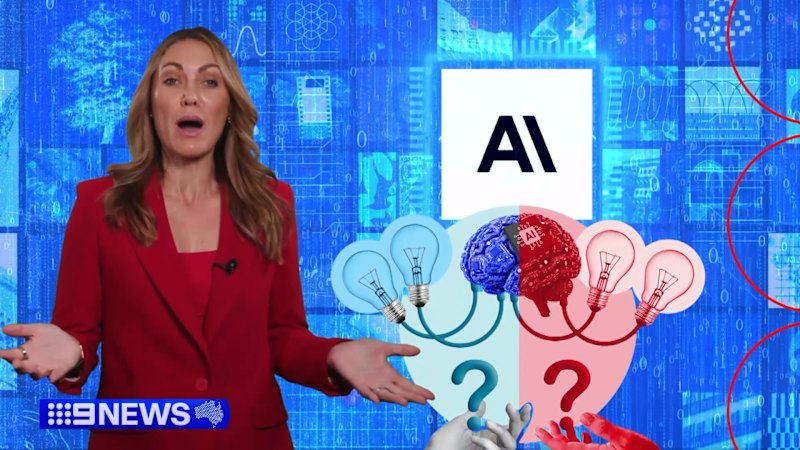
Everyone on Wall Street knew this day was coming. You can't burn through billions of dollars in compute costs forever without eventually knocking on the doors of the public markets, and Anthropic has finally signaled its readiness to step onto the trading floor.
The maker of the Claude AI models is preparing for a stock market debut. That single move changes the entire math of the artificial intelligence race. Until now, retail investors who wanted direct exposure to frontier foundation models had almost nowhere to turn except indirect plays like Microsoft, Alphabet, or Nvidia. Now, one of the true pure-play AI labs is getting ready to open its books to the Securities and Exchange Commission and the general public. For an alternative look, see: this related article.
Let's be honest about why this is happening now. Training massive models isn't cheap. Even with billions in backing from Amazon and Google, private capital eventually hits a ceiling when your server bills look like the GDP of a small nation. Going public gives Anthropic a liquid currency to pay employees, acquire smaller startups, and raise massive amounts of capital without begging sovereign wealth funds every six months.
Why an Anthropic IPO Changes Everything for Retail Investors
For the past three years, the biggest gains in artificial intelligence were locked behind velvet ropes. Venture capital firms, institutional funds, and massive tech conglomerates swallowed up all the equity in OpenAI, Anthropic, and xAI. Regular investors were stuck buying chipmakers or cloud providers and hoping the downstream revenue would trickle down to their portfolios. Similar analysis on this trend has been provided by Forbes.
An Anthropic initial public offering breaks that monopoly. For the first time, everyday traders will get a direct look at the unit economics of a pure-play generative AI company. We aren't just talking about glossy press releases or benchmark scores anymore. When Anthropic files its S-1 registration statement with the SEC, we're going to see the raw numbers. How much does it actually cost to run Claude? What's the real gross margin on enterprise API calls? How fast are customers churning when a cheaper open-source model drops?
I've watched plenty of high-flying tech startups hit the public markets over the last decade, and the transition from private darling to public company is always brutal. In the private markets, CEO Dario Amodei can pitch a long-term vision about AI safety and multi-year research horizons. On the Nasdaq or the New York Stock Exchange, institutional investors care about one thing every ninety days. Quarterly revenue growth.
The Elephant in the Room Is Governance
If you're thinking about buying shares on day one, you need to understand how Anthropic is built. It isn't a normal Delaware C-corporation. Anthropic operates as a Public Benefit Corporation, and it has a bizarre governance structure designed to prevent the exact kind of boardroom chaos that nearly destroyed OpenAI in late 2023.
At the heart of this setup is the Long-Term Benefit Trust. This is an independent body of five trustees who hold the power to elect and remove members of Anthropic's board of directors. None of these trustees have a financial stake in the company. Their entire job is to ensure Anthropic sticks to its mission of developing safe, steerable AI, even if doing so hurts short-term shareholder profits.
Think about what that means for you as a potential stockholder. Usually, when you buy common stock, the board has a strict fiduciary duty to maximize your financial return. At Anthropic, the governance structure explicitly balances profit against public benefit and safety.
Does that make it a bad investment? Not necessarily. Enterprise clients—especially heavily regulated banks, healthcare systems, and law firms—actually love Anthropic's obsession with safety and predictability. They don't want a chatbot that hallucinates or leaks proprietary data. That reputation has helped Claude win massive corporate contracts. Still, if Wall Street demands aggressive, risky product launches to juice the stock price, the Long-Term Benefit Trust can legally step in and say no. You have to decide if you're comfortable owning a stock where the board doesn't strictly answer to shareholders.
Breaking Down the Amazon and Google Factor
You can't analyze an Anthropic IPO without looking at its two biggest sugar daddies. Both Amazon and Google have poured billions of dollars into the San Francisco-based startup. Amazon alone committed $4 billion across multiple tranches, making Anthropic its primary partner for foundation models on Amazon Web Services. Google followed closely behind with its own multi-billion-dollar investments and cloud infrastructure deals.
Here is the catch that most casual observers miss. A huge chunk of that investment money didn't actually stay in Anthropic's bank account as free cash. It went right back to Amazon and Google to pay for cloud compute and custom AI chips like AWS Trainium and Google TPUs.
When Anthropic goes public, investors will have to untangle these circular financing deals. If Anthropic's cloud expenses are heavily subsidized by its strategic investors, what happens to its margins when those credits run out? We also have to watch how much equity Amazon and Google hold, and whether their shares carry special voting rights or lock-up agreements. Neither tech giant has a controlling stake—both structured their deals specifically to avoid triggering antitrust alarms from the Federal Trade Commission—but their influence over Anthropic's infrastructure is massive. If AWS raises compute prices, Anthropic feels the pain immediately.
How Anthropic Actually Makes Money
Unlike OpenAI, which built a massive consumer brand around ChatGPT, Anthropic has quietly focused on the enterprise market. While millions of people use Claude on the web or through mobile apps, the real engine of the business is its API and its integrations with cloud platforms like AWS Bedrock and Google Cloud Vertex AI.
Developers love Claude, particularly for coding and complex reasoning tasks. When the Claude 3 and Claude 3.5 model families rolled out, they repeatedly beat rival models on software engineering benchmarks. That translated directly into developer adoption. Startups and Fortune 500 companies alike began routing their internal workflows, customer support systems, and coding assistants through Anthropic's API.
Let's look at why enterprise revenue is so valuable for an IPO candidate. Consumer subscriptions are notoriously fickle. A user might pay $20 a month for Claude Pro today and cancel tomorrow because a shiny new app caught their eye. Enterprise contracts are sticky. Once a major financial institution builds its internal compliance tools on top of Claude's API, ripping it out is a nightmare. That recurring, high-volume API usage gives Anthropic the kind of predictable revenue stream that Wall Street analysts drool over.
Yet there is a massive margin problem hanging over the entire industry. Every time you type a prompt into Claude, servers spin up, burn electricity, and chew through expensive GPU cycles. Inference costs—the expense of actually running the model after it's been trained—have dropped significantly over the last year, thanks to better software optimization and cheaper hardware. Even so, Anthropic is locked in a brutal price war. Every time OpenAI, Google, or Meta slashes the price per million tokens, Anthropic has to match it or risk losing market share.
The Competitive Trap
Going public puts a giant target on your back. Right now, Anthropic only has to outrun a handful of competitors, and most of them are playing by similar rules. Once it becomes a publicly traded company, it has to fight a two-front war.
On one side, you have OpenAI, which commands massive consumer mindshare and has Microsoft's entire enterprise sales force pushing its products. On the other side, you have open-weight models like Meta's Llama series, Mistral, and DeepSeek. These models are either free to download or drastically cheaper to run than proprietary frontier models.
I've talked to dozens of CTOs over the past year, and their strategy is remarkably consistent. They use top-tier models like Claude for complex, high-stakes reasoning tasks, and they route all their simple, high-volume tasks to cheap open-source models to save money. For Anthropic to justify a massive public market valuation, it has to prove that its flagship models will always stay one step ahead of free alternatives. If the performance gap between proprietary AI and open-source AI narrows to zero, Anthropic's pricing power evaporates overnight.
What to Watch in the Upcoming S-1 Filing
Before you put a single dollar into an Anthropic IPO, you need to read the S-1 filing like a forensic accountant. Don't listen to the financial news pundits who will inevitably hype this as the next Nvidia. Look at the actual metrics that determine whether a software business can survive long-term.
First, check the net dollar retention rate. This tells you whether existing customers are spending more money with Anthropic over time. If a company spends $100,000 on Claude API calls in year one and $150,000 in year two, that's a great sign. It means they are finding new use cases and expanding their deployment. If that number is flat or shrinking, it means customers are testing the tech and walking away.
Second, look closely at gross margins excluding cloud credits. You want to see the raw cost of delivering the AI service compared to the revenue it brings in. Traditional software companies boast gross margins of 75% to 85% because copying code costs basically nothing. AI companies have much lower margins because compute costs scale directly with usage. If Anthropic's gross margins are sitting down around 40% or 50%, Wall Street shouldn't value it like a traditional SaaS company. It should value it more like a utility or an infrastructure provider.
Third, examine the capital expenditure commitments. How many billions of dollars has Anthropic already promised to spend on future compute clusters over the next five years? Training the next generation of models requires data centers that consume gigawatts of power. If Anthropic is locked into rigid multi-year spending contracts, a sudden slowdown in enterprise AI adoption could trigger a severe cash crunch.
How to Approach the IPO Without Getting Burned
Tech IPOs are notorious for punishing retail investors who buy at the opening bell. Institutional banks allocate shares to their biggest clients at the official IPO price the night before trading begins. By the time the stock actually opens for regular buyers on a brokerage app, the price has often spiked 40% or 50%, leaving retail traders holding the bag when early insiders start cashing out.
If you want exposure to Anthropic once it hits the market, patience is your best weapon. Wait for the initial media frenzy to die down. Almost every major tech IPO experiences a lock-up expiration roughly 180 days after its debut. That's the date when early employees and venture capital backers are legally allowed to sell their shares on the open market for the first time. That sudden flood of supply almost always pushes the stock price down, giving patient investors a much cleaner entry point.
Track the quarterly earnings reports for the first two cycles after the listing. Watch how management handles Wall Street pressure, whether enterprise customer growth accelerates, and how the Long-Term Benefit Trust interacts with public shareholders. Treat Anthropic like what it actually is—a high-risk, capital-intensive bet on the future of enterprise software—and size your position accordingly.