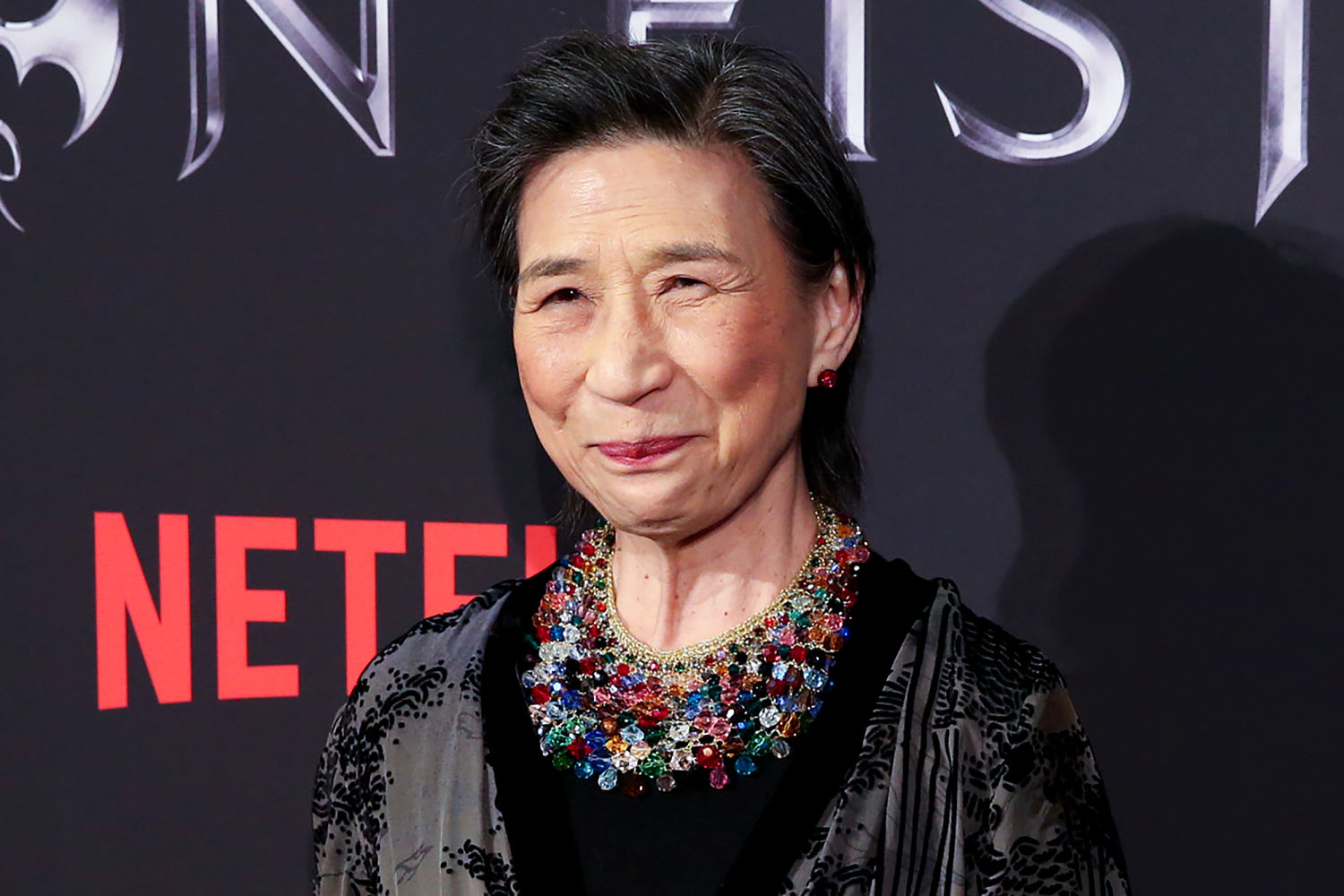
The passing of veteran actress Wai Ching Ho at the age of 82 marks the end of an era for both prestige television and the New York stage. Best known to global audiences as the calculating, cane-wielding crime lord Madame Gao across Marvel’s street-level universe, Ho died following a stroke. While traditional obituaries paint a standard portrait of a late-career breakthrough, a closer look at her five-decade career reveals a far more complex story. She did not merely find fame in her seventies; she systematically dismantled the industry's deeply ingrained stereotypes by infusing them with an undeniable, terrifying gravity.
For decades, Hollywood treated older Asian actresses as background decoration or one-dimensional caricatures. Ho refused to accept those limitations. From her early days at the American Academy of Dramatic Arts to her final towering stage performances in late 2025, she quietly built a formidable body of work that challenged how the West perceives immigrant artists. Her departure leaves a massive void in an industry that is only just beginning to realize the true depth of the talent it spent decades overlooking.
The Quiet Subversion of the Screen Villain
When Marvel Television cast Ho as Madame Gao in the 2015 debut season of Daredevil, the production was playing with fire. The character risked falling squarely into the archaic, colonial trope of the "Dragon Lady"—an exoticized, untrustworthy oriental criminal mastermind. In lesser hands, the role would have been a forgettable relic.
Ho transformed it into a masterclass in minimalist menace. She understood that true power does not need to shout. Instead of relying on theatrical histrionics, she utilized slight shifts in posture, measured breathing, and a chillingly placid gaze that could silence a room of heavily armed gangsters. Her costars frequently noted that she commanded the set without ever raising her voice.
Her characterization altered the power dynamics of the entire franchise. In Daredevil, Iron Fist, and The Defenders, Gao was not a sidekick to male warlords. She was the architect. She managed heroin networks, outmaneuvered corporate executives, and struck fear into superhuman protagonists using nothing more than a walking stick and absolute psychological dominance.
This was not an accidental success. It was the result of a highly disciplined methodology developed over decades in the theater. Ho knew how to command space. By strip-mining her performance of all unnecessary movement, she forced the camera—and the audience—to focus entirely on her intent. She took a comic book stereotype and injected it with the psychological weight of a classic Shakespearean antagonist.
A Career Forged in the Crucial Spaces of New York Theater
To understand Ho's sudden omnipresence in modern pop culture, one must look backward to the stage communities that sustained her when the screen ignored her. Long before Marvel came calling, Ho was a foundational pillar of the National Asian American Theatre Company (NAATCO) and the Ma-Yi Theater Company. These venues served as vital incubators during eras when major American networks rarely looked beyond white ensembles.
She was an actress of immense range. She graduated from the University of Hong Kong before moving to New York to study at the American Academy of Dramatic Arts, immersing herself in classical technique. Despite her elite training, the Hollywood of the 1980s and 1990s offered her little more than fleeting guest spots on procedurals like Law & Order.
Rather than becoming embittered by these industry limitations, Ho directed her creative energy into the theater, where she took on complex, demanding roles that proved her versatility. She inhabited the works of contemporary playwrights and classical authors alike. In Celine Song’s acclaimed off-Broadway play Endlings, she captured the grueling reality and deep emotional inner life of a Korean haenyeo—an aging sea diver wrestling with time, family, and survival.
Her final major stage appearance occurred in late 2025, starring in Primary Stages' production of Laowang. The play was an audacious, modern adaptation of King Lear set in a contemporary Chinatown. Playing the central, Lear-like figure of A-Poh, Ho delivered a performance that critics hailed as both magnetic and fiercely imperious. She possessed the rare ability to project profound human fragility while simultaneously radiating a stubborn, unyielding authority. It was a fitting summation of her theatrical philosophy.
The Hidden Labor of the Ultimate Industry Mentor
Behind the scenes, Ho occupied a role that was arguably far more significant than any character she portrayed on screen. She was a fierce, protective mentor to generations of Asian American actors who entered an industry severely lacking in non-white role models.
Tributes from her colleagues illuminate a woman who was the polar opposite of her icy on-screen personas. Her Daredevil costar Peter Shinkoda publicly expressed his profound grief, noting that he hung on her every word and learned constantly from her presence both on and off the set. Theater artist Mahira Kakkar, who shared a dressing room with Ho during a production of Henry VI, described her as an essential pillar for actors navigating an industry that often felt isolating or hostile.
Ho performed this emotional labor without pretense or expectation of reward. She routinely brought warmth, humor, and practical wisdom to young performers, famously advising her castmates to eat raw ginger daily to stave off illness during exhausting production schedules. Her refusal to speak ill of others, combined with her uncompromising work ethic, established her as an ethical compass within the New York creative community.
Her career serves as a stark reminder of the immense talent that frequently goes underutilized in mainstream entertainment. It should not require a massive comic book franchise for a brilliant octogenarian actress to finally receive the institutional recognition she earned fifty years prior. Ho’s late-stage career resurgence—which also included voicing Grandma Wu in Pixar’s Turning Red and appearing in Awkwafina Is Nora from Queens—was a victory, but it was also an indictment of an industry that takes far too long to see the brilliance right in front of its eyes.
The industry will miss her presence, but her blueprint remains for every character actor fighting to turn a stereotype into art.