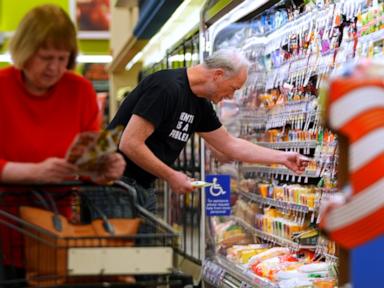
Political pundits love a simple metric. For years, the prevailing media consensus—reflected in headlines like "Voter frustration about the economy went beyond gas prices, Voter Poll shows"—has treated economic anxiety as a grocery list of line-item complaints. First, commentators claimed voters were upset about gas. Then, when fuel costs dipped and voter dissatisfaction remained high, analysts pivoted to groceries, rent, and interest rates.
That framing misses the structural mechanics of how people actually experience the economy. The lazy consensus treats voter frustration as a temporary reaction to specific price spikes, assuming that once the rate of inflation cools, public sentiment will automatically rebound. Economists, behavioral researchers, and political analysts point to a much deeper, multi-faceted reality: public dissatisfaction is driven by the collision of permanent price-level resets, psychological loss aversion, uneven wealth distribution, and the erosion of upward mobility.
The Inflation Rate vs. Price Level Trap
The most common misunderstanding in economic reporting is the conflation of disinflation with deflation.
When government agencies like the Bureau of Labor Statistics (BLS) report that inflation has cooled from 9% to 3%, policymakers and financial commentators often expect voters to celebrate. To an economist, a lower Consumer Price Index (CPI) growth rate signals stabilization. To a household managing a monthly budget, however, a 3% inflation rate still means prices are rising—just more slowly than before—on top of a baseline that jumped permanently over the previous few years.
Economists at institutions like the Federal Reserve and the Brookings Institution have noted that consumers do not evaluate their financial well-being based on year-over-year percentage changes. They evaluate it against historical reference prices. If a basket of staples cost $100 four years ago and costs $125 today, slowing the rate of future increases does not restore the lost purchasing power. Unless wages grow fast enough to outpace cumulative inflation—and crucially, unless workers perceive that wage growth as earned rather than merely defensive—the sense of falling behind persists.
The Behavioral Economics of Asymmetric Pain
Why do rising wages fail to offset the frustration of rising prices in public opinion polls? Behavioral economics provides a clear answer through prospect theory, developed by psychologists Daniel Kahneman and Amos Tversky.
Kahneman and Tversky demonstrated that humans experience loss aversion: the psychological pain of a loss is roughly twice as powerful as the pleasure of an equivalent gain. In the modern economy, this asymmetry plays out every month in household finances:
- Wage gains feel earned: When an employee receives a 5% raise, they typically attribute it to their own hard work, productivity, or tenure. They view it as a reward they deserve.
- Price hikes feel stolen: When the cost of car insurance, utilities, or childcare jumps by 15%, consumers view it as an external penalty eroding the raise they worked to earn.
Even when real median household income rises on paper, the daily friction of paying higher prices for non-negotiable expenses creates a persistent sense of economic vulnerability. Furthermore, researchers at the University of Michigan, who conduct the long-running Surveys of Consumers, have documented how high borrowing costs—particularly mortgage rates and auto loan APRs—act as a psychological barrier. A household might have a stable job and growing savings, yet feel trapped because moving to a new home or replacing an aging vehicle carries a dramatically higher monthly financing cost than it did a few years prior.
The K-Shaped Reality Behind Aggregate Data
Another flaw in standard polling analysis is treating "the economy" as a single, uniform experience. Macroeconomic indicators like Gross Domestic Product (GDP) growth, the unemployment rate, and S&P 500 performance measure aggregate output and asset values, not median household security.
Economists frequently describe the post-pandemic recovery as K-shaped, meaning different segments of the population experienced starkly divergent trajectories:
- Asset Holders: Households that owned homes with locked-in, low-interest mortgages and held equities saw their net worth expand significantly as property values and stock markets climbed. For this group, higher interest rates even generated higher yields on cash reserves.
- Non-Asset Holders and Renters: Households without equity exposure or fixed-rate real estate faced rising rents, higher credit card interest rates, and elevated costs for essentials that consume a larger share of their disposable income.
When political commentators look at strong GDP numbers and low unemployment and wonder why voters remain pessimistic, they are looking at averages that mask this divergence. According to Federal Reserve Distributional Financial Accounts, the top 10% of households hold the vast majority of corporate equities and mutual fund shares. Consequently, a booming stock market does little to alleviate the day-to-day cash-flow pressures felt by working-class and middle-income renters.
Why Voters Question the Measuring Stick
Polling organizations like Pew Research Center and Gallup have consistently found a wide gap between how Americans rate their own personal finances and how they rate the national economy. Often, a majority of respondents report that their personal financial situation is "good" or "excellent," while simultaneously rating national economic conditions as "poor."
Critics of the electorate sometimes dismiss this gap as partisan bias or media negativity. While media consumption and political affiliation undeniably influence economic perception—a phenomenon political scientists call partisan perceptual screen, where voters view economic data more favorably when their preferred party holds the White House—the gap also reflects genuine structural concerns:
- Loss of Predictability: Households value financial predictability almost as much as absolute wealth. Rapid shifts in housing costs, insurance premiums, and healthcare expenses disrupt long-term planning for retirement, education, and family formation.
- The Affordability of Milestones: Traditional markers of middle-class stability—buying a first home, affording childcare, paying for higher education—have grown faster than general inflation over the past two decades. A young worker can have a solid entry-level salary and low unemployment risk while still viewing the broader economy as broken because the threshold for asset ownership feels out of reach.
- Skepticism of Official Metrics: Many voters feel that headline economic statistics exclude or understate the costs that matter most to them. While the Bureau of Labor Statistics regularly updates its methodology to account for substitution effects and quality adjustments in the CPI, ordinary consumers experience inflation through unadjusted, out-of-pocket cash outflows.
What Analysts and Policymakers Get Wrong About Messaging
When leaders respond to voter frustration by reciting macroeconomic statistics—pointing to job creation numbers, manufacturing investments, or cooling inflation rates—they often inadvertently widen the trust gap. Telling a voter who is struggling with a 20% increase in auto insurance and higher grocery bills that "the economy is strong" does not persuade them; it signals that decision-makers are disconnected from their lived reality.
Conversely, simply blaming corporate greed or government spending in isolation oversimplifies a complex web of global supply chains, monetary policy, demographic shifts, and fiscal stimulus. A more accurate assessment requires acknowledging the limits of traditional metrics:
- GDP measures activity, not well-being. Spending more money on healthcare, emergency repairs, or higher interest payments contributes to GDP, even though it leaves households worse off.
- Low unemployment is a baseline, not a ceiling. Having a job prevents acute crisis, but job security alone does not guarantee upward mobility if real purchasing power feels stagnant.
- Sentiment is forward-looking. Voters do not just cast ballots based on last quarter's balance sheet; they vote based on whether they believe the next five years will offer greater stability and opportunity than the last five.
The Limits of Contrarian Economic Narratives
Challenging the simplistic "gas prices" narrative does not mean ignoring the real power of tangible prices, nor does it mean claiming that macroeconomic data is fake. The official statistics compiled by the BLS, the Bureau of Economic Analysis, and the Federal Reserve remain the most rigorous tools available for tracking national output and labor markets.
Moreover, economic sentiment is never purely rational or purely material. Extensive research in political science shows that partisan identity heavily colors economic assessments; when control of the presidency changes, voter assessments of the exact same economic indicators frequently flip overnight among partisans on both sides. Ignoring the role of political polarization and media ecosystems would be just as incomplete as reducing voter anger to the price of a gallon of fuel.
Moving Beyond Surface-Level Polling
Understanding voter frustration requires looking past single-issue soundbites and headline CPI prints. Gas prices were never the whole story, and neither were groceries in isolation. Those visible price tags simply served as daily reminders of a broader shift in the cost of living, the price of credit, and the widening divide between owning assets and relying solely on a paycheck.
Until economic reporting and political analysis stop treating voter sentiment as a math problem that can be solved with a single chart, they will continue to be surprised by an electorate that measures prosperity not by national averages, but by whether a hard week's work still buys a secure future.