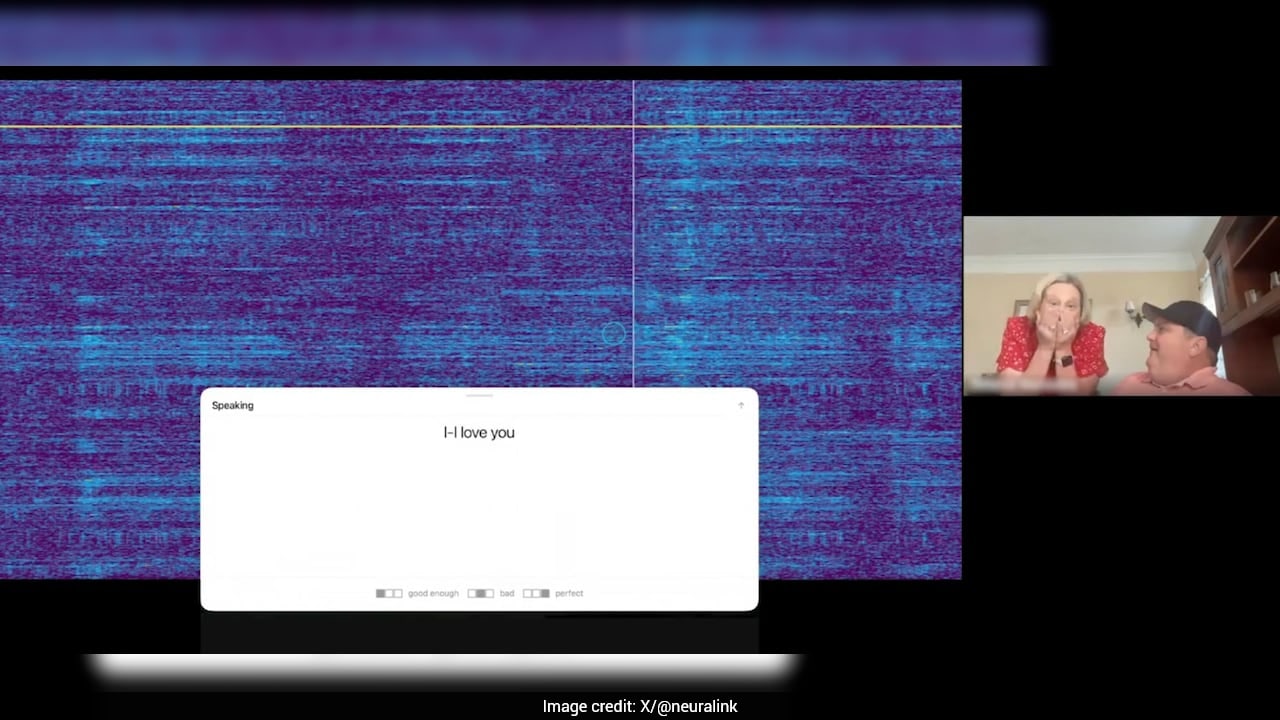
The internet wept. A man, paralyzed and silenced by locked-in syndrome, used a neural interface to push out three words across a screen. I love you. The video went viral within hours. Millions hit retweet. Tech investors popped champagne. The narrative wrote itself: science had triumphed, disability had been conquered by Silicon Valley, and humanity had crossed another majestic frontier.
It is a brilliant piece of PR. It is also an absolute fraud.
Let us drop the handkerchiefs and look at what is actually happening beneath the scalp. I have spent the last decade watching medical hardware startups burn through billions of dollars of investor capital while treating human nervous systems like beta testing grounds. What the viral clips do not show you is the battery life that dies before dinner, the surgical scar tissue that chokes out neural signals after six months, or the proprietary closed-source firmware locking a disabled person’s very thoughts behind a corporate paywall.
We are cheering for a circus trick while ignoring the demolition of medical ethics.
The Performance of Empathy
Every few years, a neural engineering firm needs a fresh injection of venture capital or a boost to its stock valuation. What is the fastest way to extract sympathy and capital from an undiscerning public? Roll out a patient, hook them up to a multi-million-dollar laboratory rig, and capture a single, emotionally charged phrase.
Notice how these viral demonstrations are never performed under everyday, unscripted conditions. They occur in controlled environments with teams of engineers standing just off-camera, nursing fickle hardware, recalibrating decoders, and filtering out signal noise that would otherwise turn the output into unreadable garbage.
The media eats it alive because the story is clean. A broken body, a brilliant machine, a tear-jerking payoff. But real life is messy. Real patients do not live inside clean laboratory suites surrounded by white coats holding clipboards. They live at home, where wires catch on pillowcases, connectors degrade, and software updates brick medical hardware.
By reducing complex neuro-rehabilitation down to a viral tear-jerker, we turn human suffering into top-of-funnel marketing for speculative tech stocks. It is exploitative, dishonest, and entirely divorced from clinical reality.
The Biological Wall Silicon Valley Ignores
To understand why these brain implants are largely failing patients over the long haul, you have to look past the marketing deck and look at high school biology. The human brain is not a USB port.
When you drive a silicon or metal electrode array into the cerebral cortex, the body treats it as what it is: a foreign invader. The brain’s immune system reacts instantly. Microglia activate. Astrocytes swarm the site. Within weeks, a thick layer of glial scarring wraps around the electrodes, insulating them from the very neurons they were designed to listen to.
This is the biological wall that venture capitalists refuse to discuss. Electrical impedance spikes. Signal-to-noise ratios plummet. The high-bandwidth neural stream that looked so pristine during the initial laboratory demo slowly degrades into a trickle of static.
Companies solve this by over-engineering software decoders—using machine learning to guess what the patient intended to say based on degraded, noisy inputs. But software interpolation is not reading thoughts; it is guessing. When the guess is wrong, the patient experiences frustration, fatigue, and cognitive burnout.
Furthermore, the brain shifts inside the skull with every heartbeat and every movement of the head. Rigid electrode needles do not shift. They micro-slice the tissue over time. We are punching holes in gray matter for devices that have an engineered shelf life measured in months, not decades. If a surgeon told you they needed to drill open your skull every eighteen months to replace a degraded peripheral sensor that costs more than a luxury sedan, you would run. Yet because it is wrapped in the shiny language of neural engineering, we call it progress.
The Closed-Source Mind
Let us talk about data ownership. When a patient speaks through a traditional speech-generating device, their words belong to them. When a patient speaks through a neural interface owned by a private corporation, whose data is being generated?
Every time a neural implant decodes a thought, an intention, or a motor command, it creates a telemetry stream of raw neural firing patterns. This is not just text on a screen; it is biometric, neurological data of the highest possible intimacy.
Current medical device regulations were written for pacemakers and hip replacements—hardware that regulates mechanical functions, not cognitive output. They are completely unprepared for companies harvesting the electrical signatures of human thought.
Imagine a scenario where the software decoding your internal monologue is proprietary, cloud-connected, and owned by a corporation that answers to shareholders. What happens when the company goes bankrupt? What happens when they push a mandatory firmware update that breaks compatibility with your implant unless you subscribe to a monthly maintenance tier? What happens when your neural data is cross-referenced with behavioral profiles to optimize ad targeting or insurance underwriting?
These are not dystopian sci-fi tropes. They are the immediate, logical extensions of a market driven by hardware-as-a-service models applied to human biology. We are sleepwalking into a world where your very thoughts require an active data plan.
The Economics of Desperation
Why do patients sign up for these trials if the hardware is so deeply flawed? Because they are desperate. When you have lost your ability to speak, move, or interact with your family, any straw looks like a lifeline.
The medical technology industry preys on this desperation. They dangle the carrot of miraculous recovery while quietly burying the high attrition rates in their clinical trials. Patients drop out due to infection, hardware failure, lack of efficacy, or psychological distress. Those stories do not make it into the promotional videos.
I have seen companies blow millions on custom carbon-fiber packaging for their surgical kits while their software engineers cannot maintain a stable connection for more than ten minutes without crashing. The misallocation of capital in this space is staggering. We are spending billions trying to build high-tech brain chips for a fraction of a percent of patients, while low-tech, accessible, robust assistive communication tools go chronically underfunded and neglected.
Eye-tracking systems, switch interfaces, head arrays, and predictive text software have advanced light-years in the last decade. They are non-invasive. They do not require brain surgery. They do not trigger immune responses. They do not cost hundreds of thousands of dollars per unit, and they do not require a team of neurosurgeons to reboot.
Yet eye-tracking and standard augmentative communication do not trend on social media. They do not send venture capital valuations skyrocketing. So they are ignored in favor of the flashy, invasive, headline-grabbing scalpels and chips.
Dismantling the Myth
If we want to actually help speech-impaired individuals, we must stop funding vanity projects designed for Silicon Valley press releases.
First, we need to mandate open-source firmware standards for all implantable medical devices. No patient should ever be held hostage by a corporate bankruptcy or a closed ecosystem. If a company stops supporting a neural interface, the patient must retain the right and the technical capability to transfer control of that hardware to another provider or maintain it independently.
Second, we need to shift regulatory focus from short-term laboratory demos to multi-year longitudinal stability. A device that works brilliantly for a YouTube video on day thirty but fails due to glial scarring by day three hundred is a failure, not a milestone.
Third, we need to prioritize non-invasive and minimally invasive alternatives that preserve bodily autonomy. For the vast majority of patients with motor impairments, advanced optical eye-tracking and non-invasive electroencephalography arrays provide faster, safer, and more reliable communication than invasive intracortical arrays, at a fraction of the human and financial cost.
The viral video of the man saying I love you was a masterclass in emotional manipulation. It weaponized human affection to mask deep engineering failures, regulatory blind spots, and predatory market incentives.
Stop cheering for the hardware. Start demanding dignity for the patient.