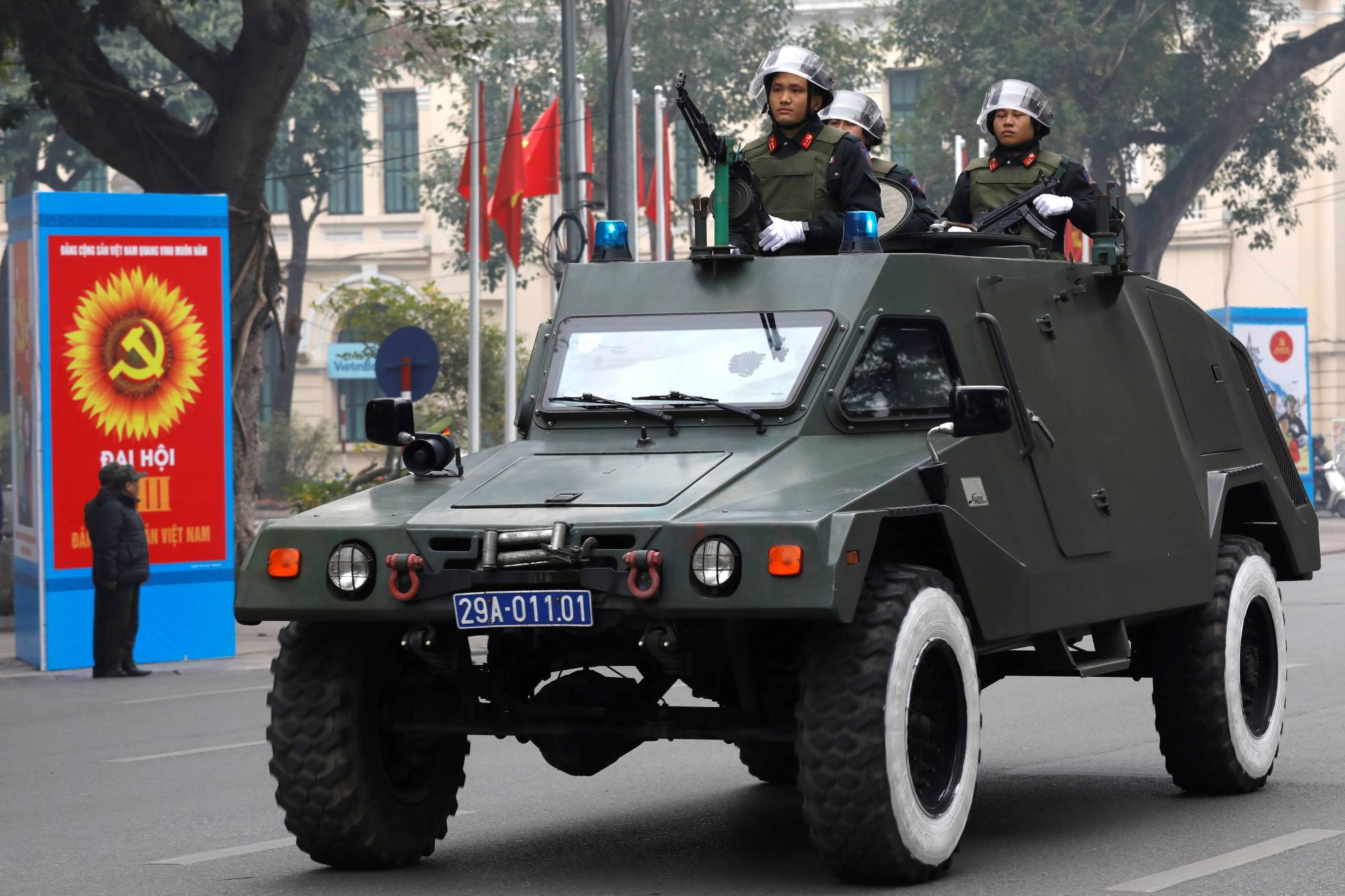
Hanoi doesn't call it a "China model," but the resemblance is becoming impossible to ignore. For years, Vietnam tried to walk a tightrope, balancing a communist political structure with a relatively open, pro-Western economic vibe. That's changing. Under General Secretary and President To Lam, the country's security apparatus isn't just protecting the state; it's becoming the state.
If you've been watching the headlines, you've seen the "Burning Furnace" anti-corruption campaign rip through the highest levels of government. It started as a way to clean up graft. Now, it looks like a permanent restructuring of power. The Ministry of Public Security (MPS) has moved from the sidelines to the driver’s seat of the economy, technology, and daily life.
The Rise of the Policeman in Chief
To Lam’s trajectory is the most obvious signal of this shift. He didn't come up through the traditional party bureaucracy or economic planning offices. He spent over 40 years in the police force. When he took the top spot as General Secretary in 2024 and then secured a full term as President in April 2026, he broke the old "four pillars" system of collective leadership.
Power is now concentrated in a way we haven't seen since the days of Le Duan. By bringing a cop’s mindset to the presidency, Lam has signaled that stability and security come before everything else—including the comfort of foreign investors. This mirrors exactly how Xi Jinping reshaped China over the last decade. It’s a "security first" ideology where the police are the primary instrument of governance.
Digital Sovereignty or Total Surveillance
Look at the tech. Vietnam is currently rolling out massive AI camera networks and state-run data exchanges. In early 2026, the Ministry of Public Security issued Plan No. 12/KH-BCA, which gives them the authority to inspect basically any business or household that they deem a "risk to security and social order."
It’s not just about boots on the ground anymore. It’s about the National Population Database. The police now control the most valuable data in the country. They’re using it to:
- Monitor financial transactions in real-time.
- Track movement through facial recognition in major cities.
- Require "online and remote inspections" of private companies’ electronic data.
If you’re a business owner in Ho Chi Minh City, you aren't just dealing with the tax man anymore. You’re dealing with a police ministry that has the tech to look into your servers without even knocking on your door.
The 3+3 Dialogue and the Beijing Connection
The diplomatic pivot is just as telling. In March 2026, Hanoi hosted the first "3+3" strategic dialogue with China. This brought together the ministers of foreign affairs, defense, and public security from both nations. The goal? "Safeguarding the security of political systems" and resisting "color revolutions."
This is a massive deal. Vietnam and China have plenty of historical friction, especially in the South China Sea. But when it comes to keeping the Communist Party in power, they’re reading from the same playbook. They’re trading tips on how to manage internet dissent and how to use "law enforcement cooperation" to hunt down dissidents who flee across borders. Honestly, the ideological bond is currently outweighing the maritime disputes.
The Economic Cost of a Security First State
Can you run a police state and a thriving market economy at the same time? China has proven you can—to a point. Vietnam is trying to pull off the same trick, but it's getting messy.
The "Burning Furnace" campaign has made local bureaucrats terrified of signing off on anything. If a project goes wrong, they might get arrested for "negligence" or "mismanagement." This has led to a massive backlog in infrastructure projects and a slowdown in government spending.
- Bureaucratic Paralysis: Officials would rather do nothing than risk a police investigation.
- Investor Nervousness: Foreign firms like Apple and Intel moved to Vietnam to escape China’s unpredictability. Now, they’re finding a mini-China with its own set of aggressive regulations.
- Super-Ministries: The government is currently streamlining its structure, merging ministries and cutting staff. While it sounds efficient, it’s really about centralizing control under a few loyalists.
What This Means for the Next Two Years
If you're living in Vietnam or doing business there, the "Wild West" days of the early 2010s are over. The state is becoming more organized, more intrusive, and much more digital.
- Expect more "Data Compliance" requests. If you hold user data, the MPS will want access. Have your legal team ready for "remote inspections" under the new 2026 guidelines.
- Watch the 14th National Congress. Everything happening now is a build-up to the 2026 Congress. To Lam has consolidated power, but he still needs to finalize the "Era of National Rise" (Kỷ nguyên vươn mình của dân tộc) as the official state doctrine.
- Diversify your political risk. Don't assume that a high-level "friend" in the government can protect you. The anti-corruption sweeps have shown that nobody is untouchable if they fall on the wrong side of the security apparatus.
Vietnam isn't becoming a province of China, but it’s definitely adopting the Chinese operating system. It’s a more rigid, controlled environment where the line between "public safety" and "political survival" has completely disappeared.