The oak tree on 146 Street has stood longer than most of the mortgages in the neighborhood. It provides a heavy, sprawling shade that cools the pavement every July, dropping amber leaves into gutters that remember the steady, predictable hum of single-family life.
Then came the stake in the ground next door.
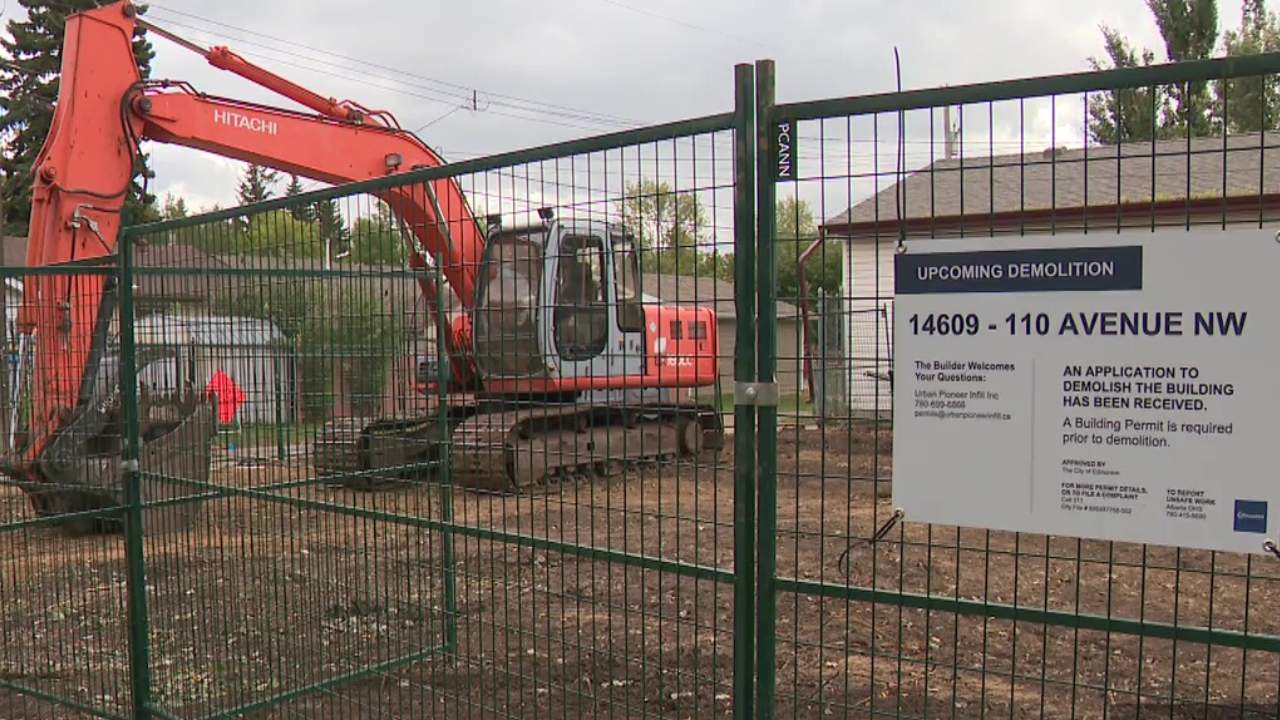
A bright orange notice fluttered against the wooden fence, bearing an abstract municipal code that changed everything. A modest bungalow, weathered and lived-in, was scheduled for demolition. In its place, blueprints promised an eight-plex rising toward the clouds, packing multiple families into a footprint once meant for a single swing set. Across mature mature neighborhoods in Edmonton like McQueen, Crestwood, and South Edmonton, this scene plays out like a slow-moving shockwave.
Municipal leaders look at these leafy lots and see a canvas for crisis management. They see rising populations, young families priced out of traditional housing, and a desperate mandate for urban density. They draw up blanket zoning laws to fast-track multi-unit builds, aiming to solve an affordability crunch.
Homeowners, however, look at the exact same dirt and see the erosion of a quiet social contract.
When city hall whispers progress, neighborhoods answer with the law. Enter the restrictive covenant—a legal instrument drafted onto a property title that operates like a velvet wall. Originally designed decades ago to preserve neighborhood aesthetics or dictate uniform design standards, these private contracts are experiencing a sharp revival. Residents are banding together, gathering signatures street by street, and attaching binding agreements to their land that restrict future development. If you buy the house, you inherit the rule: no multi-unit splitting, no towering multiplexes, no sudden shifts in the vertical rhythm of the block.
Consider what happens when public policy collides with private property rights. It creates an underground municipal system running parallel to city hall. A developer can secure every stamp and seal required by municipal bylaws, only to hit a brick wall written into the property's ancestral title. Neighbors can sue to enforce these private rules, effectively granting individual homeowners a localized veto over city-wide growth targets.
Some residents go to extremes. Real estate developers and fed-up locals have occasionally resorted to buying up adjacent properties entirely, spending their own capital just to keep the wrecking balls at bay. It is an expensive, defensive maneuver born from a profound sense of helplessness. People feel cornered by architectural changes that happen too fast, bring too much concrete, and strain local parking, electricity, and water grids.
Yet, the counterargument carries its own harsh arithmetic. Canada faces a housing shortage that presses heavily on anyone under forty. Low-density neighborhoods close to central amenities, transit, and jobs become exclusive islands if they refuse to share space. Critics of restrictive covenants point out that freezing a neighborhood in amber shifts the tax burden outward, driving up regional costs and locking out newcomers. When hundreds of property owners sign away the right to densify, they protect their own views while quietly compounding the affordability crisis for everyone else.
This friction exposes a deep emotional vulnerability on both sides. On one hand sits the longing for permanence—the human desire to know that the neighborhood you invested your life savings into will not transform beyond recognition overnight. On the other hand sits the urgent necessity of shelter, the stark realization that cities must either grow upward or break apart under the weight of their own success.
The restrictive covenant is not a permanent shield. Courts rarely overturn them unless rendered entirely obsolete, but they act as speed bumps on a runaway train. They force a tense, uncomfortable negotiation between what a city needs on paper and what a community can bear in practice.
The oak tree on 146 Street remains for now, its roots tangled deep in soil that is rapidly becoming a battleground for the soul of the modern city.