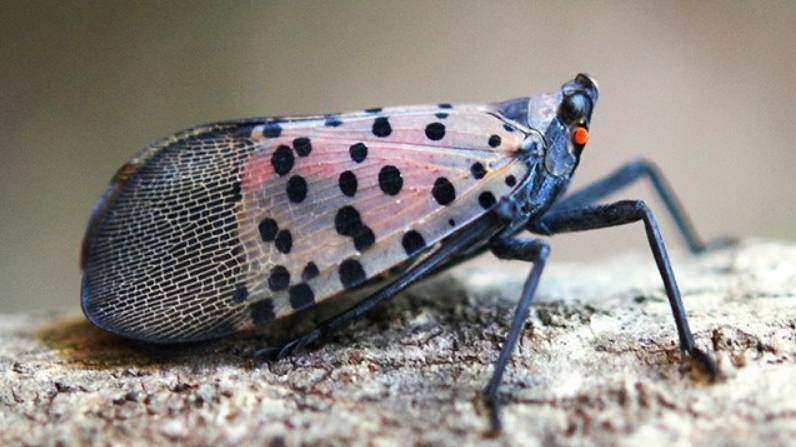
The arrival of non-native organisms into sovereign territories represents a critical failure of biosecurity boundaries and international supply chain filters. When biological anomalies such as the spotted lanternfly breach national borders—as confirmed by the Canadian Food Inspection Agency—the event exposes structural vulnerabilities in trade corridors, cargo inspection protocols, and micro-climatic forecasting models. Understanding this phenomenon requires moving past superficial descriptions of ecological panic and examining the underlying economic vectors, vector transport physics, and ecosystem carrying capacities that govern biological expansion.
The Tripartite Vector Model of Biological Incursion
Every successful biological incursion operates through three distinct operational phases: transport, introduction, and establishment. The failure point in modern border defense rarely stems from a lack of legislative prohibition, but rather from the high friction coefficient between high-volume international trade and low-friction port inspection protocols.
Cargo ships, wooden dunnage, and imported horticultural stock act as primary logistical vectors. Unlike native species bounded by natural topographies, invasive organisms leverage human commerce as a high-velocity transit network.
- The Transport Phase: Organisms attach to structural components of international shipping, hitchhike within packaging materials, or remain dormant in soil matrices.
- The Introduction Phase: The organism bypasses port-of-entry quarantine parameters, driven by statistical sampling limitations where inspection agencies can only audit a fractional percentage of total container volume.
- The Establishment Phase: The organism encounters a localized ecosystem lacking co-evolved predators, allowing exponential population growth prior to density-dependent regulatory feedback loops taking effect.
The Economic Cost Function of Ecological Displacement
The financial fallout of an established invasive species is not merely a localized agricultural nuisance; it functions as a regressive tax on domestic productivity, timber yields, and municipal management budgets. The economic loss can be modeled through a damage cost function where total impact ($I$) scales with population density ($N$), the value of vulnerable agricultural assets ($A$), and the mitigation expenditure efficiency ($\epsilon$):
$$I = f(N, A) - \epsilon(M)$$
When an invasive species enters a virgin market, the absence of natural predators drives $N$ up vertically in the initial logarithmic growth phase. Agricultural assets such as vineyards, orchards, and hardwood timber inventories absorb the primary shock. Mitigation expenditure ($M$) must scale exponentially to suppress the population below an economic injury level. If early eradication protocols fail, the system transitions from an eradication paradigm to a permanent management paradigm, locking affected industries into perpetual operational expenditure increases.
Biosecurity Bottlenecks and Regulatory Limitations
Regulatory agencies operate under severe structural constraints. Border protection protocols rely heavily on visual inspections, targeted trap monitoring, and manifest verification. However, these systems exhibit high rates of false negatives when dealing with dormant life stages, such as egg masses deposited on non-agricultural surfaces or microscopic fungal spores.
Furthermore, trade velocity directly degrades inspection efficacy. As global supply chain throughput demands faster container turnover times, the time allocated per inspection diminishes. This creates an inverse relationship between trade volume and biosecurity precision. When inspection depth drops, the probability of undetected transport increases linearly, leaving domestic ecosystems exposed to unvetted biological agents.
Strategic Containment and Resource Allocation
Mitigating the long-term impact of newly detected invasive species requires shifting capital expenditure from reactive containment to predictive surveillance. Traditional containment strategies—such as establishing quarantine zones after a population center is discovered—frequently lag behind the actual geographic dispersion of the organism.
Resource allocation must prioritize high-risk entry nodes, including container ports, rail hubs connected to coastal terminals, and major distribution corridors. By deploying automated sensor arrays, environmental DNA (
Ecological Vector Expansion The Mechanics of Invasive Species Arrival in Canadian Ecosystems
news, technology
The detection of an invasive species in a new geographic theater is rarely an isolated biological anomaly; it is the visible failure point of a complex trade, transport, and ecological filter system. When a foreign organism establishes its first documented presence in Canada, the event marks the culmination of a multi-stage vector process that bypassed biogeographical barriers, port inspections, and localized biosecurity defenses. Understanding this arrival requires moving past alarming headlines to examine the structural mechanics of biological invasions: the transport vectors, the survival filters, and the systemic vulnerabilities that permit foreign taxa to transition from transient imports to self-sustaining populations.
The Tripartite Mechanics of Biological Incursion
Every successful biological incursion operates through three distinct operational phases: transport, introduction, and establishment. The initial transport phase relies on vector efficiency. Global supply chains, containerized shipping, ballast water discharge, and the movement of ornamental flora create continuous pathways for non-native organisms to traverse oceans and continental divides. A species does not arrive by accident; it arrives because its life history traits allow it to exploit the specific transport logistics of modern commerce.
Following transport comes the introduction phase, where the organism is released into the wild. This transition is governed by propagule pressure—a composite measure of the number of individuals released and the frequency of release events. A single specimen dropped into an unfavorable Canadian climate will perish; a steady stream of viable organisms entering a receptive habitat dramatically alters the probability of colonization.
The final phase, establishment, tests the organism's physiological tolerance and ecological adaptability. Canada presents severe environmental filters, particularly seasonal temperature extremes and winter metabolic bottlenecks. An invasive species that clears this hurdle possesses a combination of rapid reproductive rates, high phenotypic plasticity, and a lack of co-evolved predators or pathogens in the new range.
Transport Vector ---> High Propagule Pressure ---> Environmental Filter Cleared ---> Establishment
The Economic and Logistical Cost Function
The arrival of an invasive species imposes an immediate, compounding cost function on public infrastructure, agricultural yields, and native biodiversity. Unlike native pests governed by local ecological feedback loops, invasive organisms enter a regulatory and biological vacuum.
Total Impact = (Biomass Accumulation Rate x Distribution Area) - Mitigation Lag
The mitigation lag—the time elapsed between initial introduction and official detection—is the critical variable determining long-term containment costs. During this lag phase, populations grow exponentially while management strategies remain reactive. By the time detection occurs, eradication is often mathematically and logistically impossible, shifting the economic burden from proactive eradication to permanent, recurring management.
Centering biosecurity policy on reactive responses ensures systemic failure. Effective strategic intervention requires shifting capital upstream, focusing resources on pathway interruption at international ports of entry rather than post-establishment population control.
Strategic Vector Mitigation and Biosecurity Optimization
Mitigating future incursions demands a transition from static quarantine protocols to dynamic risk-profiling models. Trade routes associated with high-risk source regions must be subjected to targeted metagenomic surveillance and automated imaging inspection technologies. Furthermore, regulatory frameworks governing the import of live organisms, packing materials, and untreated wood products must account for climate-matching algorithms that predict which foreign regions share thermal profiles with vulnerable Canadian biomes.
The long-term trajectory of biological invasions in northern latitudes will be dictated by climate velocity. As warming trends alter traditional thermal barriers, habitats previously hostile to foreign species will become viable settlement zones. Addressing this shift requires treating ecological defense as an intelligence-driven supply chain issue, where predictive analytics and rapid-response containment protocols replace passive observation.