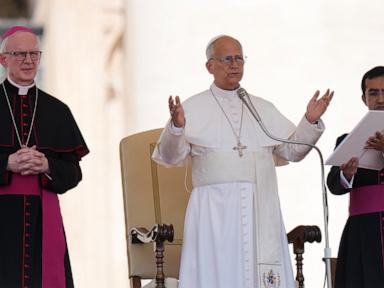
The Vatican is facing an imminent internal crisis as Pope Francis attempts to halt unauthorized bishop consecrations by a traditionalist breakaway faction. This high-stakes standoff threatens a formal schism within the Catholic Church, a rupture that Rome has spent decades trying to avoid. At the heart of the dispute is the Society of Saint Pius X (SSPX) or similar ultra-traditionalist offshoots, whose defiance of papal authority challenges the very structure of Catholic hierarchy. If these consecrations proceed without a pontifical mandate, they trigger automatic excommunications, locking both the consecrating bishops and the new candidates out of the Church.
The immediate trigger for Rome's urgency is the preservation of apostolic succession, the theological chain linking modern bishops back to the apostles. When a traditionalist group appoints its own bishops, it establishes a self-sustaining, parallel hierarchy. This is not a mere disagreement over Latin prayers or liturgical preferences; it is a direct challenge to the geopolitical and spiritual sovereignty of the Holy See.
The Mechanics of Defiance
To understand why Rome is panicking, one must look at how Church law operates. Under canon law, specifically Canon 1382, a bishop who consecrates someone without a pontifical mandate incurs an automatic excommunication latae sententiae. The penalty happens by the very fact of committing the act.
This is the nuclear option of ecclesiastical law. The Vatican relies on a centralized system where the pope alone approves the appointment of shepherds for the world’s 1.3 billion Catholics. When traditionalist factions bypass this system, they create a rogue network of clergy who can ordain priests, administer sacraments, and govern communities entirely outside of Rome’s oversight.
The breakaway groups view this differently. They invoke what they call a state of necessity. In their view, the post-Vatican II Church has fallen into heresy, modernism, and liturgical decay. They argue that disobeying the pope is a duty to save souls. For them, preserving the traditional Catholic priesthood justifies breaking the rules of canon law.
The Failed Decades of Diplomacy
Rome's current desperation follows a long history of failed carrot-and-stick diplomacy. Pope Benedict XVI made significant concessions to traditionalist groups, lifting the excommunications of four bishops consecrated back in 1988 by Archbishop Marcel Lefebvre. Benedict even widened access to the traditional Latin Mass in 2007, hoping to bring these groups back into the fold.
It did not work. The underlying theological differences proved too vast.
Pope Francis reversed course. He severely restricted the Latin Mass, aiming to unify the Church under a single liturgical expression. This clampdown backfired by alienating moderate traditionalists and pushing hardliners further into isolation. The current threat of new, unauthorized consecrations is a direct reaction to Francis's restrictive policies. Traditionalists feel cornered. They believe their spiritual lineage is under threat of extinction.
Money Land and Parallel Institutions
The conflict is as much about infrastructure as it is about theology. Breakaway traditionalist groups are not small, underground cults. They operate global networks of seminaries, schools, priories, and chapels. They command millions of dollars in donations from a highly committed, conservative base.
A formal schism means these properties and financial assets remain entirely outside Vatican control. In many countries, church property is legally held by local non-profit corporations or trusts controlled by the traditionalist society, not the local diocese. Rome cannot simply march in and seize these assets.
Furthermore, these groups are successfully recruiting young men into their seminaries at a time when mainstream Catholic dioceses in the West are facing severe priest shortages. This demographic reality gives the breakaway groups immense leverage. They are building a self-sufficient ecosystem that can survive indefinitely without Rome’s blessing.
The Geopolitical Fallout
A new schism would reverberate far beyond the walls of the Vatican. It provides a theological rallying point for conservative political movements globally, particularly in North America and Europe. Secular critics of Pope Francis frequently align with traditionalist Catholics, using the religious dispute to fuel broader culture wars regarding governance, nationalism, and traditional values.
If a major traditionalist group goes rogue and consecrates new bishops, it creates a permanent alternative magisterium. This structure will continue to attract Catholics who are disillusioned by the current papacy's focus on environmental issues, migration, and pastoral outreach to marginalized groups.
The Vatican's appeals for restraint are falling on deaf ears because the breakaway leaders believe they are fighting for the survival of true Catholicism. They see the pope's pleas not as a gesture of pastoral care, but as a sign of weakness from a centralized authority that is losing its grip on the fringes of the Church. Rome is running out of diplomatic options, and the window to prevent a permanent fracturing of the hierarchy is closing fast.


