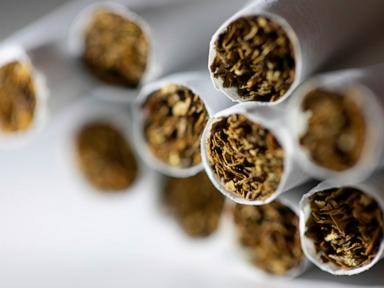
The brass counter at the corner bodega used to feature a permanent, sticky ring from the bottom of a coffee cup and a steady mountain of colorful paper boxes. Twenty years ago, if you stood there for fifteen minutes at 8:00 AM, you would witness a synchronized morning ritual. The commuter would slap down a five-dollar bill. The clerk, without looking, would reach backward, grab a red or gold pack, flip a plastic lighter into the transaction, and slide it across the counter.
It was the heartbeat of American mornings. It was automatic.
Today, that same brass counter is clear. The plastic dividers that once held rows of tobacco brands are pushed to the back, dusty and half-empty, replaced by protein bars and prepaid phone cards. The commuter still comes in, but they leave with an oat milk cold brew. No smoke. No fire.
We are witnessing a quiet, monumental collapse.
According to the latest public health data, adult cigarette smoking in the United States has plummeted to another historic low. Only about 11% of American adults still smoke. To put that in perspective, in the mid-1960s, more than 40% of the country lit up regularly. We have watched a defining cultural habit erode into near-extinction within a couple of generations.
But statistics are cold. They don't breathe. They mask the immense, messy human struggle behind the numbers. This decline isn't just a triumph of policy; it is a story of shifting identity, invisible social pressure, and the grueling personal battles fought in millions of backyards, balconies, and parking lots.
The Ghost in the Room
To understand how we got here, consider a hypothetical composite of a modern smoker. Let’s call him Michael. Michael is forty-two, works in logistics, and started smoking behind the high school bleachers in 1999 because it made him feel like a character in an indie movie. For two decades, cigarettes were his punctuation marks. They marked the end of a shift, the conclusion of a meal, the frantic pause during a stressful argument.
For Michael, quitting wasn't a sudden epiphany sparked by a government pamphlet. It was a slow, agonizing realization that he had become a social ghost.
The turning point arrived when Michael attended a friend’s backyard barbecue. He stepped away from the patio, walked down the driveway, and stood near the curb to light up. When he looked back, he saw the party continuing through the window. He was entirely isolated, standing under a streetlamp, shivering slightly, holding a burning stick that labeled him an outsider.
The social contract had rewritten itself while he wasn't looking.
Smoking didn't just become unhealthy; it became inconvenient. It became lonely. The world used to build infrastructure to support the habit—ashtrays in armrests, smoking sections in diners, designated rooms in airports. Now, the world has quietly dismantled that infrastructure. If you want to smoke, you must accept exile.
This cultural banishment has done more heavy lifting than any tax hike or warning label ever could. Humans are hardwired to seek belonging. When the choice becomes a choice between a chemical hit and social connection, the chemical hit eventually loses its grip.
The Mechanics of the Exit
The steep drop in smoking rates is frequently celebrated as an unmitigated victory for public health, and visually, it is. The air in restaurants is clean. Hospital admissions for acute cardiovascular events have shifted accordingly. Yet, if we look closer at the 11% who remain, the picture grows more complex and far more urgent.
Smoking did not decline equally across the board. It retreated from affluent suburbs and corporate high-rises and concentrated heavily in specific communities.
Today, the people who still smoke are disproportionately those living below the poverty line, those struggling with substance use disorders, and individuals facing severe mental health challenges. For these communities, a cigarette isn't just a bad habit to be kicked with a nicotine patch and a bit of willpower. It is a cheap, accessible form of self-medication. It is a reliable, five-minute escape from overwhelming stress.
Think about the sheer cognitive load of poverty. When you are worried about rent, food insecurity, and unreliable transportation, the long-term threat of a cardiovascular event twenty years from now feels abstract. The anxiety radiating through your chest right now, however, is entirely real. The cigarette solves the immediate problem, even if it compounds the future one.
This is where the standard public health narrative falters. We celebrate the "all-time low" without fully acknowledging that the remaining cohort of smokers requires a fundamentally different approach. The easy wins are over. The people who could be persuaded by a graphic warning label or a slight price increase have already quit. Those who are left are holding onto tobacco as a lifeline, and taking away a lifeline without offering a safer anchor is a recipe for failure.
The New Architecture of Vice
Then there is the elephant in the room—the digital, sleek, battery-powered alternative that changed the rules of engagement entirely.
As traditional cigarette smoking hit the floor, vaping soared. The transition wasn't a total victory for sobriety; it was a migration of nicotine dependence from analog to digital. For a long time, the public health apparatus was caught flat-footed by this shift.
Consider the contrast in sensory experience. Traditional smoking is loud. It smells. It stains your teeth, leaves a film on your jacket, and alerts everyone within a twenty-foot radius of your vice. It forces you to look at the ash, to see the physical waste you are generating.
Vaping is invisible by comparison. It tastes like mango or mint. It leaves no lingering odor. It can be hidden in a palm, utilized in a bathroom stall, or puffed discreetly on a couch while watching a movie. By removing the filth, the smoke, and the social stigma, nicotine managed to slip back into the mainstream under a new guise.
For young people who would never dream of touching a harsh, foul-smelling combustible cigarette, the electronic alternative felt high-tech and harmless. We traded the tar-stained fingers of the past for the glowing blue LEDs of the present.
This creates a profound paradox for health officials. On one hand, switching from cigarettes to vapes represents a massive reduction in harm for an older, chronic smoker whose lungs are actively failing. On the other hand, it represents a brand-new pipeline of addiction for a teenager who had never previously consumed nicotine. The decline in cigarette use is real and historic, but the war against chemical dependency merely changed battlefields.
The Weight of What We Leave Behind
There is a strange, quiet grief that accompanies the end of an era, even a destructive one. Tobacco structured American life for more than a century. It funded cities, shaped advertising, defined Hollywood cool, and served as the connective tissue between strangers in smoke-filled bars.
When you eliminate that, you leave a vacuum.
We see it in the way people interact now. The spontaneous conversation starter—"Got a light?"—has vanished from the urban landscape. That simple, low-stakes micro-interaction bridged social classes and political divides for decades. Now, we walk past each other with headphones in, looking down at screens, entirely self-contained. We are healthier, certainly. But we are also a little more isolated.
The data points down, down, down, tracking toward a zero that may never actually arrive. Every decimal point dropped represents thousands of people who will see their children grow up, thousands of families spared the agonizing, slow-motion grief of oncology wards. That is the real victory. It isn't a line on a government chart. It is the absence of a cough in the hallway. It is a clean breath taken in the morning air.
Back at the corner bodega, a young woman steps up to the counter. She pays for her items with a quick tap of her phone. She doesn't look at the back wall where the cigarettes used to be. She doesn't even know what used to live in those empty plastic tracks. She turns, pushes open the glass door, and steps out into the crisp, unclouded morning, breathing in a world that her parents had to fight to build.