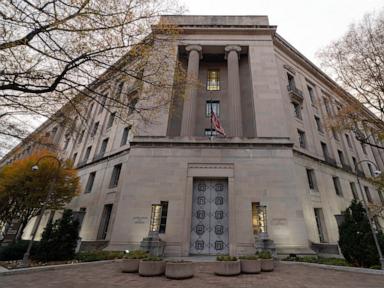
For three decades, a specialized legal body sat completely unused. That changed abruptly in Washington, D.C., when the Alien Terrorist Removal Court convened for its very first public hearing.
The Trump administration dragged this obscure judicial panel out of storage to target Nazira Haji Zada, an Afghan woman living in Fort Worth, Texas. She hasn't been charged with any criminal offense. Yet, she finds herself trapped inside a fast-track deportation mechanism that critics argue bypasses standard constitutional safeguards. For an alternative view, consider: this related article.
If you haven't heard of the Alien Terrorist Removal Court, you aren't alone. Created by Congress way back in 1996 under the Antiterrorism and Effective Death Penalty Act, it was designed to handle classified evidence in deportation cases involving non-citizens suspected of terrorism. Until this month, the docket remained entirely blank. Zero petitions. Zero hearings. Just an empty courtroom waiting for a moment like this.
Inside the Case Against Nazira Haji Zada
The Justice Department filed its groundbreaking application to remove Zada in July 2026. FBI agents arrested her at her home shortly after. According to unsealed government filings and an internal FBI memo, investigators claim Zada is an Islamic State supporter. Related reporting on this trend has been provided by USA Today.
The allegations tie directly to a thwarted 2024 Election Day plot. Federal prosecutors state that her son, Abdullah Haji Zada, and her son-in-law, Nasir Ahmad Tawhedi, conspired to carry out an ISIS-inspired attack in the United States. Tawhedi previously worked as a security guard for a U.S. military installation in Afghanistan before pleading guilty to material support charges. Her son received a 15-year prison sentence last November and agreed to eventual deportation upon release.
Federal investigators allege that Zada had her children pledge loyalty to the terrorist group and actively supported the family's violent planning. Crucially, prosecutors aren't putting her on trial for a criminal conspiracy. They are utilizing the civil deportation machinery of the 1996 statute instead.
Why Defense Attorneys Are Crying Foul
During Thursday's historic hearing in the nation's capital, assistant federal public defender Matthew Farley didn't mince words. He urged Chief Judge Joan Ericksen to immediately toss out the government's petition and release his client.
"This entire scheme is in violation of due process and unconstitutional," Farley argued in court.
The core legal friction stems from how the Alien Terrorist Removal Court operates. The statute allows the government to present classified evidence to a judge without necessarily giving the defendant the full ability to confront or examine all underlying intelligence materials in the same manner as a standard criminal proceeding. Defense advocates argue that using a dormant, quasi-secret judicial track to bypass regular immigration courts or criminal trials strips away essential civil liberties.
Judge Ericksen denied the immediate request to dismiss the case. However, she noted that Zada's defense team can formally renew their motions as the litigation moves forward.
The Bigger Picture for Immigration and National Security
Activating this 30-year-old court signals a massive shift in how the executive branch might handle high-stakes national security immigration cases moving forward. Instead of relying on traditional removal proceedings in overcrowded immigration courts or pursuing lengthy criminal indictments, the administration has unlocked a tool built specifically for secret evidence and expedited removals.
Legal scholars and civil rights watchdogs are watching closely. This initial test case will likely set monumental precedents for how much power the federal government holds when utilizing statutory tools left gathering dust for generations. Zada's lawyers are preparing for a long legal brawl over constitutional boundaries, and the outcome will determine whether this obscure tribunal remains active or gets sent back into permanent retirement.


