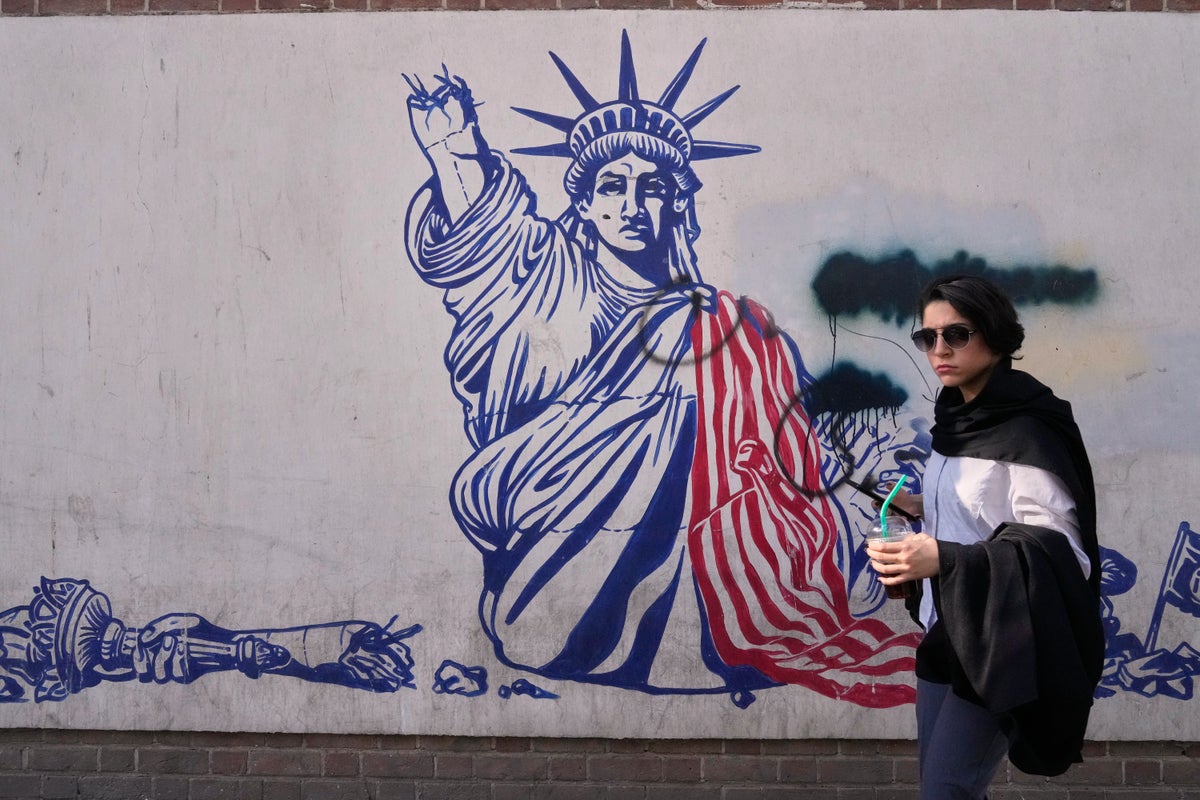
The foreign policy establishment is currently salivating over the prospect of a grand bargain between Washington and Tehran. Diplomats are drafting communiqués, think-tank analysts are charting pathways to sanctions relief, and the media is pushing a comforting narrative: a formal treaty will finally bring stability to the region.
It is a dangerous delusion.
The mainstream press views geopolitics like a corporate merger, assuming that if you get the right executives in a room and sign a comprehensive contract, the market stabilizes. They treat a potential US-Iran peace deal as a terminal point—a finish line.
In reality, a formal treaty between the United States and the Islamic Republic of Iran would not be the end of a war. It would be the opening salvo of a far more volatile, decentralized, and economic conflict. The assumption that normalization breeds stabilization misses the core mechanics of how power, proxy networks, and oil markets actually function.
The Fatal Flaw of the Sanctions Relief Myth
The foundational argument for a peace deal rests on a flawed economic premise: if the West lifts secondary sanctions, Iran will integrate into the global financial system, prioritize economic growth, and naturally moderate its behavior.
I have spent years analyzing capital flows and risk metrics in frontier markets. I can tell you that Western compliance officers do not care about diplomatic handshakes. They care about risk.
[Mainstream Delusion]  Peace Deal -> Sanctions Lifted -> Economic Integration -> Regional Stability
[Geopolitical Reality] Peace Deal -> Cash Influx -> Proxy Funding -> Localized Escalation -> Market Panic
Imagine a scenario where a comprehensive treaty is signed tomorrow. The US Treasury Department removes the Islamic Revolutionary Guard Corps (IRGC) from the Foreign Terrorist Organization list and unfreezes $100 billion in oil revenues. What happens next?
- The Compliance Wall Remains: Global banks like HSBC, BNP Paribas, or Deutsche Bank will not suddenly open branches in Tehran. The compliance architecture built over the last two decades is sticky. The risk of snapback sanctions, reputational damage, and remaining domestic anti-money laundering regulations means Western institutional capital will stay on the sidelines.
- The Asymmetric Capital Influx: The money that does flow back into Tehran will not fund tech startups or consumer infrastructure. It will flow directly into the state-controlled sectors managed by the IRGC.
- The Weaponization of Liquidity: For decades, Tehran has run a highly efficient, low-cost proxy strategy. It does not cost billions to manufacture thousands of one-way attack drones or supply anti-ship missiles to non-state actors in the Bab el-Mandeb strait. A cash injection does not buy Iranian moderation; it lowers the marginal cost of regional disruption.
By granting sanctions relief in exchange for verifiable nuclear halts, the West solves a theoretical 10-year problem by instantly financing a current, kinetic problem.
Dismantling the People Also Ask Premise
When people look at the Middle East, their questions are shaped by legacy media narratives. Let us look at the fundamental questions driving the search volume right now and dismantle the flawed premises behind them.
Will an Iran peace deal lower global oil prices?
Only in the short-term paper markets. Day traders will panic-sell, driving Brent crude down for a few weeks based on the expectation of millions of barrels of Iranian crude legally hitting the water.
But look at the structural reality. Iran is already selling its oil. Through an elaborate dark fleet of tankers utilizing ship-to-ship transfers in the South China Sea and masking transponders, Tehran has consistently moved over 1.5 million barrels per day to independent refineries in China.
A formal deal merely legitimizes volume that is already priced into the physical market. More importantly, the moment regional actors realize that a cash-flush Iran is expanding its asymmetric footprint, the geopolitical risk premium returns with a vengeance. You cannot have stable energy corridors when the state funding the maritime disruption has just received a financial lifeline.
Can the US guarantee Israel's security through diplomacy with Tehran?
This question assumes the Israeli-Iranian rivalry is a misunderstanding that can be arbitrated by Washington. It cannot.
The conflict between Jerusalem and Tehran is existential, structural, and zero-sum. Tel Aviv views Iran’s nuclear program and its ring of fire—Hezbollah, Hamas, the Houthis, and various Iraqi militias—as a direct threat to its national survival. A US-signed piece of paper will not change Israel’s defense doctrine.
If anything, a US-Iran normalization pact forces Israel’s hand. History shows us that when Israel feels isolated by its primary superpower patron, it acts unilaterally. Look at the 1981 strike on Iraq's Osirak reactor or the 2007 strike on Syria's Al-Kibar facility. A deal that binds Washington's hands legally obligates Israel to strike preemptively before the balance of power shifts permanently.
The Proxy Paradox: Why Treaties Cannibalize State Control
The greatest blind spot of Western diplomacy is the belief that capitals control their proxies like remote-controlled cars.
Over the last decade, groups like the Houthis in Yemen or the Kata'ib Hezbollah in Iraq have evolved. They are no longer just tools of Iranian foreign policy; they are indigenous political and military forces with their own local incentives, revenue streams, and ideological goals.
If Tehran attempts to rein in these groups to fulfill its obligations under a US peace deal, it creates a volatile vacuum:
- The Fragmentation Action: Sub-factions within these proxy groups will reject Iranian oversight, viewing any concession to the US as a betrayal. They will fracture into smaller, less predictable cells.
- The Competition for Radical Supremacy: To maintain legitimacy, splinter groups will increase attacks on Western assets or regional adversaries to prove they have not been compromised by diplomacy.
- The Plausible Deniability Loophole: Tehran will genuinely lose absolute control over some of these elements, allowing it to tell Western monitors, "That wasn't us," while still reaping the strategic benefits of the chaos those groups cause.
You cannot pacify a region by cutting a deal with the hub when the spokes have developed their own momentum.
The Regional Arms Race Nobody Is Betting On
Let us talk about the Gulf states. Riyadh and Abu Dhabi are not passive observers in this diplomatic theater. They have watched Washington’s foreign policy pivot wildly every four to eight years.
If the US signs a treaty with Iran, the Gulf monarchies will not celebrate the dawn of peace. They will interpret it as an official American exit strategy from the region.
The consequence will be a massive, rapid proliferation of advanced conventional weapons and independent nuclear hedging. Saudi Arabia has already made its conditions clear: any civilian nuclear cooperation must allow for domestic uranium enrichment. If Iran’s path to a nuclear capability is normalized or merely delayed by a treaty, Riyadh will move to match that capability byte for byte, centrifuge for centrifuge.
Instead of a region stabilized by a balance of power, you get a highly unstable multi-polar nuclear landscape where the margin for error drops to zero.
The Strategic Playbook for Corporate and Geopolitical Realists
If you are managing global supply chains, allocating capital in energy markets, or designing sovereign risk strategies, stop tracking the diplomatic theater. It is noise. Instead, pivot your strategy to exploit the structural realities that a peace deal will trigger.
1. Hard-Hedge Maritime Supply Chains
Do not assume a diplomatic breakthrough reopens the Red Sea permanently. The weaponization of narrow choke points (the Strait of Hormuz, the Bab el-Mandeb) is now a proven, low-cost method for non-state actors to project global power.
Assume that maritime transit through these zones will remain permanently volatile regardless of what happens in Geneva or Washington. Shift your capital allocations toward near-shoring manufacturing and secure overland trade corridors that bypass traditional maritime choke points entirely.
2. Disregard the Sanctions Relief Hype
If you are an enterprise looking at the Iranian market as a "new frontier" post-deal, stop. The legal risks will remain prohibitive.
The US political system guarantees that any executive action taken by one administration can be instantly reversed by the next via executive order. No serious multinational corporation can build a five-year capital expenditure plan on a foundation that fragile. The companies that rush in will find their assets trapped or subject to sudden litigation when the political winds shift.
3. Track the Alternative Capital Corridors
The real alignment happening in the Middle East is not between Washington and Tehran; it is between Tehran, Moscow, and Beijing.
Iran’s economic survival during maximum pressure campaigns has cemented a sanctions-evasion infrastructure that relies on non-Western currencies, localized banking networks, and barter systems. A peace deal will not dismantle this network. It will legitimize it, allowing China to secure long-term energy contracts at a discount while Russia integrates Iranian drone and missile tech into its own industrial base. Watch the Eurasian trade routes, not the Western diplomatic channels.
The peace deal narrative is built on an obsolete, twentieth-century model of statecraft where nations could sign a document, shake hands, and order their forces to stand down.
The modern Middle East is a hyper-connected, asymmetric, multi-polar arena where non-state actors hold strategic vetoes and economic warfare is continuous. A treaty between the US and Iran will not bring peace. It will simply unbind Tehran’s hands, force Israel into a corner, accelerate a regional nuclear arms race, and provide a masterclass in the unintended consequences of naive diplomacy.
The deal isn't the solution. It's the catalyst for the next phase of the conflict.