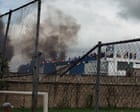
Thick black smoke billowing from prison roofs isn't a new sight in Venezuela, but the chaos unfolding at the Barinas prison hits differently right now. Inmates have taken over the facility roof, stacking and torching their own mattresses in a desperate bid to get the world's attention. They aren't rioting for better food or extra yard time. They are screaming for survival, chanting "No more torture!" while hanging makeshift SOS banners over the concrete walls.
If you want to understand why things exploded so violently in Barinas, you have to look past the dramatic images of smoke and fire. This isn't just an isolated scuffle between guards and inmates. It's a direct, explosive consequence of a prison system operating completely in the dark, even as the country goes through massive political shifts.
Blood and Fire on the Roof in Barinas
The trouble peaked on Sunday when roughly 1,200 men and over 100 women held inside the western Venezuelan facility launched what they insisted was a peaceful strike. According to video dispatches smuggled out by inmates and shared by the Venezuelan Observatory of Prisons, the situation turned bloody fast.
Prison staff opened live fire on unarmed detainees. One harrowing video clip shows a prisoner with a fresh bullet wound gaping in his chest. "We want justice. They are shooting us, the guards and the wardens," a prisoner says to the camera.
The primary target of the inmates' fury is Elvis Macuare Guerrero, the prison's recently appointed director. Detainees accuse Guerrero of personally overseeing the armed crackdown and cultivating an environment of extreme cruelty. According to reports compiled by local human rights watchdogs, the administration stripped inmates of their clothes, banned all family visits, and actively pressured prisoners to sell drugs inside the blocks.
When you strip desperate people of their clothes, cut off their only connection to the outside world, and shoot at them for speaking up, a roof riot becomes their only megaphone.
The Desperate Stand of the Families Outside
While the mattresses burned on the roof, a separate battle line formed right outside the prison gates. Relatives who rushed to the facility after seeing the smoke found themselves facing down lines of National Guard officers armed with heavy riot shields.
Distraught mothers and wives tried desperately to block the guards from entering the facility, terrified of the retribution their loved ones would face inside. They failed to hold the line. Minutes after the military forces pushed their way through the perimeter, the families remaining outside heard a barrage of screams and heavy explosions echoing from the cellblocks.
The agonizing reality for these families is the total lack of information. Yelitza Arrollo, whose son is an inmate at the Barinas facility, told reporters she hasn't heard a single word about his condition or safety since early May. The anxiety outside the walls is just as suffocating as the smoke inside. They aren't asking for miracles; they're asking for the immediate removal of Guerrero and a guarantee that their children won't be executed in the dark.
A Broken System in a Changing Nation
This explosion of violence comes at a highly strange and volatile moment for Venezuela's penal network. The country's prisons have been under an intense international microscope following major political upheavals, including the capture of Nicolas Maduro earlier this year and the rise of an interim government led by Delcy Rodriguez.
The new administration recently passed laws aimed at releasing hundreds of political prisoners, which sparked immense hope across the country. Yet, the situation on the ground tells a completely different story. While some high-profile detainees are discussed in diplomatic circles, the daily operations of local prisons like Barinas remain trapped in a brutal cycle of corruption and violence.
The contrast is jarring. On one hand, you have official talk of amnesties and legal reforms. On the other hand, you have underground cells, malnourished inmates with yellowed skin, and prison directors allegedly running drug operations while ordering guards to shoot unarmed strikers. The justice system hasn't magically healed just because the names at the top of the government letterhead changed. For the thousands of ordinary citizens trapped in facilities like Barinas, the machinery of repression is still grinding away perfectly.
What Needs to Happen Right Now
The Venezuelan Observatory of Prisons is actively documenting the Barinas crisis to present the evidence to international human rights agencies. But international reports take months; the people inside that facility need protection today.
If there's any hope of stopping this from turning into a full-blown massacre, several immediate steps have to occur.
First, the Ministry of Penitentiary Services must immediately suspend Director Elvis Macuare Guerrero and launch an independent investigation into the live-fire response against unarmed inmates. Second, human rights observers and independent medical personnel must be granted immediate access to the facility to treat the wounded and verify the safety of the 1,300 prisoners. Finally, the government needs to establish a transparent communication channel for the families waiting outside the gates. Keeping mothers in a state of total silence only guarantees that the rage outside the prison walls will soon match the rage on the roof.
Silent march in Caracas highlights growing anger over prison deaths
This video provides critical context regarding the broader, escalating public outrage and protests across Venezuela concerning deteriorating prison conditions and the tragic deaths of detainees.