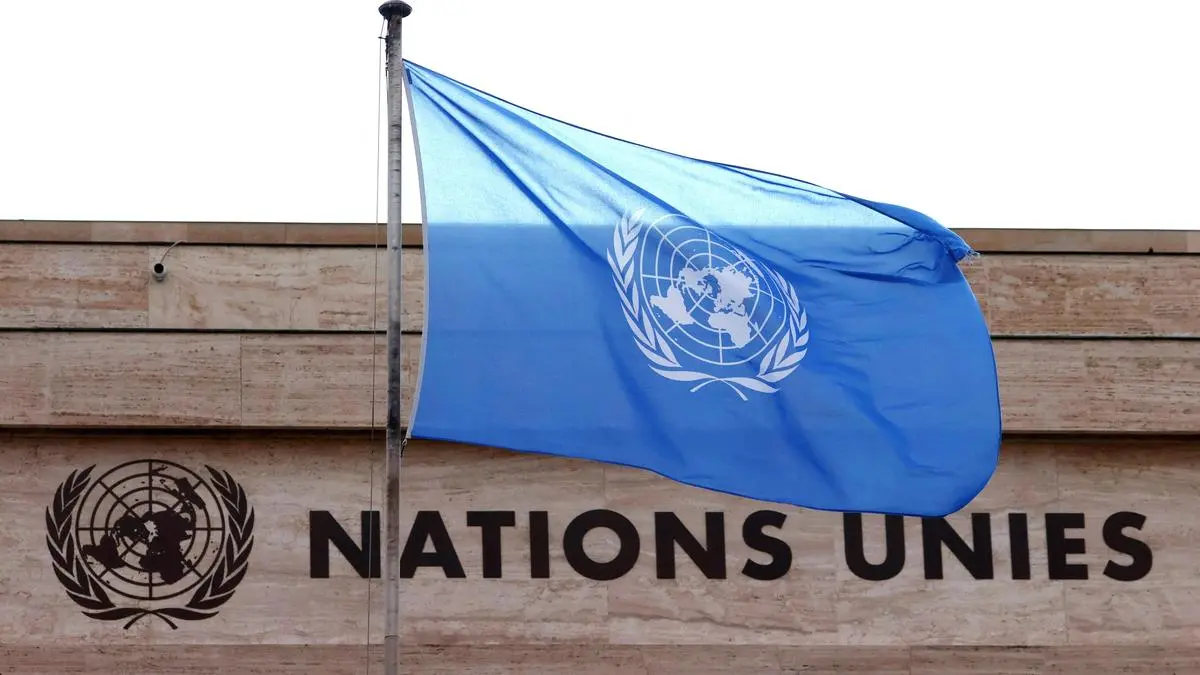
The United Nations is currently facing a liquidity crisis so severe it threatens the basic operational capacity of its global secretariat. This is not merely a bureaucratic hiccup or a seasonal dip in cash flow. It is a fundamental breakdown of the social contract between the world’s most powerful nation-states and the institution they built to prevent global chaos. Member states are simply refusing to pay their dues on time, or in some cases, at all. As of early 2024, the UN reported that only a fraction of its 193 members had paid their regular budget assessments in full, leaving a multi-billion dollar hole that has forced the suspension of hiring, travel restrictions, and the scaling back of essential peacekeeping missions.
The math is brutal. When the largest contributors—most notably the United States—withhold funds or delay payments due to domestic political gridlock, the entire machinery grinds to a halt. But the financial shortfall is just the visible symptom of a much deeper, more malignant disease. The UN is struggling to justify its existence in a multipolar world where unilateral action has become the new standard for diplomacy.
The Empty Coffers of New York
Walking through the halls of the Secretariat building, the physical signs of austerity are everywhere. Escalators are turned off to save electricity. Heat is turned down in the winter. These are optics, certainly, but they reflect a grim reality. The UN regular budget, which covers administrative costs and core programs, is separate from the peacekeeping budget, yet both are currently bleeding out.
The primary cause of this insolvency is a collection of "arrears" that have ballooned over the last decade. The United States remains the largest debtor, often using its financial contribution as a political lever to demand internal reforms. While the U.S. argues that the UN is bloated and inefficient, the resulting cash crunch prevents the very modernization the Americans claim to want. You cannot fix a plane's engine while you are refusing to pay for the fuel required to keep it airborne.
Beyond the U.S., other major powers have started to treat their dues as optional subscriptions. When a mid-sized economy decides to delay its payment by six months, it creates a ripple effect. The UN cannot borrow money from commercial banks. It relies entirely on the timely arrival of checks from capitals around the world. When those checks don't arrive, the organization has to dip into its working capital fund and special account, both of which are currently hovering near zero.
Peacekeeping on a Shoestring
While the administrative cuts in New York make headlines, the real human cost is felt in places like South Sudan, the Democratic Republic of Congo, and Mali. Peacekeeping is the UN’s most visible and expensive "product." It is also the one most currently under fire.
Peacekeeping missions are funded through a separate assessment scale, and the arrears here are even more staggering. We are seeing a dangerous trend where missions are being asked to do more with significantly less.
- Equipment failures: Contingents from developing nations often arrive with substandard gear because the UN cannot reimburse them promptly.
- Mandate creep: Missions are tasked with "stabilization," which is a polite word for counter-insurgency, without the heavy armor or intelligence capabilities required for such work.
- Early exits: In countries like Mali, the government has demanded the UN leave, partly because the mission lacked the resources to actually provide security, leading to a vacuum filled by mercenary groups.
The failure to fund peacekeeping doesn't just result in smaller offices; it results in dead civilians. When a patrol is canceled because there isn't enough fuel for the APCs, a village is left unprotected. This isn't abstract mismanagement. It is a direct consequence of a funding model that is no longer fit for purpose.
The Security Council Deadlock
Money is a tool, but power is the engine. The financial crisis is exacerbated by the total paralysis of the UN Security Council (UNSC). The veto power, once a safeguard against superpower conflict, has become a blunt instrument used to protect parochial interests at the expense of global stability.
Whether it is the conflict in Ukraine, the devastation in Gaza, or the civil war in Sudan, the UNSC has proven largely incapable of passing meaningful, enforceable resolutions. This impotence makes member states even less likely to cough up the cash. Why should a parliament in Europe or an administration in Washington prioritize UN dues when the organization cannot even agree on a ceasefire in a major global flashpoint?
The perception of the UN as a "talk shop" has moved from a cynical trope to an observable fact. The General Assembly passes resolutions that carry moral weight but zero legal teeth, while the Security Council remains locked in a Cold War-style staring match. This creates a feedback loop of irrelevance. As the UN becomes less effective, nations invest less in it, which in turn makes it even less effective.
The Rise of Parallel Institutions
We are witnessing the slow-motion fragmentation of global governance. As the UN falters, nations are looking elsewhere to solve their problems. We see this in the expansion of the BRICS+ bloc, the increasing reliance on the G20 for economic coordination, and the proliferation of regional security alliances that bypass the UN framework entirely.
These "minilateral" groups are more nimble. They don't require the consensus of 193 nations. However, they also lack the universal legitimacy that the UN Charter provides. When the UN is sidelined, we trade a flawed but universal system for a series of competing clubs. This is great for the "big players" who can dominate their respective spheres, but it is a disaster for smaller nations who rely on the UN to protect their sovereignty and provide a platform for their grievances.
The UN’s specialized agencies—like the WHO, WFP, and UNICEF—still perform vital work. But even these are being pushed toward "voluntary contributions" rather than "assessed contributions." This means their agendas are increasingly set by wealthy donors and private foundations rather than by a collective global strategy. It is the privatization of global aid by the back door.
Internal Rot and the Reform Myth
Critics of the UN often point to the "New York lifestyle" of high-ranking diplomats—the tax-free salaries, the generous pensions, and the perceived insulation from the problems they are supposed to solve. While much of this is exaggerated, there is a kernel of truth regarding the organization's sclerotic bureaucracy.
The UN’s hiring processes are legendary for their slowness. It can take eighteen months to fill a single mid-level position. The geographical distribution requirements, while necessary for a global body, often mean that merit is secondary to nationality. Furthermore, the UN is famously difficult to "right-size." Once a program or an office is created, it becomes nearly impossible to shut down, even if its original purpose has long since expired.
Secretary-General António Guterres has pushed for "Our Common Agenda," a sweeping plan to modernize the UN. But reform requires more than just a visionary document. It requires the P5 (the permanent five members of the Security Council) to willingly give up some of their control, and it requires the G77 (the coalition of developing nations) to accept more stringent accountability measures. Neither side seems particularly interested in a compromise.
The Specialized Agency Trap
Look at the World Health Organization. During the initial stages of the COVID-19 pandemic, the WHO was caught between the competing narratives of the U.S. and China. Because it relies so heavily on voluntary funding, it lacked the independence to challenge its biggest donors. This is the future of the entire UN system if the liquidity crisis is not solved. An organization that has to beg for its dinner cannot speak truth to power.
We see a similar pattern in the UN Relief and Works Agency (UNRWA). When allegations surfaced regarding the conduct of a handful of employees, major donors pulled their funding instantly. Regardless of the merits of the allegations, the speed with which the organization was pushed to the brink of collapse showed how fragile the UN's "safety net" truly is. It is a system built on sand.
The Cost of Collapse
If the UN continues to atrophy, we don't just lose a bunch of buildings in New York and Geneva. We lose the only forum where every country on earth has a seat at the table. We lose the technical standards that allow international mail to be delivered, planes to fly safely across borders, and telecommunications to function.
The "severe cutbacks" mentioned in official reports are the sounds of the floorboards creaking before the house falls in. The organization is currently surviving on accounting tricks—shifting money from one fund to another to pay the staff at the end of the month. But you can only play the shell game for so long.
The reality is that the world's powers are currently choosing to let the UN fail. They find the constraints of international law inconvenient and the cost of multilateralism too high. They are opting for a "might makes right" world, perhaps forgetting that the UN was created specifically because the last time we lived in such a world, it ended in a global conflagration.
The UN will likely not end with a bang or a formal dissolution. It will end with a whimper—a slow fade into a ceremonial role where well-dressed people give speeches that no one listens to, while the real decisions of the world are made in private rooms in Washington, Beijing, and Brussels. The lights are being dimmed one by one, not by a single enemy, but by the collective indifference of its creators.
National governments must decide if they want a global referee or a global free-for-all. If they choose the former, they need to pay the bill. If they choose the latter, they should be prepared for the consequences of a world where there is no longer a neutral ground to talk through a crisis before the missiles start flying. The invoice is on the desk; the deadline passed years ago.