The fluorescent tubes overhead hummed a low, threatening note, the kind that vibrates straight behind your eyes after forty minutes on a plastic chair.
Around me sat the quiet army of the frustrated. A young mother nursing a clipboard covered in birth certificates. An elderly man trying to decipher a QR code on a cracked screen. A contractor whose morning wages were actively evaporating while he waited for a stamp. We were all bound by a singular, humiliating truth: we needed permission from our own government to exist on the road, to open a business, to prove who we were, and the system made us pay for it with our time.
Nobody expects luxury from a state office. We expect penance. We expect to be treated like petitioners at the gates of a medieval castle, holding our crumpled papers, praying the guard at the desk is in a merciful mood.
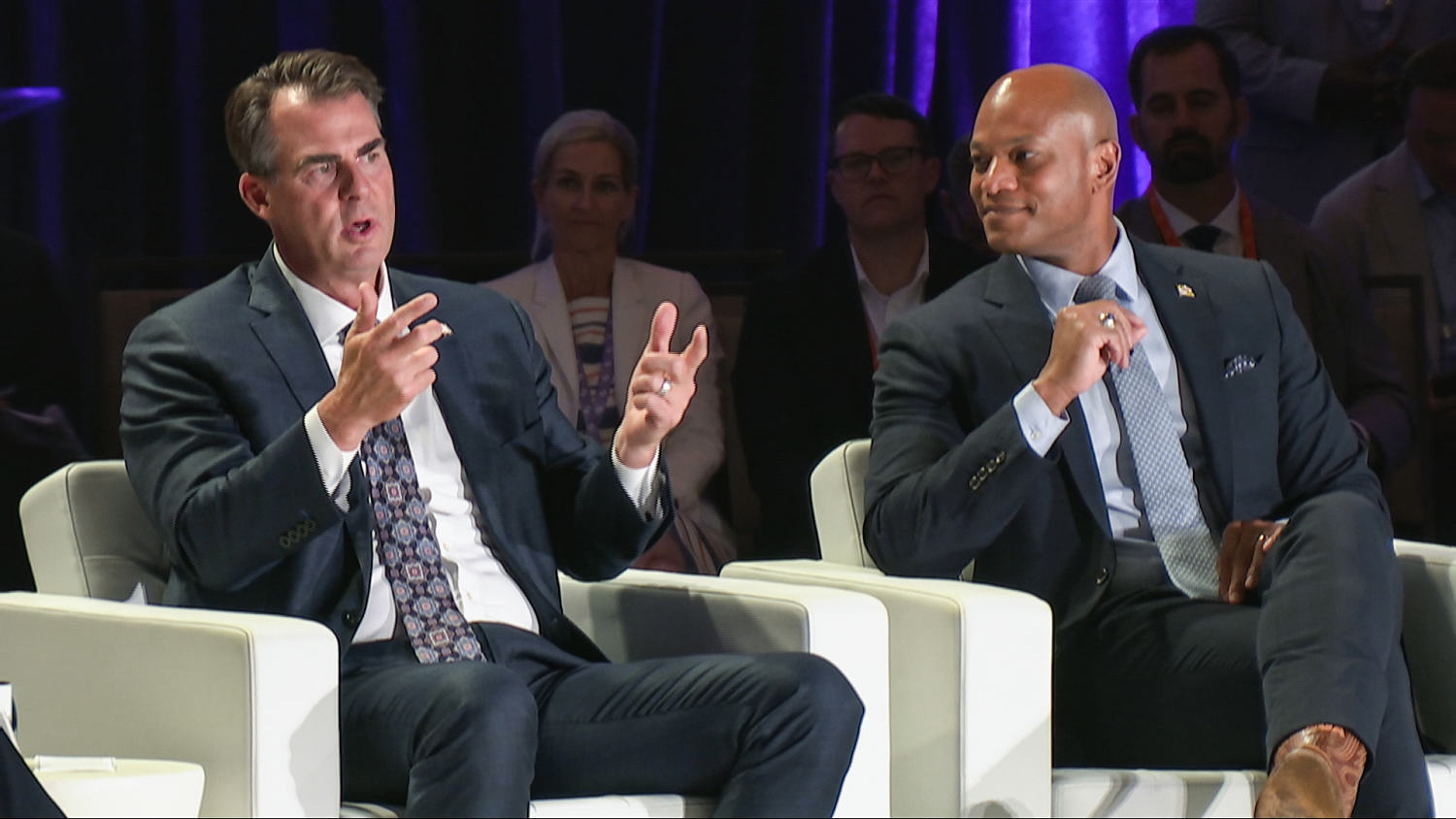
Governor Kevin Stitt of Oklahoma and Governor Wes Moore of Maryland know this waiting room. Even from their vantage points at the top of the organizational chart, they recognize the slow-motion erosion happening in the basement of civic life. Across state lines, across the sharp divide of red and blue partisan warfare, two executives reached the same bruised conclusion.
Government has forgotten how to serve.
Efficiency is not a conservative or a liberal value. It is a human one. When a bureaucracy takes three weeks to process a professional license, a family misses a rent payment. When a citizen is bounced between four different phone trees just to update an address, trust leaks out of the institution like air from a punctured tire.
Consider what happens next: apathy.
When public service feels like public punishment, people stop believing in the enterprise altogether. They withdraw. They shake their heads at the news and assume competence is an extinct species.
Stitt and Moore want to drag public administration out of the filing cabinet and into the modern era. They are talking about dignity. Not as a buzzword for a campaign brochure, but as an operational metric. What if a state agency treated a resident the way a decent hotel treats a guest? What if government remembered that every interaction represents a moment of vulnerability for the citizen on the other side of the counter?
Change rarely starts with a grand speech. It starts with a metric that hurts.
In Oklahoma, the push has been about cutting the fat, trimming redundant layers, and treating taxpayers like customers whose patronage is earned, not coerced. In Maryland, Moore has leaned heavily on service, pushing to rebuild the connective tissue between neighbors while streamlining the machinery that serves them. Different philosophies, different electorates, identical diagnoses. The engine is rusted.
Think about how we build software today. Your phone updates overnight. Your banking app remembers your face, your preferences, your patterns. It anticipates what you need before you finish typing. Meanwhile, the state Department of Motor Vehicles is still running on logic that predates the internet, demanding paper forms filled out in black ink, delivered in person, during standard business hours when normal people are expected to be at work.
It is an absurd tax on the working class.
If you are wealthy, time is an inconvenience you can outsource. You pay a service to wait in line. You have an accountant who handles the bureaucratic friction. But if you are living paycheck to paycheck, a botched filing or a three-hour wait at a state agency isn't just an annoyance. It is a crisis. It costs you hours you cannot spare. It costs you wages you cannot afford to lose.
This is where the abstract concept of good governance crashes into human reality.
When Stitt and Moore call for a cultural reset in public service, they are acknowledging an uncomfortable secret. For decades, we built government agencies around the convenience of the bureaucracy rather than the citizen. We protected jobs at the expense of outcomes. We rewarded compliance over creativity.
Breaking that pattern requires a peculiar kind of political courage. It means picking fights with entrenched unions, legacy contractors, and the deep-seated inertia of civil servants who have spent thirty years perfecting the art of saying no. It means measuring success not by how many forms were stamped, but by how quickly a person got what they needed and got back to their life.
Imagine walking into a state office and walking out five minutes later, your business registered, your license renewed, your issue resolved by a system that actually works. Imagine never having to mutter the phrase, "I'm from the government and I'm here to help," as a dark joke.
We are a long way from that reality. The inertia of red tape is a heavy anchor.
Yet the conversation is shifting. When executives from opposite ends of the political spectrum start singing from the same hymn sheet, pay attention. They are reading the room. They see the exhaustion of a public tired of friction. They know that democracy doesn't just die in darkness; sometimes, it dies in a fluorescent-lit waiting room while you wait for number 42 to flash on a broken screen.
The machinery of the state belongs to us. It is time we demanded it act like it.