War isn't just about trenches anymore. It's about supply lines.
When Ukraine launched a massive wave of coordinated drone strikes targeting Russian logistics hubs, ports, and transport networks, military analysts took notice. Kyiv isn't just fighting on the front line. They're systematically dismantling the economic and military infrastructure keeping Russian forces supplied, hitting everything from commercial e-commerce warehouses to vital naval bases in Novorossiysk.
If you want to understand why this strategy matters, you have to look at how modern conflicts are won. Bullets and artillery win single battles. Cutting off fuel, ammunition, and parts wins campaigns.
Shifting From Frontline Defense to Deep Logistics Interdiction
For months, the conflict bogged down into a grueling war of attrition. Russia kept pushing men and materiel through a network of southern roads, rail terminals, and maritime routes. Ukraine recognized a hard truth. Shooting down every incoming tank or artillery shell at the frontline is a losing battle.
Instead, Kyiv shifted tactics.
They targeted the choke points. According to reports from conflict monitors like ACLED, the drone campaign evolved through distinct phases. It started with radar and air defense suppression. Then it moved to vehicles along key transport corridors like the R-280 road. Now, it has expanded into systematic strikes on fixed bridges, rail yards, and energy infrastructure across occupied territories and deep inside Russian regions.
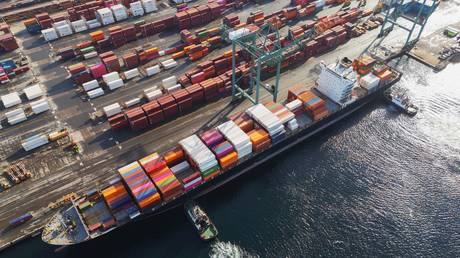
Take the recent operations targeting key logistics networks. Ukrainian forces didn't just hit random targets. They struck major storage facilities, commercial retail distribution hubs utilized for military backing like Wildberries warehouses in regions spanning Moscow to Tver, and critical port infrastructure at Ust-Luga and Novorossiysk.
Striking Where It Hurts Most
Ports and transit hubs are fragile. When a drone strikes a grain terminal or a naval supply pier, the ripple effect reaches far beyond the immediate blast zone.
Consider what happened at Novorossiysk. Ukrainian drones and maritime assets battered the Black Sea Fleet's main operational base, damaging major naval vessels like the Admiral Essen and Admiral Makarov frigates, alongside port grain facilities. When you disable a warship's missile launchers in its own home port, you alter the balance of power in the entire body of water.
Simultaneously, strikes on domestic logistics networks inside Russia force Moscow into a tough corner.
- Resource Reallocation: Air defenses must be pulled back to protect domestic industrial cities and warehouses.
- Supply Bottlenecks: Damaged rail links and ports force logistics coordinators to rely on slower, more vulnerable overland routes.
- Economic Strain: Hits on regional energy and commercial transport facilities drive up repair costs and disrupt normal domestic supply chains.
Russia's Defense Ministry recently claimed that air defense systems intercepted hundreds of drones across multiple regions, highlighting the sheer scale of these aerial operations. Yet, the physical damage reported at sites like the Baltic port of Ust-Luga proves that interception rates don't stop every impact.
What This Means for the Road Ahead
Warfare rewards adaptation. Russia continues to construct pontoon bridges, reroute supply trucks, and lean heavily on alternate transport corridors. But Ukraine's willingness to use cheap, repeatable drone technology means the cost of defense will always outpace the cost of attack.
You can't defend every square mile of a massive supply chain. When an army relies on centralized hubs, those hubs become targets. Kyiv's strategy proves that you don't need a larger army to disrupt a superpower. You just need better focus, persistent pressure, and the ability to strike where the enemy least expects it.