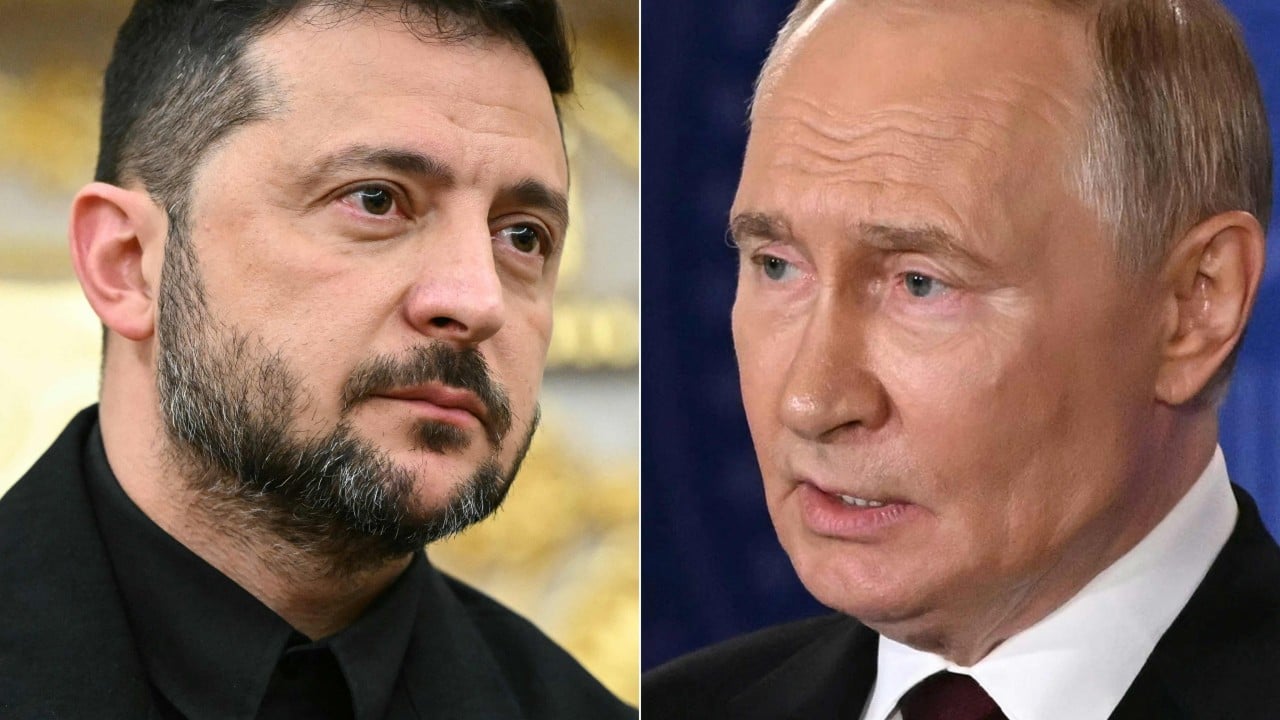
The headlines repeat a comforting script. Volodymyr Zelensky steps to a microphone, mentions readiness for de-escalatory steps if Moscow mirrors the gesture, and the diplomatic press corps exhales. Capitals across the West nod approvingly. Analysts on cable news praise the pragmatism. It sounds civilized. It sounds like the logical prelude to an exit ramp.
It is also completely disconnected from the mechanics of this conflict.
Talk of conditional de-escalation sounds like a peace strategy, but in reality, it is a rhetorical trap that obscures how modern attrition wars actually end. Wars of this scale do not wind down because leaders exchange polite signals of restraint across a demarcation line. They stop when one side's economic, industrial, or military capacity hits a wall so hard that continuation becomes an existential impossibility, or when the cost-benefit calculus shifts through unvarnished force.
Waiting for a reciprocal peace gesture from the Kremlin is not diplomacy. It is wishful thinking disguised as strategy.
The Myth of Reciprocal Goodwill
To understand why the readiness narrative falls apart, examine the baseline asymmetry of the actors involved. In traditional conflict resolution theory, de-escalation functions as a bilateral dance. One side takes a small step back, the other matches it, trust compounds, and the temperature drops.
That framework assumes both participants share a definition of the status quo worth preserving. Moscow does not.
When Ukrainian leadership floats conditional readiness for stepped-down tensions, the underlying assumption is that Moscow treats frozen lines or partial ceasefires as a mutual baseline. But historical precedent from the Donbas conflicts between 2014 and 2022 demonstrates the opposite. Ceasefires were treated by Russian planners not as endpoints, but as tactical pauses used to rearm, rotate units, and reset logistics nodes for the next phase of push.
Offering de-escalation preconditions to an adversary whose entire doctrine views pauses as operational logistics is like negotiating rules of engagement with an opponent who plays a different sport. You are not checking their momentum; you are giving them time to dig deeper trenches.
The Economics of Exhaustion
Let us strip away the diplomatic varnish and look at the ledger. Wars of position are sustained by two primary currencies: industrial output and demographic endurance.
For the past several years, I have watched defense analysts misread the economic indicators driving this war, treating it like a standard corporate restructuring where a dip in quarterly revenue forces a strategic pivot. It is not. Moscow has transitioned its entire domestic apparatus onto a wartime footing, converting civilian manufacturing lines into artillery shells, drone hulls, and armored chassis.
When a state reorganizes its society around continuous mobilization, political signals about de-escalation bounce off the system without changing its momentum. The factories do not care about press statements. They care about supply chains.
If Kyiv conditions its tactical posture on a reciprocal step from an economy locked into total mobilization, the wait will be infinite. Moscow has zero structural incentive to de-escalate while its domestic production lines are running three shifts a day and its foreign suppliers are expanding shipments. Asking an opponent who believes they are winning the math game to voluntarily slow down because you asked nicely is geopolitics as performance art.
The Danger of the Pause Trap
What happens if the West forces a premature, poorly structured de-escalation framework onto the battlefield?
We get a frozen conflict that heals nothing and breeds disaster. A temporary freeze without ironclad, forward-deployed security guarantees does not end a war; it merely resets the clock for a more destructive round.
Think of it like a poorly restructured corporate debt load. If you defer payments without fixing the underlying insolvency, you haven't solved the crisis—you've just concentrated the losses for the inevitable explosion down the road. A frozen line rewards territorial acquisition, validates the use of force as a viable foreign policy tool for revisionist powers globally, and leaves millions under occupation while telling them to wait for the next round of talks.
The alternative isn't endless escalation without thought. The alternative is accepting that peace is never begged into existence by offering concessions to an uninterested party. Peace is secured when the cost of continuation for the aggressor vastly exceeds any possible gain.
Until that equation shifts through hard metrics—uncompromised industrial supply, technological overmatch, and absolute battlefield reality—every talk of reciprocal de-escalation is just noise designed to comfort spectators thousands of miles away from the front line.
Stop waiting for the other side to grow a conscience. Build the leverage, hold the line, and let the results speak.