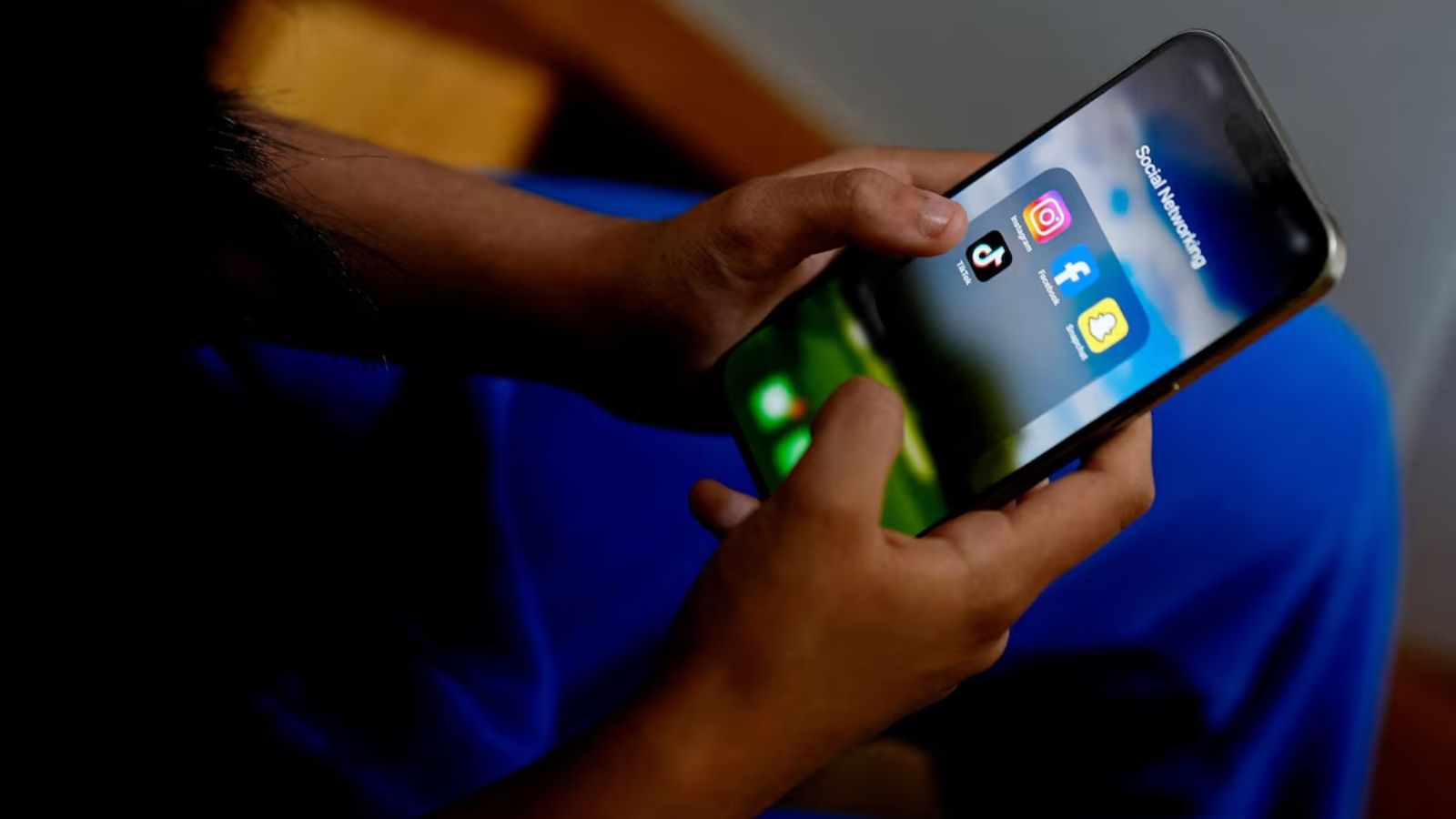
The British government wants to tuck your teenagers into bed by turning off their apps.
Technology Secretary Liz Kendall announced a new strategy targeting 16- and 17-year-olds. Starting next spring, platforms like TikTok, Instagram, and YouTube will feature a default midnight-to-6am block. The goal sounds noble on paper. Minsters want to stop endless late-night scrolling, boost sleep quality, and help kids focus on college.
But there is a glaring, ridiculous catch. The curfew is completely voluntary.
Older teenagers can bypass the entire restriction with two quick clicks in their settings. It is an opt-out system masquerading as tough regulation. The government calls it a smart way to ease the transition into adulthood. Critics, including Conservative shadow education secretary Laura Trott, have rightfully called the plan a "dog's dinner". Either a platform is safe for a 17-year-old at 11:59 PM, or it isn't. Pretending a easily skippable digital timer solves the youth mental health crisis is peak political theater.
The Flawed Logic of an Opt Out Curfew
Why is the UK Department for Science, Innovation and Technology pushing this now? It follows a separate, much stricter ban on social media for children under 16. To avoid a sudden "cliff edge" where a teenager turns 16 and instantly gets bombarded by highly addictive tech, the government cooked up these default settings.
Alongside the midnight lockout, tech giants must disable infinite scrolling and algorithm-driven auto-play feeds by default for older teens. If you want to keep scrolling, you have to manually turn those features back on.
The policy stems from a government-commissioned pilot study tracking 300 teenagers. When forced away from apps like Snapchat and TikTok between 9pm and 7am, kids went to bed earlier, reported better concentration, and felt less stressed.
The problem? The kids in the trial didn't have a giant "turn off restriction" button staring them in the face.
Real-world teenagers are tech-literate. If they want to watch TikToks at 2:00 AM, they will change the setting. Online safety minister Kanishka Narayan claimed the government is "forcing the tech companies to do it" under threat of severe regulatory sanctions. Yet forcing a company to build an easily breakable lock is pointless.
The VPN Problem and the Real Digital Risks
Even if the government tightened the rules, they are ignoring the tools teenagers already use to circumvent blocks. Virtual Private Networks (VPNs) let anyone mask their geographic location. If a platform restricts a UK user, the user simply switches their digital location to a country without restrictions.
Remarkably, the government explicitly stated it will not restrict VPN usage, citing free speech and data privacy concerns. Their own internal data shows only 7% to 10% of children currently use VPNs to bypass age checks.
That number is incredibly naive.
The moment you implement a strict nationwide digital wall, VPN adoption skyrockets. Australia ran into the exact same issue when trying to roll out its own youth social media bans. Platforms struggle to execute basic age-verification checks. When they do, kids quickly find a workaround.
Campaigners like the Molly Rose Foundation—a group founded after 14-year-old Molly Russell took her own life following exposure to harmful online content—aren't impressed by the curfew. They labeled the measures a piecemeal announcement that avoids the actual issue.
The real danger isn't the clock. It's the content.
Data from the Molly Rose Foundation shows that 76% of teenagers who saw high-risk self-harm or suicide content encountered it on TikTok. A default midnight curfew does nothing to alter the dangerous algorithms operating during the daytime hours. By focusing entirely on screen time metrics, policymakers are letting big tech off the hook for building fundamentally unsafe products.
Moving Beyond Toothless Digital Timers
If you're a parent or educator waiting for the state to solve night-time device addiction, don't hold your breath for spring 2027. A voluntary curfew will not change teenager behavior. Real digital safety requires immediate, localized action rather than reliance on software defaults.
- Implement physical device boundaries: The only foolproof curfew is a physical one. Move charging stations out of bedrooms entirely before midnight.
- Utilize operating system controls: Don't rely on TikTok or Instagram to police themselves. Use built-in Apple Screen Time or Google Family Link settings at the device level, which require a parental passcode to override.
- Focus on algorithm education: Teach older teenagers how to actively reset their feeds, block harmful keywords, and recognize when an algorithm is manipulating their mood.
Relying on tech giants to enforce a polite, optional pause button is a losing strategy. The government's new safety measures look great in a press release, but they crumble the second a teenager decides they want to stay awake.