The clock in a prime minister’s office doesn’t tick like a normal one. It thuds. Every second is a heavy reminder of a collapsing economy, a thirsty power grid, and the impossible demands of two superpowers who rarely agree on the color of the sky.
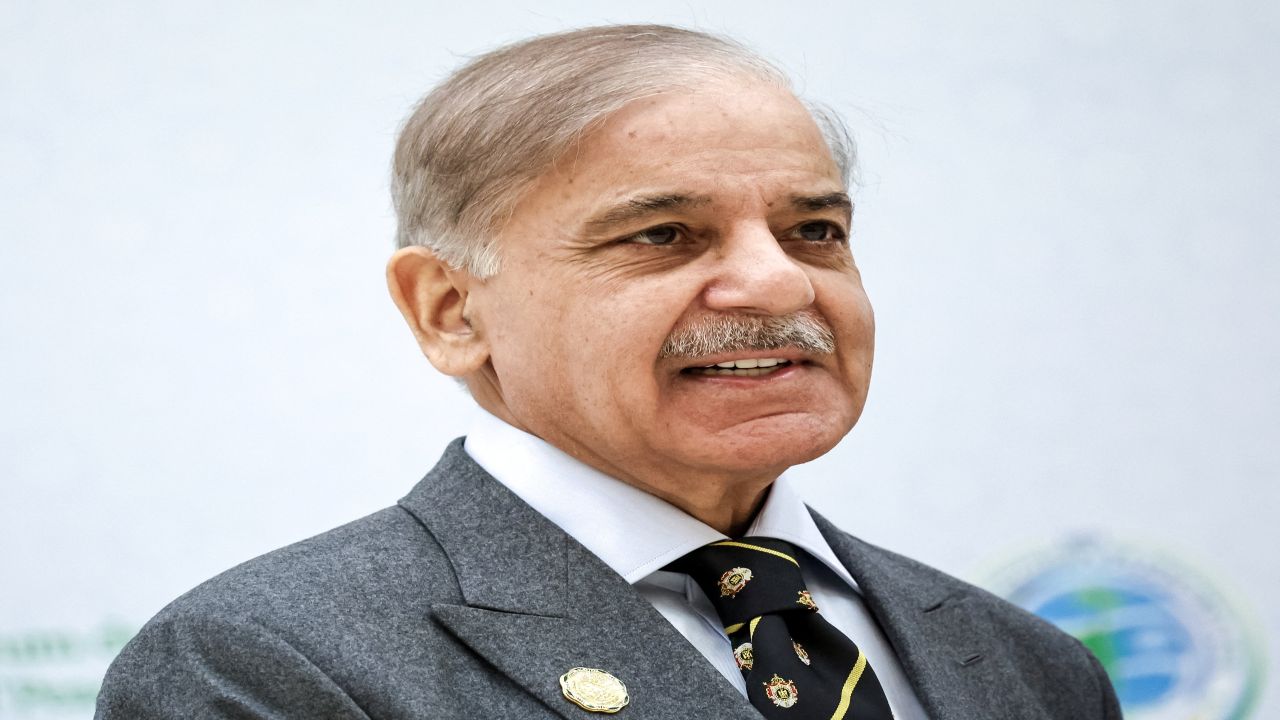
In Islamabad, the air is thick with more than just the usual spring heat. It is thick with the weight of an ultimatum. Donald Trump has set a deadline, a hard line in the sand regarding Pakistan’s dealings with Iran. But Shehbaz Sharif, a man currently holding together a country by its frayed edges, has asked for something more precious than money. He has asked for time. Fourteen days. Two weeks to find a way to breathe while the world’s two largest geopolitical shadows close in.
The Ghost of a Pipeline
To understand why fourteen days matter, you have to look at the ground. Deep beneath the rugged, dust-choked border between Iran and Pakistan, there is a dream made of steel. The Iran-Pakistan gas pipeline was supposed to be the "Peace Pipeline." It was designed to carry the lifeblood of industry—natural gas—from the South Pars field to the darkened factories of Punjab.
Consider a hypothetical shop owner in Karachi named Ahmed. Ahmed doesn't care about the nuances of the US State Department’s sanctions. He cares that his sewing machines stop humming at 4:00 PM every day because the grid can’t keep up. He cares that his children study by candlelight. To Ahmed, the gas pipeline isn't a political bargaining chip; it is the difference between a thriving business and a shuttered door.
But the steel remains empty.
Washington sees the pipeline as a lifeline for Tehran, a way for a sanctioned regime to funnel cash into its coffers. To the White House, any cooperation with Iran is a breach of a global wall. To Pakistan, however, saying "no" to Iran doesn't just mean dark streets; it means a multi-billion dollar legal penalty for breach of contract that could finally snap the nation’s back.
The Art of the Impossible Ask
Shehbaz Sharif is not just a politician; he is currently a professional tightrope walker. On one side, he has the American administration, which holds the keys to the International Monetary Fund (IMF) and the foreign aid that keeps Pakistan’s rupee from becoming a relic. On the other side, he has a neighbor in Iran that is tired of waiting and ready to sue for damages in international courts.
The deadline imposed by the Trump administration wasn't just a suggestion. It was a demand for a definitive pivot. But how do you pivot when both directions lead to a cliff?
By asking for a two-week extension, the Prime Minister isn't just procrastinating. He is looking for a third way. He is searching for a loophole, a waiver, or a miracle. The request represents a desperate attempt to explain to the United States that a total collapse of the Pakistani economy is far more dangerous to global stability than a gas deal with a neighbor.
The stakes are invisible until they aren't. We talk about "macroeconomics" and "bilateral relations," but the reality is the price of a loaf of bread in a Lahore market. If the US pulls the rug, inflation—already a monster—becomes a god. If Iran sues, the national debt becomes an inescapable prison.
The Washington Friction
The Trump era of foreign policy has never been known for its patience. The "America First" doctrine views these delays with skepticism. From the perspective of a desk in D.C., Pakistan's hesitation looks like double-dealing. They see a country that wants American F-16s and IMF dollars while simultaneously building infrastructure with a sworn adversary.
But the world isn't a spreadsheet. It’s a messy, bleeding reality of geography. You cannot move your neighbors. Iran will always be there, sharing a border that stretches for nine hundred kilometers of desolate, difficult terrain.
The tension in this two-week request lies in the silence between the words. Sharif is essentially whispering, Don't make us choose, because if you do, we might have to choose survival over friendship. ## The Sound of Two Weeks Passing
Imagine the meetings currently happening in behind-the-scenes rooms where the tea has gone cold. Diplomats are scouring decades-old treaties. Lawyers are looking for force majeure clauses. This isn't dry paperwork. It is a frantic race.
One week might be enough to craft a new proposal for a liquefied natural gas (LNG) terminal that satisfies the Americans. Ten days might be enough to convince Tehran to delay their legal filing. Fourteen days? That is just enough time for a desperate man to convince a stubborn one that their interests are actually aligned.
The tragedy of the situation is the lack of a middle ground. The US sanctions are designed to be "maximum pressure." They don't leave much room for "moderate exceptions." Yet, Pakistan is a nuclear-armed nation of over 240 million people. Its stability is a pillar for the region. If the pressure becomes too great, the pillar cracks.
The Human Cost of Geopolitics
We often view these news cycles as a game of chess. We watch the kings and queens move across the board. We analyze the "pivotal" moments and the "strategic" shifts. But the pawns—the people—are the ones who feel the cold when the heaters won't turn on.
There is a specific kind of exhaustion that comes from living in a country that is constantly the subject of someone else’s deadline. It is a weary, bone-deep uncertainty. When the news broke about the extension request, it wasn't met with cheers in the streets. It was met with a collective, anxious holding of breath.
People are waiting to see if they are about to be caught in the crossfire of a trade war they didn't start. They are waiting to see if their sovereign government has any sovereignty left at all, or if the direction of their energy policy is decided entirely in a zip code five thousand miles away.
The fourteen-day window is a microcosm of the modern world. It is the story of a smaller power trying to navigate the clashing egos of giants. It is about the struggle to keep the lights on without setting the house on fire.
As the sun sets over the Margalla Hills, the clocks in the halls of power continue their heavy thudding. The extension hasn't been granted yet. The answer from the White House could come in a tweet, a formal letter, or a deafening silence. In the meantime, the pipeline sits in the sand, a long, hollow pipe waiting for a gas that might never come, while a nation waits for a permission slip to survive.
The deadline is approaching. The tightrope is swaying. And for the millions of people whose lives depend on the outcome, two weeks feels like a lifetime and a heartbeat all at once.