When a Very Large Crude Carrier (VLCC) carrying two million barrels of crude oil strikes a naval mine and sinks in the Strait of Hormuz, the immediate headlines focus on burning hulls, plunging stocks, and frantic naval deployments. Those surface reactions miss the actual mechanism that grinds global trade to a halt. The real choke point is not the 21-mile-wide shipping lane between Oman and Iran. It is the underwriting desks in London. Once a supertanker goes down, maritime war-risk insurance evaporates overnight, freezing roughly one-fifth of the world's daily petroleum supply before a single replacement ship can even weigh anchor.
To understand why a single sunken tanker triggers a systemic cascade, you have to look at the anatomy of a VLCC, the physics of modern naval mines, and the unforgiving math of global energy markets.
The Anatomy of a Two-Million-Barrel Loss
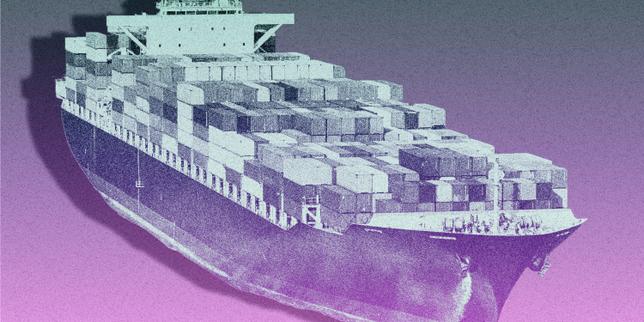
A Very Large Crude Carrier is not just a big boat. It is a floating industrial complex measuring over 1,000 feet long, roughly the length of the Eiffel Tower laid flat, with a draft that plunges 70 feet below the waterline. Carrying two million barrels translates to approximately 280,000 metric tons of cargo—enough crude oil to satisfy the entire daily consumption of a mid-sized European nation like Spain or Poland.
Modern VLCCs are built with double hulls, a regulatory mandate that became universal after the 1989 Exxon Valdez disaster. The outer hull is separated from the inner cargo tanks by a ballast space several meters wide, designed to absorb the kinetic energy of a grounding or low-speed collision without breaching the oil containment.
Naval mines do not care about grounding standards.
Unlike a surface collision that tears laterally along the waterline, a bottom-moored influence mine detonates beneath the keel. The explosion creates a massive, high-pressure gas bubble that expands violently, lifting the midsection of the ship upward. As the bubble collapses, the surrounding water rushes back in, creating a localized vacuum that pulls the hull downward. This phenomenon, known as whipping, snaps the steel spine of a supertanker in half. Even a reinforced double hull cannot withstand structural buckling when the keel loses its buoyancy support in a fraction of a second.
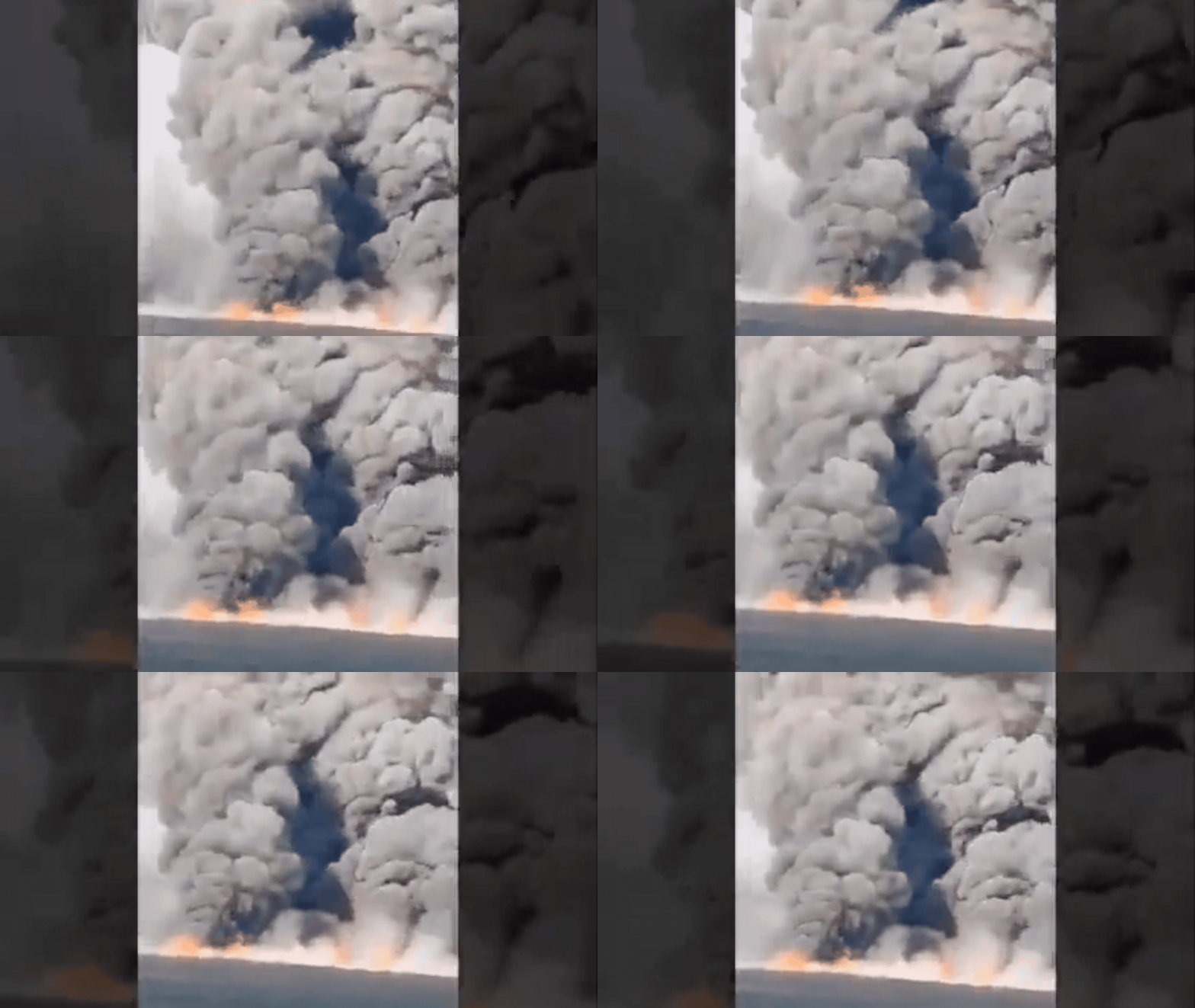
When the hull fractures, two distinct catastrophes unfold simultaneously. First, the environmental containment failure begins immediately. While heavy crude oil does not evaporate quickly like refined gasoline, the sheer volume—84 million gallons—overwhelms regional skimming capacity within hours. Because the Strait of Hormuz is a relatively shallow, semi-enclosed body of water with average depths around 160 to 260 feet, tidal currents push the slick directly into the desalination intakes of the Persian Gulf states. For nations like Kuwait, Qatar, and the United Arab Emirates, where over 80% of potable water comes from coastal desalination plants, an uncontained VLCC sinking is an existential infrastructure threat, not merely an ecological tragedy.
Second, the physical wreck itself becomes a navigational hazard. The Strait of Hormuz features two narrow Traffic Separation Schemes—inbound and outbound lanes—each only two miles wide, separated by a two-mile buffer zone. A 1,000-foot steel carcass resting on the seabed in 180 feet of water creates an underwater mountain that forces deep-draft tankers to deviate into unmapped or shallow waters, compounding the risk of secondary groundings.
Why Naval Mines Remain the Ultimate Asymmetric Weapon
Navies spend billions on aircraft carriers, Aegis destroyers, and satellite surveillance, yet a weapon designed during the American Civil War remains the most effective tool for closing a maritime choke point. Naval mines are cheap, silent, and politically deniable.
Consider the economics of asymmetric warfare. A sophisticated acoustic or magnetic influence mine costs anywhere from $10,000 to $50,000 to manufacture. A modern VLCC costs upwards of $120 million to build, and its two-million-barrel cargo represents another $150 million to $180 million depending on benchmark crude prices. That is a return on destruction exceeding 5,000 to 1.
More importantly, mines introduce psychological paralysis into commercial shipping. A missile strike is loud, visible, and attributable; radar tracks its trajectory back to a launch site, inviting immediate kinetic retaliation. A mine sits silently on the seabed for weeks or months, triggered only when a vessel's specific acoustic signature or magnetic field passes overhead.
Clearing a mined channel is agonizingly slow. Mine countermeasures (MCM) vessels must sweep the water column square yard by square yard using specialized sonar and remotely operated vehicles to neutralize each explosive charge. During the 1980s "Tanker War" between Iran and Iraq, over 400 commercial vessels were damaged or sunk, and even with the full might of the U.S. Navy conducting Operation Earnest Will, escorting tankers through mined waters required months of painstaking, high-risk sweeps.
If a supertanker sinks today, military commanders cannot simply declare the lane open the following morning. Every square mile of the Traffic Separation Scheme becomes suspect until cleared, effectively imposing a blockade without firing a second shot.
The Real Choke Point Is in London
Media coverage inevitably fixates on naval fleets steaming toward the Persian Gulf, yet warships do not move oil. Merchant mariners do, and merchant mariners do not sail without insurance.
The global shipping industry operates on a tightly wound web of Protection and Indemnity (P&I) clubs and war-risk underwriters, heavily concentrated in London's insurance market. Under standard maritime contracts, a vessel's baseline hull and machinery policy excludes acts of war, terrorism, and mines. To transit high-risk zones like the Strait of Hormuz, shipowners must purchase separate Additional War Risk Premiums (AWRP), typically valid for seven-day transit windows.
In peacetime, those premiums represent a tiny fraction of a percent of the vessel's hull value. The moment a supertanker hits a mine and sinks, the Joint War Committee in London designates the area an extreme-risk zone. Underwriters immediately revoke existing quotes and reprice risk in real time.
Let us look at a hypothetical example to see how the math breaks down for a shipping operator. Imagine a fleet owner operating a VLCC valued at $120 million. Before the sinking, the seven-day war-risk premium might sit at 0.05% of the hull value—roughly $60,000 per transit. Following a confirmed mine strike, underwriters routinely hike that rate to 1% or even 2% per week. Suddenly, the insurance bill alone jumps to $1.2 million or $2.4 million for a single passage, wiping out the entire profit margin of the charter before the crew even clears the Strait of Oman.
Even if an oil major agrees to absorb the exorbitant insurance surcharge, force majeure clauses kick in across charterparty agreements. Ship captains and crews have the contractual right to refuse transit into active war zones, and no reputable shipping line will risk a $120 million asset and 25 crew members when a single unmapped mine can send them to the bottom. The blockade becomes self-enforcing. Commercial traffic drops to zero not because the water is physically impassable, but because the financial liability is uninsurable.
The Myth of the Pipeline Bypass
Whenever tensions flare in the Strait of Hormuz, energy analysts inevitably point to overland pipelines as the pressure valve that will save global markets from a price shock. That optimism rarely survives contact with hydraulic reality.
Approximately 20 to 21 million barrels per day (bpd) of petroleum liquids transit the Strait of Hormuz, accounting for roughly 20% of global petroleum consumption. In addition, nearly one-fifth of the world's Liquefied Natural Gas (LNG)—primarily from Qatar—passes through this exact same corridor.
To bypass Hormuz, Middle Eastern producers rely on two primary overland arteries:
- Saudi Aramco’s East-West Pipeline (Petroline): Stretching across the Arabian Peninsula from the Abqaiq processing facility to the Red Sea port of Yanbu, this system has a theoretical nameplate capacity of roughly 5 million barrels per day.
- The Abu Dhabi Crude Oil Pipeline (ADCOP): Running from Habshan in the UAE to the port of Fujairah on the Gulf of Oman, this line can move approximately 1.5 to 1.8 million barrels per day.
Do the subtraction. Even if both pipelines operate at 100% of their theoretical maximum capacity—a feat rarely sustained over long periods due to maintenance, pumping station bottlenecks, and crude grade incompatibilities—they can absorb at most 6.5 to 6.8 million barrels per day.
That leaves 13 to 14 million barrels of crude oil per day completely stranded inside the Persian Gulf with nowhere to go.
Furthermore, there is zero overland pipeline bypass for Qatari LNG. Liquefied natural gas requires specialized cryogenic tankers that cannot simply reroute through crude oil pipes. If the Strait of Hormuz closes to commercial shipping, Asian and European utilities lose access to roughly 20% of global LNG supply overnight, triggering immediate bidding wars for spot cargoes from the United States and Australia.
Storage Limits and Forced Shut-Ins
A common misconception is that Gulf producers can simply pump oil into onshore storage tanks until the minefield is cleared. In practice, upstream oil infrastructure is designed for continuous flow, not long-term warehousing.
Once supertankers stop loading at terminals like Ras Tanura in Saudi Arabia or Kharg Island in Iran, onshore tank farms reach capacity within 10 to 14 days. At that point, operators face a brutal operational reality: they must shut in producing wells.
Shutting in high-pressure carbonate reservoirs is not like turning off a kitchen faucet. Rapidly halting production alters reservoir pressure dynamics, risking permanent geological damage, water intrusion, and collapsed wellbores. When the crisis eventually passes, bringing those fields back online takes months of costly workovers and does not guarantee a return to pre-crisis output levels.
Strategic Reserves and the Refining Mismatch
When physical barrels vanish from the water, consuming nations turn to Strategic Petroleum Reserves (SPR)—most notably the U.S. reserve stored in salt caverns along the Texas and Louisiana coasts, alongside coordinated stockpiles held by International Energy Agency (IEA) member states.
While releasing emergency stockpiles dampens immediate panic on futures exchanges, it cannot solve the chemical mismatch at global refineries.
Crude oil is not a uniform commodity. It varies wildly in density (measured by API gravity) and sulfur content. Most Persian Gulf exports consist of medium and heavy sour crudes—dense oil with higher sulfur levels. Over the past three decades, major refineries in Asia, Europe, and the U.S. Gulf Coast spent tens of billions of dollars installing complex coking and hydrocracking units specifically calibrated to process heavy sour crude into diesel, jet fuel, and marine bunker fuel.
Conversely, the vast majority of emergency supply available from U.S. shale basins—and much of the emergency release capacity—is light sweet crude.
Refineries cannot simply swap heavy sour feedstocks for light sweet oil without altering their output yields. Running light sweet crude through a complex refinery designed for heavy sour grades yields an excess of light ends like naphtha and gasoline while starving the market of middle distillates—specifically diesel and aviation fuel.
Because diesel powers long-haul trucking, agricultural machinery, freight rail, and construction equipment, a prolonged Hormuz disruption hits the physical supply chain far harder than pump prices alone suggest. Even if governments flood the market with emergency light crude, freight costs spike, supply chains slow down, and industrial inflation accelerates.
The Shadow Fleet Wildcard
There is one glaring exception to the insurance freeze that complicates any clean analysis of a Hormuz blockade: the dark fleet.
Over the past several years, sanctions regimes targeting Russian, Iranian, and Venezuelan oil exports gave rise to a parallel maritime ecosystem consisting of hundreds of aging tankers operating outside Western financial and insurance networks. These vessels routinely disable their Automatic Identification System (AIS) transponders, conduct ship-to-ship transfers in international waters, and rely on opaque, state-backed, or non-Western insurance entities.
When mainstream shipping lines backed by London P&I clubs halt operations following a mine strike, dark fleet operators see an opportunity for massive windfall profits. Unburdened by Western compliance boards or standard maritime liability rules, these vessels may continue transiting contested waters to move sanctioned or discounted crude to buyers willing to overlook regulatory risk.
However, relying on aging, poorly maintained supertankers to navigate an active minefield introduces a terrifying secondary hazard. Many dark fleet vessels are 15 to 20 years old—well past the prime operating life of a standard VLCC—and lack rigorous class-society inspections. If an uninspected, uninsured dark fleet tanker strikes a second mine, there is no P&I club standing by to fund the multi-billion-dollar environmental cleanup, leaving coastal states to bear the catastrophic ecological and financial wreckage entirely on their own.
Measuring the Real Fallout
Watching crude oil futures spike 15% or 20% in electronic trading hours after a tanker sinking is merely watching algorithms react to headline risk. The true barometer of whether a Hormuz crisis will tip the global economy into recession lies elsewhere.
Forget the daily fluctuations in Brent and WTI front-month contracts. Watch the Brent time spreads—specifically the price difference between oil delivered next month versus six months from now. When that spread blows out into steep backwardation, it signals that refiners are desperate for physical barrels right now because actual supply has vanished from the water.
At the same time, look at Very Large Crude Carrier spot charter rates and London war-risk premium quotes. Until underwriters put a price on transit risk that commercial shipowners can actually afford to pay, no amount of naval posturing or emergency stockpile releases will restore the flow of two-million-barrel cargoes out of the Persian Gulf.