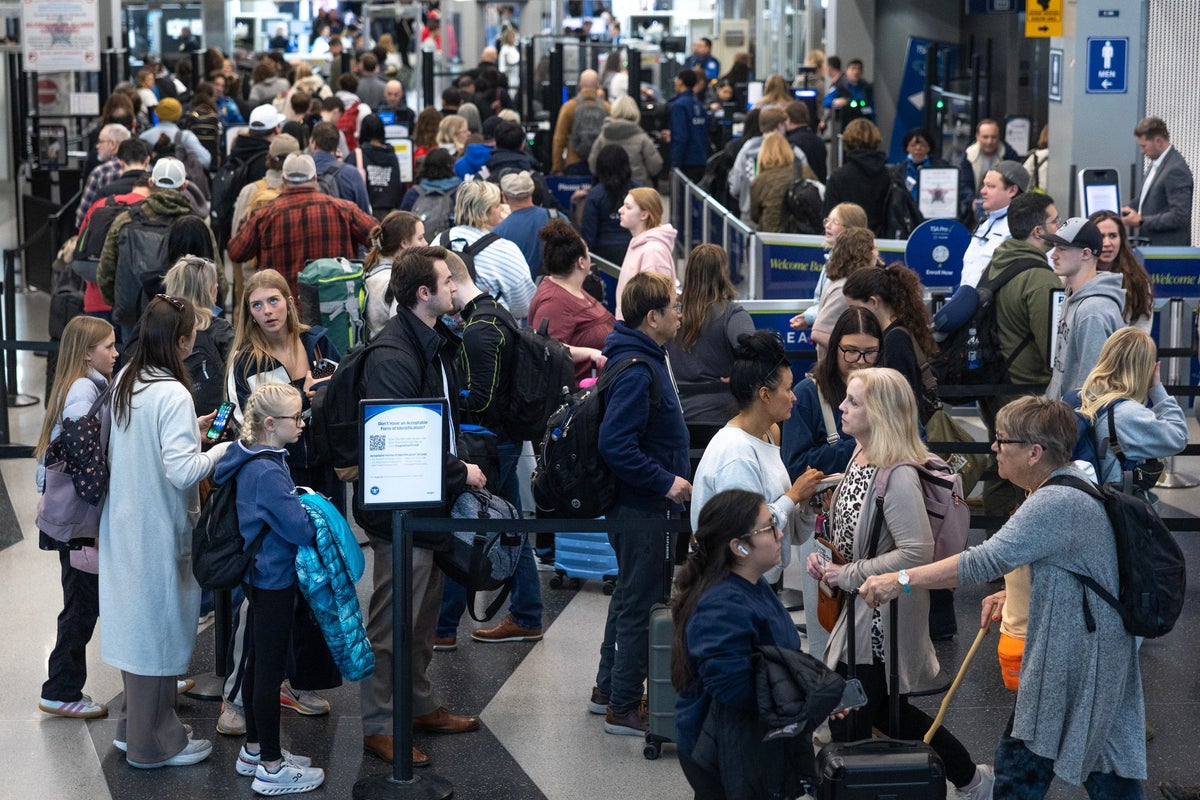
President Donald Trump signed an executive order on Friday to bypass a stalled Congress and pay Transportation Security Administration (TSA) workers, a move designed to stem a mass exodus of staff and collapse wait times that have recently exceeded four hours. While the White House promises that paychecks will flow as early as Monday, the reality on the terminal floor is far grimmer. Paying the workers who stayed does not instantly replace the hundreds who quit, nor does it immediately soothe the morale of a workforce that has been selling plasma to pay rent during a 42-day partial government shutdown.
The "emergency" order attempts to solve a logistical nightmare with a legal maneuver. By redirecting funds from last year’s tax legislation—described by the administration as having a "logical nexus" to security operations—the White House is betting that the mere promise of back pay will end the "blue flu" of sick calls currently crippling major hubs like Atlanta, BWI, and JFK. However, the structural damage to the nation’s aviation security is already deep, and a single signature cannot un-break a system that reached its snapping point weeks ago.
The Shell Game of Federal Funding
The legality of this move remains on thin ice. Under the Antideficiency Act, federal agencies generally cannot spend money that hasn't been specifically appropriated by Congress. To circumvent this, the administration is tapping into unspent billions from a previous reconciliation bill. Critics and constitutional scholars are already flagging this as a potential overreach, yet the administration is banking on the fact that no traveler stuck in a 240-minute line at BWI is going to sue to stop a paycheck from reaching a screener.
This isn't just about money; it’s about the precedent of "emergency" reallocation. If the executive branch can unilaterally decide which parts of a shut-down department are "essential" enough to fund via side-channels, the very mechanism of a government shutdown changes. It becomes a selective blackout where the most visible inconveniences—like airport lines—are patched, while quieter, equally critical functions remain dark.
Why the Lines Won't Vanish Overnight
A paycheck on Monday doesn't mean a full staff on Tuesday. Since the DHS funding lapse began in mid-February, more than 480 TSA officers have officially resigned. Thousands more have been working while facing eviction notices or utility shutoffs. In cities like Houston and New Orleans, absenteeism hit 40 percent this week.
The recovery period for a security checkpoint is much longer than the time it takes to process a bank transfer.
- Training Lag: It takes four to six months to fully vet and train a new TSA officer. The 480 who walked out represent a hole in the system that will take until the end of summer to fill.
- The Trust Deficit: Officers who felt abandoned for six weeks are wary. Many took second jobs in the private sector—driving for ride-share apps or working warehouse shifts—that offer more stability than a federal role subject to the whims of a budget standoff.
- The Spring Break Surge: This order arrives exactly as the spring travel season peaks. With Passover and Easter approaching, the volume of passengers is expected to rise by 15 percent, meaning even a "fully paid" TSA will be understaffed relative to the demand.
The ICE Factor and the Mission Creep
In a desperate bid to keep checkpoints open, the administration recently deployed Immigration and Customs Enforcement (ICE) agents to assist at airports. This move was largely symbolic. ICE agents are not trained in the specific nuances of TSA screening technology or prohibited item detection. Instead, they have been relegated to "queue management"—essentially acting as high-priced ushers.
This patchwork approach has created friction. Travelers are confused by the presence of armed immigration officers at domestic checkpoints, and TSA unions have expressed concern that the presence of "outsiders" disrupts the specialized flow of the screening floor. The executive order to pay TSA agents suggests a desire to phase out this temporary ICE involvement, but until the call-out rates drop significantly, the optics of "border agents at the gate" will likely persist.
The Regional Collapse
While major international gateways get the headlines, the real crisis is simmering at Category C and D airports—the smaller regional hubs. Officials have warned that if staffing levels don't stabilize, they may have to "hibernate" checkpoints at low-volume fields to funnel remaining officers to major cities.
A suspension of security at a regional airport in a place like Des Moines or Charleston doesn't just hurt local travelers; it creates a "cascade of chaos" for the entire network. If a feeder flight can't take off because there's no one to screen the bags, the connecting flight in Chicago or Atlanta leaves half-empty. The economic cost of these "micro-closures" could eventually outstrip the cost of the unpaid wages ten-fold.
The Specter of the World Cup
The urgency behind this order isn't just about this week's headlines. Looming on the horizon is the FIFA World Cup, set to bring an estimated 10 million additional passengers to U.S. airports starting in June. The TSA'"acting leadership has been blunt: if the agency doesn't start hiring and retaining staff now, the World Cup will be a national security embarrassment.
The current funding maneuver provides a temporary bridge, but it is built on shaky ground. If a court challenges the use of reconciliation funds for TSA pay, or if the "permanent" DHS funding bill continues to stall over ICE and Border Patrol disagreements, the "blue flu" will return with a vengeance. Travelers should not mistake a temporary infusion of cash for a cured system.
Arrive four hours early, regardless of what the headlines say. The money might be coming, but the people have already left.