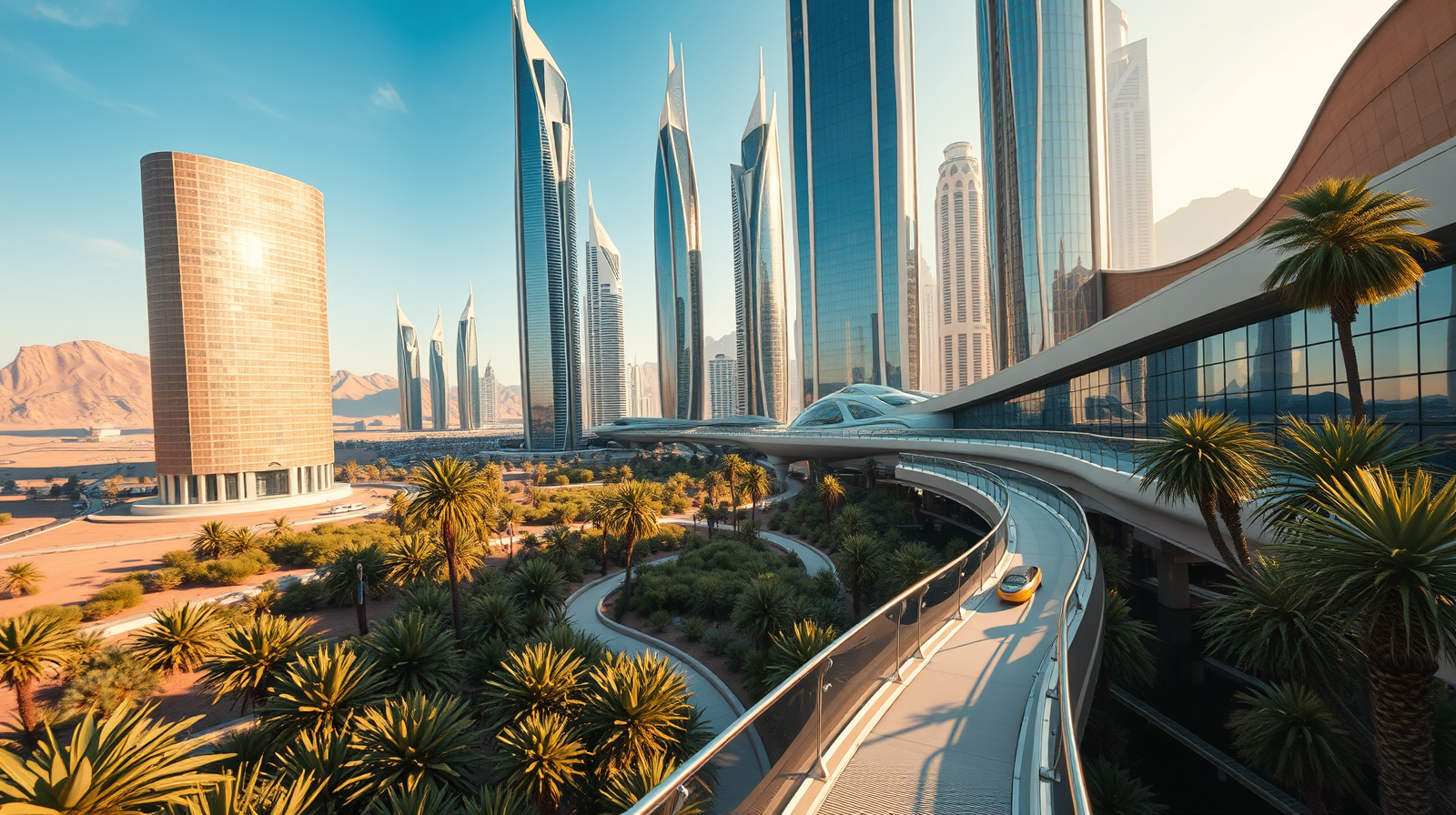
Saudi Arabia promised the world a revolution in urban living. They called it The Line, a 170-kilometer mirrored skyscraper slicing through the desert near the Red Sea, completely free of cars, streets, and carbon emissions. It sounded like science fiction because it was.
Now, the reality of building a sci-fi utopia in the desert is setting in. The kingdom is quietly pulling back on its wildest dreams, shrinking the immediate scope of its crown jewel project. If you have been tracking NEOM and the broader Red Sea developments, you need to understand that the master plan has collided with economic math. The scale is shifting drastically.
The original pitch promised a home for 1.5 million people by 2030. The updated reality? Officials now expect fewer than 300,000 residents by that deadline. Instead of 170 kilometers of vertical city stretching across the sands, contractors expect to finish just 2.4 kilometers of the structure. That is a massive pullback. It shows that even with hundreds of billions of dollars at your disposal, physics and finance still win.
The Reality Check Hitting The Line
Building a mirrored megastructure that rises 500 meters above sea level presents insane engineering hurdles. Think about the thermal expansion of glass in desert heat. Consider the wind loads pushing against a massive, continuous wall. Project managers quickly realized that constructing 170 kilometers of this all at once was functionally impossible.
The pullback is not a secret anymore, though the kingdom tries to spin it as a phase-based rollout. Contractors have slowed down operations on-site. Hundreds of workers have faced layoffs or reassignments as the construction schedule stretches further into the future.
The immediate focus has shrunk to a tiny fraction of the original vision. They are focusing on a specific 2.4-kilometer stretch that links directly into the hidden high-speed rail lines and the nearby Red Sea ports. The rest of the grand line remains a distant dream, likely pushed back decades.
Money Talks And Hype Walks
Saudi Arabia possesses deep pockets through its Public Investment Fund. However, those pockets are not bottomless. The kingdom needs oil prices to stay consistently high to fund the sheer volume of giga-projects currently underway across the country. Between NEOM, the Red Sea Project, Qiddiya, and Riyadh EXPO preparations, the capital demands are staggering.
Foreign direct investment has not flowed into NEOM at the scale Crown Prince Mohammed bin Salman originally hoped. Western and Asian investors love the concept of a sustainable, futuristic trade hub. They are far more hesitant to sink billions into unproven vertical real estate with no guaranteed return on investment.
The state is forcing a prioritization strategy. They have to decide which parts of the Vision 2030 plan actually yield economic returns quickly. A massive tourist resort on the Red Sea like Sindalah can generate cash through luxury travel soon. A 170-kilometer mirror wall cannot generate revenue until people actually live there. Money is flowing to projects that can open their doors soonest.
What This Means For Carbon Free Urban Design
The dream of a car-free region remains central to the marketing, but the engineering tells a different story. To move people across a vertical city without cars, you need an incredibly complex network of high-speed trains, autonomous shuttles, and vertical elevators.
When you scale the city down to just over two kilometers, the entire internal transport logic changes. You do not need a multi-billion-dollar subterranean bullet train just to move people across a distance they could easily walk or bike in twenty minutes. The scaling down makes the transport system cheaper to build, but it completely alters the proof-of-concept for regional car-free living.
The neighboring Red Sea projects face their own logistical realities. Developing luxury islands without destroying the delicate coral reefs requires slow, meticulous work. You cannot rush environmental preservation. The rush to hit 2030 deadlines caused massive tension between foreign environmental consultants and state officials who wanted fast results.
The Lessons For Global Real Estate Investors
If you are looking at the Middle Eastern real estate market, this pivot offers a crucial lesson. Do not buy into the initial render images. Look at the infrastructure phases. The scaling back of NEOM proves that mega-developments always revert to economic fundamentals.
To evaluate these massive projects effectively, look at three key metrics instead of marketing materials:
- Port and Rail Proximity: Projects that connect immediately to existing global shipping lanes and operational transport hubs survive scaling rollbacks.
- Phased Revenue Models: Look for developments that can open small sections to paying tourists or businesses within three years, rather than waiting a decade for full completion.
- Local Debt Markets: Watch how much local Saudi banks are lending to these projects. When local banks slow their lending, it is a sign that cash reserves are tight.
Track the individual projects within NEOM rather than treating the region as a single entity. The industrial port city of Oxagon and the luxury island of Sindalah are moving forward because they have clear, traditional business models. The Line is the piece facing the biggest identity crisis. Shift your investment focus toward the industrial and luxury tourism nodes rather than the speculative vertical city concepts. The money is moving where the immediate returns are. Watch the capital flows, ignore the press releases, and position yourself where construction crews are actively pouring concrete today.
.svg/240px-1-8_note_quaver_(music).svg.png)