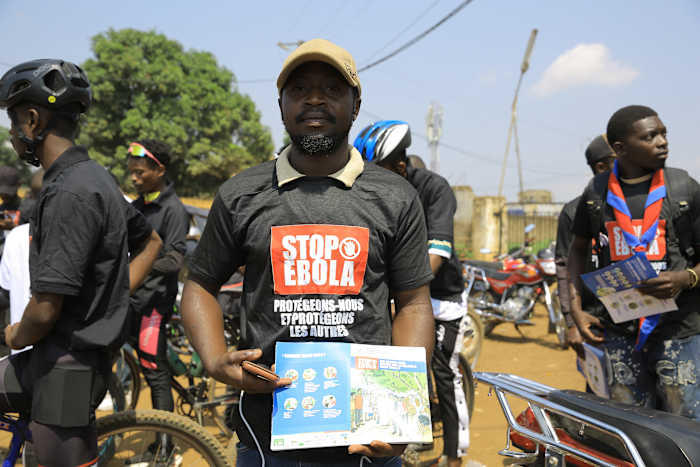
You’ve probably seen the headlines. They claim this Ebola outbreak is the deadliest ever, moving faster than anything we’ve seen before. It’s scary stuff, especially when numbers like "three times faster" get thrown around. But if you strip away the alarmist tone, you start to see the real story. I’ve been tracking infectious disease reporting for years, and this situation in the Democratic Republic of the Congo (DRC) is less about a biological "super-virus" and more about the brutal reality of operating in a conflict zone.
The current outbreak, which was officially declared on May 15, 2026, is driven by the Bundibugyo virus. This isn't the same strain that fueled the massive 2014-2016 West African epidemic. It’s a rarer, genetically distinct variant. Because of this, the medical community hit a wall almost immediately. We don't have the same proven vaccines or established treatments that we had for the more common Zaire ebolavirus. That’s the first thing most people miss: we aren't fighting the same enemy.
Why This Outbreak Moves So Fast
The term "fastest" is a statistical observation, not a mystery. In 2014, health systems were overwhelmed, sure, but they were working within a global response structure that had time to mobilize. Here, the geography and the politics are working against every containment effort.
The virus is spreading in the eastern region of the DRC, specifically in provinces like Ituri and North Kivu. These are areas where armed conflict has been a daily reality for years. When your primary challenge is reaching a village that’s controlled by rebel groups or is actively under attack, you aren't just doing public health work—you're working in a war zone.
I’ve looked at the reports coming out of the DRC, and the numbers are sobering. As of August 20, 2026, we are looking at over 5,290 confirmed cases and more than 2,500 deaths. That trajectory is staggering compared to previous events. It’s hitting those milestones at triple the pace of the 2014 crisis because the virus is moving through a population that is constantly on the move, fleeing violence, and often unable to access even basic medical care.
The Complication of Misinformation
One of the biggest hurdles is the reaction on the ground. People in these regions have been traumatized by years of instability. When health workers arrive in full protective gear to tell a family they can’t hold a traditional funeral for a loved one, it doesn't just breed distrust—it sparks hostility.
I’ve seen firsthand how these cultural clashes play out. When you restrict traditional burial rites—which often involve washing and preparing the body—without deep, genuine community engagement, you get pushback. In some areas, locals have even accused health teams of bringing the virus themselves. It’s a tragedy of communication. When people are scared, they hide their sick. When they hide the sick, the virus finds new hosts.
The Reality of Medical Limitations
Without a specific vaccine or targeted treatment for the Bundibugyo virus, the strategy has to be old-school: rigorous contact tracing, strict isolation, and supporting the patient’s body through the illness. It’s basic, but it’s incredibly difficult to execute.
The case fatality rate currently sits around 46%. That’s high. But it’s important to remember that this isn't just about the virus’s virulence; it’s about the lack of support. If a patient is diagnosed late, their chances of survival plummet. If they stay away from clinics because they’re afraid of the stigma or the violence, they aren't getting the fluids and supportive care they need to survive the initial phase of the disease.
What You Should Actually Know
If you're worried about the international risk, take a breath. The risk of this spreading to countries outside of Central Africa remains very low. While there have been a few isolated, imported cases in countries like France and cases involving Western aid workers evacuated to Germany, these haven't sparked secondary outbreaks. Global health monitoring systems are actually working exactly as they should.
We’re seeing a crisis that is exacerbated by geography, infrastructure, and historical distrust. It’s not a situation where the virus has suddenly developed some new, unstoppable power. It’s an infectious disease finding its way through a cracks in a fragile system.
If you want to understand the trajectory of such events, stop looking at the total case count as a linear climb. Look at the health zones. Look at the local labor strikes—like when responders had to pause work because they weren't being paid. Those are the things that actually decide how long an outbreak lasts.
The best way to help is to support organizations that provide direct medical assistance and community-based health infrastructure in the DRC. Transparency in reporting and consistent funding for on-the-ground, local teams is what eventually turns the tide. We don't need panic. We need sustained, localized support.