Donald Trump’s declaration of a twenty percent cargo charge on vessels transiting the Strait of Hormuz is a direct threat to India’s economic stability. If enforced, this unprecedented levy will immediately inflate India’s annual energy bill by billions of dollars, drive domestic inflation, and weaken the rupee. But the primary danger does not lie in a theoretical American invoice. The real crisis is already unfolding in the waters of the Gulf, where skyrocketing maritime insurance premiums, physical attacks on merchant vessels, and a collapsing international legal framework are making the transport of Middle Eastern crude a precarious and prohibitively expensive endeavor.
The Guardian Angel’s Toll Booth
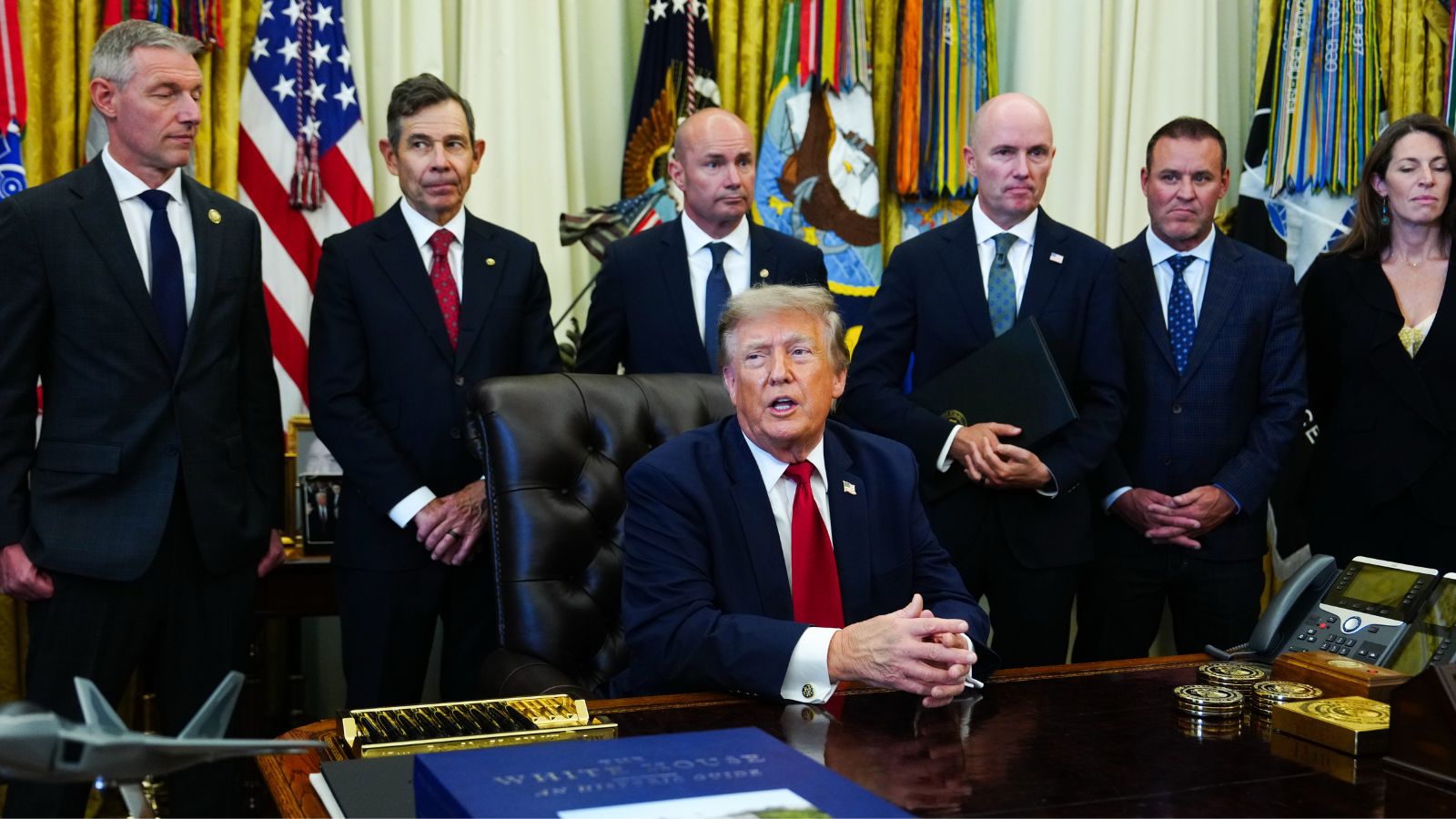
The announcement came from the Oval Office with characteristic bluster. Striking a transactional tone, the American president proclaimed that the United States would henceforth be known as the "Guardian of the Hormuz Strait". He reasoned that because American naval forces protect this highly volatile channel, the international community must reimburse Washington for its services. The price of admission is twenty percent of the value of all cargo shipped through the passage.
To back this up, the White House announced the reinstatement of a naval blockade on Iranian ports. This effectively ended a brief pause in hostilities that had been secured by a tentative memorandum of understanding just weeks prior.
For India, this is a worst-case scenario.
New Delhi is the world’s third-largest consumer of crude oil, relying on imports to meet nearly ninety percent of its domestic demand. While the government has spent the last few years diversifying its supply by purchasing heavily discounted Russian crude, the geography of energy remains stubborn. Roughly forty percent of India’s crude imports, sixty percent of its liquefied natural gas, and an astonishing ninety percent of its liquefied petroleum gas must pass through the narrow chokepoint of Hormuz. A twenty percent surcharge on these cargoes would devastate the balance sheets of Indian public-sector refiners.
The Absurd Math of a Twenty Percent Levy
To understand the sheer scale of the American proposal, one must look at the standard economics of maritime shipping. A single modern Very Large Crude Carrier can transport up to two million barrels of oil. At current global prices, a fully laden supertanker carries a cargo valued at roughly one hundred and fifty million dollars.
Under Trump’s proposed framework, a twenty percent charge on that single transit would equate to thirty million dollars.
This is not a standard transit fee. It is a sum that completely eclipses the commercial logic of shipping. Traditional canal tolls, such as those charged by the Suez Canal Authority or the Panama Canal Commission, are calculated based on vessel tonnage and typically range from several hundred thousand dollars to just over a million. A thirty-million-dollar toll is an extortionate tariff disguised as a security fee.
Furthermore, the White House has offered absolutely no clarity on how this charge would be administered.
- Who collects the money?
- Is the charge based on the declared value of the cargo, the market value of the vessel, or freight rates?
- What happens to a sovereign vessel that simply refuses to pay?
The international shipping community is baffled. The International Maritime Organization was quick to issue a statement pointing out that there is absolutely no legal basis under international maritime law for any nation to impose mandatory transit tolls on ships passing through an international strait. Historically, the United States has been the primary champion of this exact principle, routinely sending warships into the South China Sea and the Gulf under the banner of "Freedom of Navigation" operations. By claiming ownership over the transit rights of Hormuz, Washington is abandoned decades of its own foreign policy doctrine in favor of a raw protection racket.
The Shadow Tax of the Gulf War Zone
Even if the United States never successfully collects a single dollar of this proposed toll, India is already paying a steep price. The real threat is the physical instability that the policy has triggered.
Hours before the White House made its announcement, Iranian cruise missiles struck two UAE-flagged tankers, the Mombasa and the Al Bahiyah, in the southern shipping lane of the strait. The attack was devastatingly personal for India. One Indian crew member was killed, and six others were wounded.
This human cost highlights a vulnerability that Indian policymakers rarely discuss in public. A vast percentage of the global merchant navy's seafaring workforce is composed of Indian nationals. When tankers are targeted by Iranian missiles or seized by regional paramilitaries, it is Indian citizens who find themselves in the line of fire.
Strait of Hormuz Shipping Traffic (Recent Crisis Dip)
=====================================================
Typical Daily Transits:   ~20-30 Ships
Sunday Low Point:         6 Ships
Indian Vessels Stranded:  9 Vessels
=====================================================
With only a handful of vessels daring to make the transit and multiple Indian ships stranded in the Gulf, the physical flow of oil is tightening. This physical risk translates directly to financial pain.
When a shipping lane is declared a war risk area, maritime insurers do not hesitate. War-risk premiums have surged. Shipowners are demanding exorbitant freight rates to compensate for the danger of sending their multi-million-dollar hulls into a corridor where missiles are flying. These soaring freight and insurance costs are added directly to the landed cost of crude at Indian ports. It is a shadow tax that is already active, driving up the price of oil long before any official toll collector is stationed at the mouth of the Gulf.
Iran’s Sarcastic Defiance and the Legal Vacuum
The response from Tehran was swift, cutting, and highly revealing of the geopolitical deadlock. Iranian Foreign Minister Abbas Araghchi took to social media to sarcastically agree with Trump’s premise, noting that whoever secures the waterway should indeed be compensated. He added with dry irony that Iran has been the true guardian of the strait for centuries, but that twenty percent was "too much" and Tehran would be much fairer in its pricing.
This exchange highlights a dangerous consensus between the two adversaries. Both Washington and Tehran now seem to view the Strait of Hormuz not as a global commons protected by international treaty, but as a commercial asset to be controlled, policed, and monetized.
Legal Status of the Strait of Hormuz
-------------------------------------------------------------------------
UN Convention on the Law of the Sea (UNCLOS):
  Guarantees "transit passage" for all international vessels.
  The U.S. has never ratified UNCLOS but historically respected it.

The New Reality:
  U.S. threatens a 20% unilateral cargo charge.
  Iran threatens to charge its own transit tolls and restrict access.
-------------------------------------------------------------------------
The United States has long relied on the UN Convention on the Law of the Sea to justify its presence in global waters. Yet, because Washington has never officially ratified the treaty, its sudden pivot to cargo taxation makes it impossible to argue that Iran is the sole bad actor violating maritime norms. By playing the same game of territorial coercion, the Trump administration has effectively destroyed the legal shield that protected international shipping lanes.
The Macroeconomic Shockwave Heading for New Delhi
For the Indian economy, the timing of this Gulf crisis could not be worse. The Reserve Bank of India has spent months trying to anchor retail inflation near its target. A sustained energy shock threatens to undo all of that progress.
When the price of imported crude rises, the impact is felt across the entire Indian economic spectrum.
- The Fuel Pump: Diesel and petrol prices rise, immediately increasing the cost of transporting food, agricultural goods, and manufactured products across the country.
- The Trade Deficit: India must buy more U.S. dollars to pay for its energy imports, widening the current account deficit.
- The Rupee: Increased demand for dollars depreciates the rupee, which in turn makes all other imported goods—from electronics to fertilizer—significantly more expensive.
New Delhi cannot easily turn to Russia to solve this problem. While Russian oil has been a lifesaver over the past two years, those supply lines are operating at near-maximum capacity. The logistics of moving vast quantities of crude from Baltic and Black Sea ports to India are highly complex and capped by shipping availability. Furthermore, Russian Urals crude is not a perfect substitute for the specific grades of Middle Eastern crude required by many of India’s highly specialized coastal refineries.
The Indian Ministry of External Affairs has maintained a tense silence since the attacks on the tankers and the White House announcement. It is a silence born of deep geopolitical discomfort. India has spent years carefully cultivating a strategic partnership with the United States, while simultaneously maintaining crucial energy and diplomatic ties with both Iran and the Arab Gulf states.
Now, Trump’s transactional unilateralism is forcing India into an impossible position. If New Delhi complies with the American cargo charge, it recognizes a highly dangerous precedent that allows dominant naval powers to tax global trade at will. If Indian shippers refuse to pay, they risk losing the protection of the very naval forces that keep the Gulf passable, leaving their vessels entirely at the mercy of Iranian retaliatory strikes.
The era of free, unhindered maritime passage through the world’s most critical energy corridor is ending, replaced by a system of gunboat toll booths. India, with its massive import dependency and exposed seafaring workforce, is left holding the bill for a conflict it did not start and cannot control.