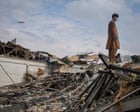
Cuba is currently a land of flickering candles and silent refrigerators. On Monday, March 16, 2026, the entire island plunged into a total blackout, leaving 11 million people sitting in the dark. This wasn't just another localized power failure. The national grid completely disconnected, a catastrophic failure that has become the new normal for a country pushed to its absolute breaking point.
While Havana remains shrouded in shadows, the rhetoric coming out of the White House is heating up. President Donald Trump didn't mince words this week. He told reporters in the Oval Office that he expects to have the "honor" of "taking Cuba in some form." He didn't stop there, either. He claimed he could do "anything I want" with the island, suggesting that after his administration's recent military moves in Venezuela and Iran, Cuba is next on the list.
The Real Reason Cuba is Unplugged
You've probably heard the Cuban government blame "the blockade" for every broken lightbulb since 1959. This time, they aren't entirely wrong, but the story is more complicated. The current energy collapse is the direct result of a crushing U.S. oil blockade implemented in January 2026.
After the U.S. military operation that captured Venezuelan President Nicolás Maduro earlier this year, the primary lifeline of cheap crude to Cuba was severed. Trump didn't just stop Venezuelan shipments; he threatened massive tariffs on any country—including Russia or China—that tries to sell oil to Havana.
The results are devastating. Cuba usually produces about 40% of its own petroleum, but its power plants are ancient. These thermal plants are currently being forced to burn heavy, high-sulfur domestic crude that they weren't designed for. This "dirty" oil is literally corroding the machinery from the inside out. When the Antonio Guiteras plant—the island's largest—tripped on Monday, it triggered a cascading failure that the rest of the weakened system couldn't handle.
What Trump Actually Means by Taking Cuba
When Trump talks about "taking" the island, people naturally jump to images of an invasion. But in the world of 2026 geopolitics, "taking" can look like many things. Secretary of State Marco Rubio has been much more specific than the President. The administration is demanding a "dramatic change," which is code for the removal of President Miguel Díaz-Canel.
The U.S. strategy is basically a pressure cooker. By cutting off the fuel, the U.S. is betting that the Cuban people will reach a level of desperation where the government simply cannot maintain control. We're already seeing the cracks. In the city of Morón, protestors recently ransacked Communist Party offices. That kind of open defiance used to be unthinkable.
- The "Friendly Takeover" Theory: Trump has floated the idea of a "friendly takeover," which involves pushing for a transition where Cuban exiles and U.S. companies step in to rebuild the infrastructure in exchange for political liberalization.
- The Regime Change Deadline: The New York Times reported that U.S. negotiators have told Cuban officials that Díaz-Canel must go. Period.
- The Venezuela Precedent: The fact that the U.S. was willing to use force to remove Maduro in January makes Trump's threats against Havana feel a lot less like bluster and more like a warning.
A Nation at the Breaking Point
Living in Cuba right now is basically an exercise in survival. It's not just about the lights being out. When the power goes, the water pumps stop. Food in the few functioning refrigerators rots within hours. Hospitals are postponing tens of thousands of surgeries because they can't guarantee the generators will hold.
Díaz-Canel is in an impossible spot. He's tried to pivot by allowing Cuban exiles to invest in private businesses on the island—a massive ideological shift—but it's probably too little, too late. The U.S. has made it clear that no amount of small-scale economic tinkering will lift the oil chokehold. They want the whole system to flip.
Honestly, the risk of social chaos is at an all-time high. If the grid doesn't stabilize, we're looking at a humanitarian disaster that could trigger a mass migration event dwarfing anything we've seen in the last few decades. Over 600,000 Cubans have already fled to the U.S. border since 2022. A total collapse would send those numbers into the millions.
What Happens Next
The "game of chicken" between Washington and Havana is entering its final stage. Trump is betting that the darkness will force a surrender. Havana is betting that they can endure the misery long enough for international pressure to force a de-escalation.
If you're watching this situation, keep an eye on the negotiations in the coming days. The Cuban government has confirmed they are talking to Trump's team. That alone is a sign of how dire things are. The real question isn't if Cuba will change, but whether that change happens through a negotiated transition or a violent collapse.
If you have family on the island or business interests in the region, now is the time to prepare for extreme volatility. Ensure you have secondary communication methods that don't rely on the local grid, such as satellite-linked devices, as the internet usually goes down with the power. Keep a close watch on State Department travel advisories, as the situation on the ground can shift from a quiet blackout to active civil unrest in a matter of hours.