Donald Trump didn't build his political career by following a traditional communications playbook. He relies on raw emotion, spectacle, and a deep understanding of what makes a piece of digital content go viral.
Lately, he's taken things a step further. He is using synthetic media as an explicit tool of statecraft. Read more on a related topic: this related article.
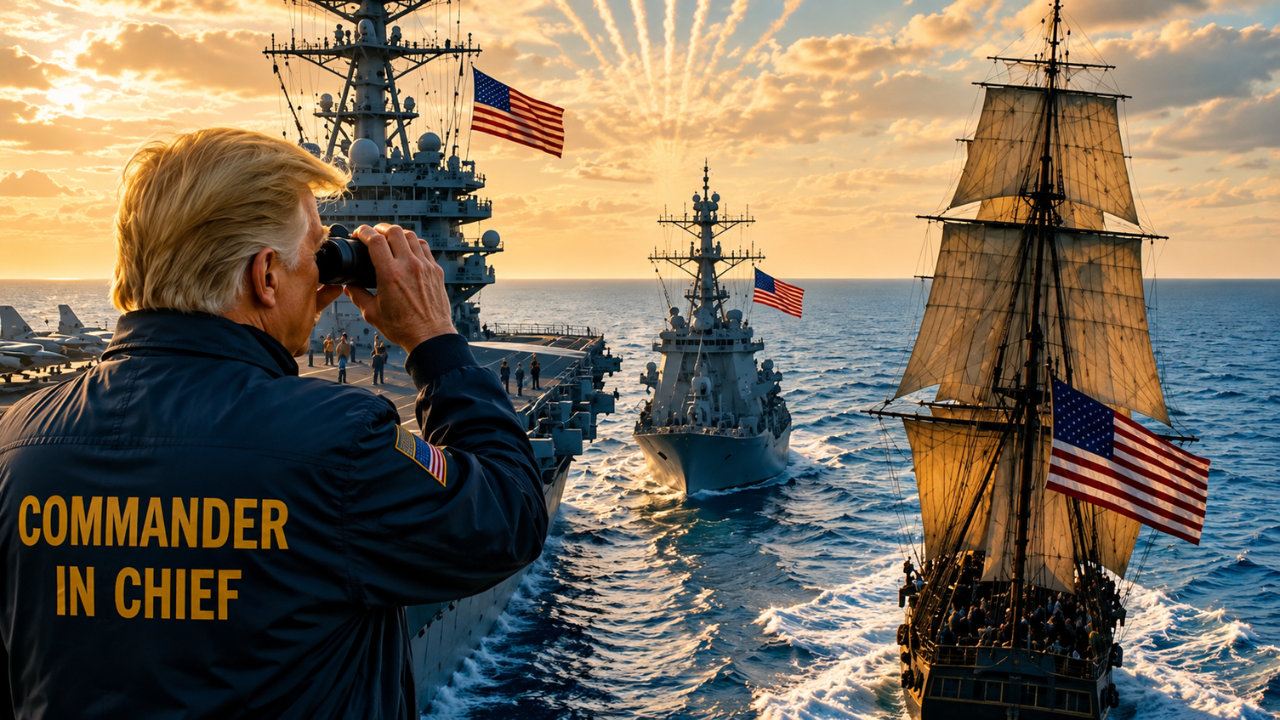
Look at his recent activity on Truth Social. He dropped a highly stylized, cinematic image. It depicts him standing on the deck of a massive naval ship with binoculars. Fighter jets streak overhead, and American warships cut through rough waters. The image blends modern military might with an archaic, Revolutionary War-era aesthetic.
The caption? "YOU'RE GETTING DISCOMBOBULATED." Further reporting by The Guardian explores similar views on this issue.
It’s easy to dismiss this as standard internet trolling. That’s a mistake. This imagery landed right in the middle of incredibly tense, high-stakes negotiations regarding a new nuclear framework with Iran. It represents a deliberate, calculated strategy. It’s designed to project absolute strength while keeping both domestic critics and foreign adversaries off-balance.
The Strategy Behind the Discombobulation
The timing of this particular post matters immensely. The White House had just signaled that a massive diplomatic breakthrough with Tehran was imminent. This new deal is meant to establish a permanent barrier against Iran acquiring nuclear weapons, directly replacing the old Obama-era JCPOA.
Trump took to social media to brag about the framework, claiming it would act as "A WALL TO NO NUCLEAR WEAPON!" and asserting that the Strait of Hormuz would immediately open to international transit.
Then came the pushback. Iran’s Foreign Ministry spokesperson, Esmail Baghaei, tried to slow things down. He publicly stated that a deal wasn't happening immediately and that significant hurdles remained.
Timeline of Events (Late May 2026):
- White House announces imminent nuclear framework with Iran
- Iranian officials publicly downplay the timeline, citing unresolved hurdles
- US forces disable a Gambia-flagged vessel violating the blockade in the Gulf of Oman
- Trump posts the "Discombobulated" AI military meme to assert dominant positioning
Instead of issuing a dry press release through official diplomatic channels, Trump fired back with synthetic media. The "discombobulated" meme wasn't just directed at Iran; it was aimed at everyone trying to pick apart the administration's narrative.
By using an AI-generated image of himself as an unyielding, cinematic commander in chief, Trump visually sidelined the diplomatic noise. He reminded the world that while the lawyers argue over commas in a draft text, the US military blockade remains fully active.
Moving From Policy Papers to Synthetic Propaganda
This isn't an isolated incident. Over the last few months, the administration has weaponized AI imagery to bypass traditional media reporting and communicate directly with the public in raw, visceral terms.
- The "Bing, Bing, GONE" Era: Trump previously posted an image of a US warship firing a fictional laser weapon to destroy an Iranian aircraft. He captioned it: "Lasers: Bing, Bing, GONE!!!"
- The Blockade Warning: He shared a generated image of an American drone obliterating an enemy fast boat at sea with the brief caption: "BYE BYE, 'Fast Boats'."
- The Gun-Toting Ultimatum: When negotiations stalled earlier in the spring, he shared an image of himself holding a rifle in front of a wall of fire, stamped with the text: "No more Mr Nice Guy!"
We used to evaluate presidential communication based on transcripts, official briefings, and state dinners. Now, we have to analyze mid-journey renders.
The strategy works because it cuts through information overload. The average voter won't read a 50-page briefing on maritime enforcement in the Gulf of Oman. They will, however, see an image of their president looking like an action star on a battleship. It translates complex, grinding geopolitical standoffs into a simple story of American dominance.
How Adversaries Are Reacting to the Digital Bluster
This heavy-handed digital posturing isn't happening in a vacuum. It’s occurring alongside genuine, lethal military friction.
Just hours before the "discombobulated" image went live, US Central Command confirmed that an American aircraft fired a Hellfire missile directly into the engine room of the M/V Lian Star, a Gambia-flagged bulk carrier. The ship had ignored 20 separate warnings and tried to run the American naval blockade to reach an Iranian port.
That marks the fifth commercial vessel disabled by US forces during this standoff. It proves the administration's aggressive posture isn't just confined to social media memes.
Interestingly, this digital war of images has forced America's allies and adversaries to change how they communicate too. Iranian authorities have severely cracked down on their domestic internet. They are forcing local journalists and citizens to sign pledges promising not to publish anything that harms the country's "psychological security."
Meanwhile, Israeli Prime Minister Benjamin Netanyahu—who has been noticeably sidelined during these direct US-Iran framework talks—retaliated with his own AI-generated image. He posted a fabricated photo of himself standing shoulder-to-shoulder with Trump, captioned with his own strict warning that Iran will never have a nuclear weapon.
When global leaders stop using official diplomatic cables and start fighting with algorithmic art, the nature of international relations changes completely.
The Real Danger of Meme Statecraft
The immediate benefit of this strategy is clear. It fires up the political base, and it forces the media to talk about the president's framing of an issue. But it carries massive, long-term risks.
When you boil complex international crises down to punchy catchphrases and hyper-masculine AI caricatures, you leave very little room for error. Foreign policy requires nuance. It demands subtle off-ramps and face-saving compromises for your adversaries.
If you constantly broadcast images of total destruction and demand absolute surrender, you can accidentally corner your opponent. A cornered adversary is far more likely to miscalculate, misinterpret a defensive maneuver as an attack, or lash out out of sheer desperation.
Furthermore, relying on synthetic media erodes the baseline credibility of official executive communication. If the public gets used to the president sharing fake images of military operations for political theater, they will struggle to identify real, verified evidence when a genuine crisis occurs. The line between a psychological operations campaign and a political meme has vanished entirely.
Keeping Your Head in the Age of Synthetic Information
We aren't going back to the era of dry, predictable presidential communiqués. Synthetic media is too cheap, too fast, and too effective at capturing human attention to ever be put back in the box. As an active consumer of news, you have to change how you process information coming out of the White House.
First, learn to separate the theater from the policy. When an aggressive, cinematic image drops on social media, don't focus on the visual shock value. Instead, look immediately at what is happening on the ground at that exact moment. Check the actual military dispatches from Central Command. Look at the formal statements from the State Department. The meme is almost always an attempt to reframe a messy, real-world complication.
Second, recognize that these images are designed to provoke an emotional reaction. They want you to feel triumphant, angry, or confused. When you feel that immediate spike of emotion, take a step back.
Ask yourself a simple question: What real-world development is this image trying to distract me from?
The administration wants its opponents discombobulated. The only way to counter that strategy is to remain fiercely anchored to verifiable facts, look past the digital smoke and mirrors, and judge the administration by its concrete actions rather than its algorithms.