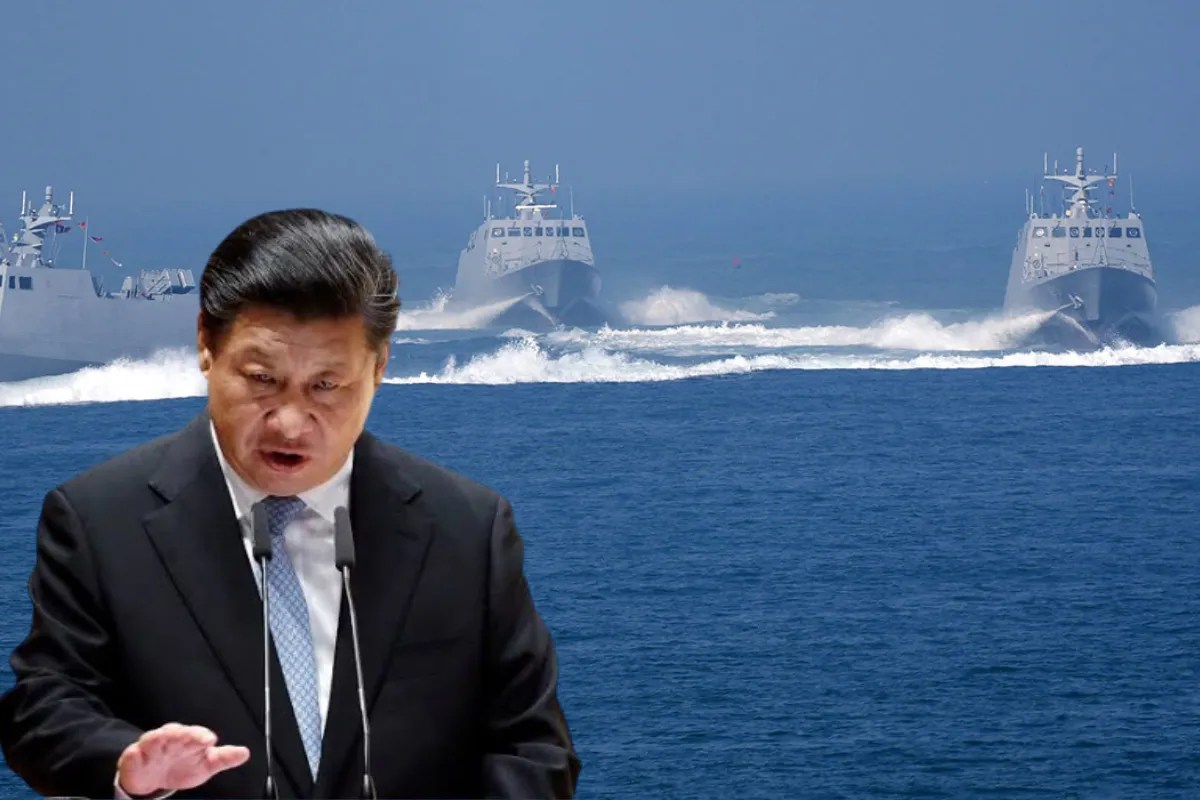
When Donald Trump posted on social media that any future Houthi attacks on maritime traffic would trigger "major military punishment" against both Yemen's rebels and their backers in Tehran, he framed it as a straightforward warning.
Don't touch the ships, or we hit back hard. Simple enough. Recently making news in this space: Why Trump Holding Iran Responsible for Houthi Attacks Changes the Energy War.
Except the Red Sea doesn't work like a standard chessboard.
The threat came right after Houthi forces launched strikes against two Saudi-flagged oil tankers, the Encelia and the Layla, ending a months-long period of relative calm in the Bab el-Mandeb Strait. With global Brent crude spiking past $100 a barrel almost instantly, the administration finds itself staring down two connected shipping chokepoints simultaneously. Further insights into this topic are detailed by Al Jazeera.
Here is why doubling down on traditional military deterrence in Yemen often misses the mark entirely.
The Proxy Reality Trump Is Trying to Rewrite
The White House statement made one thing explicitly clear: Washington considers the Houthis a direct surrogate of Tehran, meaning Iran gets the bill for every missile fired in the Red Sea.
On paper, linking the proxy directly to its sponsor makes tactical sense. It forces the regional power supplying intelligence and weaponry to calculate whether its subordinate's actions are worth taking direct fire. Trump explicitly noted that after major U.S. strikes last year, the Houthis had been acting "very responsibly" until these recent attacks.
However, treating the Houthis purely as a remote-controlled puppet misses how the group operates on the ground.
While Iran provides guidance systems, drone components, and high-level strategy, Ansar Allah operates with a high degree of local autonomy. They have their own political motivations, including enforcing a newly declared blockade against Saudi ports in response to regional tensions. Threatening Tehran might pressure Iranian diplomats, but it doesn't automatically stop a Houthi field commander from launching a anti-ship missile at a passing tanker.
The Asymmetric Math Favors the Rebels
Look at the financial reality of Red Sea naval operations.
The U.S. Navy and its allies patrol these waters using multi-billion-dollar destroyers. To intercept a Houthi attack drone that costs perhaps $20,000 to assemble, Western militaries routinely fire interceptor missiles like the SM-2 or SM-6, which run anywhere from $2 million to $4 million apiece.
That is an unsustainable exchange rate.
Even if U.S. strikes destroy physical infrastructure in Sanaa or Al-Hudaydah, the rebels have spent decades hardening their supply lines underground. They use mobile launchers that can be parked under a highway overpass, fired in minutes, and hidden before an air strike can respond.
When you threaten "major military punishment" against an adversary that owns very little high-value fixed infrastructure, your target list gets thin fast.
Why the Red Sea Chokepoint Matters Right Now
The sudden escalation in the Bab el-Mandeb comes at the worst possible moment for global markets.
With naval transit already choked around the Strait of Hormuz, closing or restricting the Bab el-Mandeb isolates the Suez Canal. That forces commercial shipping lines to take the long way around Africa's Cape of Good Hope, adding 10 to 14 days to journeys between Asia and Europe.
- Shipping costs jump: Container rates soar as supply chains absorb longer transit times.
- Fuel prices surge: Oil tankers reroute, adding transport costs directly to global benchmarks.
- Insurance premiums explode: Underwriters pull coverage or charge prohibitive war-risk surcharges for transit through the southern Red Sea.
By striking the Encelia and Layla, the Houthis proved that even limited, low-cost attacks create immediate shockwaves across energy markets. They don't need to sink every ship. They just need to make the route untrustworthy enough that commercial operators refuse to take the risk.
What Needs to Change
Relying solely on air strikes and social media warnings won't restore long-term stability to the Red Sea. A practical strategy requires a shift in approach.
- Prioritize point-defense integration: Commercial vessels traversing high-risk zones need better non-lethal and automated point-defense systems to lessen total reliance on naval escort interceptors.
- Focus on supply interdiction at sea: Rather than hitting launch sites after the fact, coalition forces must step up naval interdiction operations in the Gulf of Oman and Arabian Sea to cut off missile and drone components before they ever land in Yemen.
- Separate local grievances from regional deals: Broad threats against Iran must be paired with targeted, clear diplomatic boundaries that address regional maritime blockades directly, rather than lumping every regional action into one massive theater of war.
Military deterrence only works when the target has something lose that matches the scale of your threat. Until Washington accounts for the asymmetric realities of the southern Red Sea, firing millions of dollars in ordnance at cheap drones will remain a band-aid on a gaping wound.