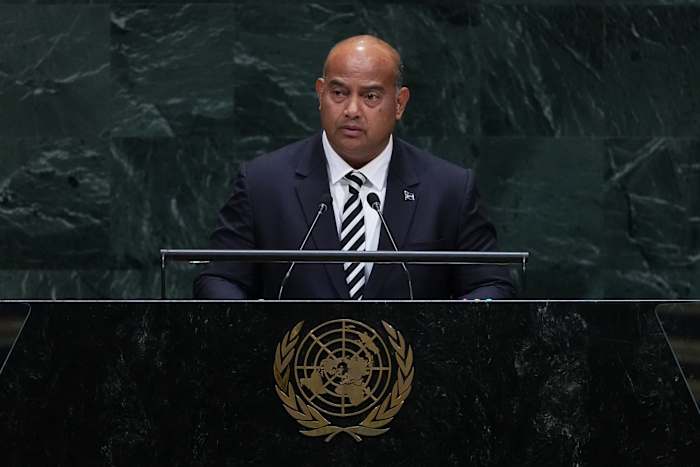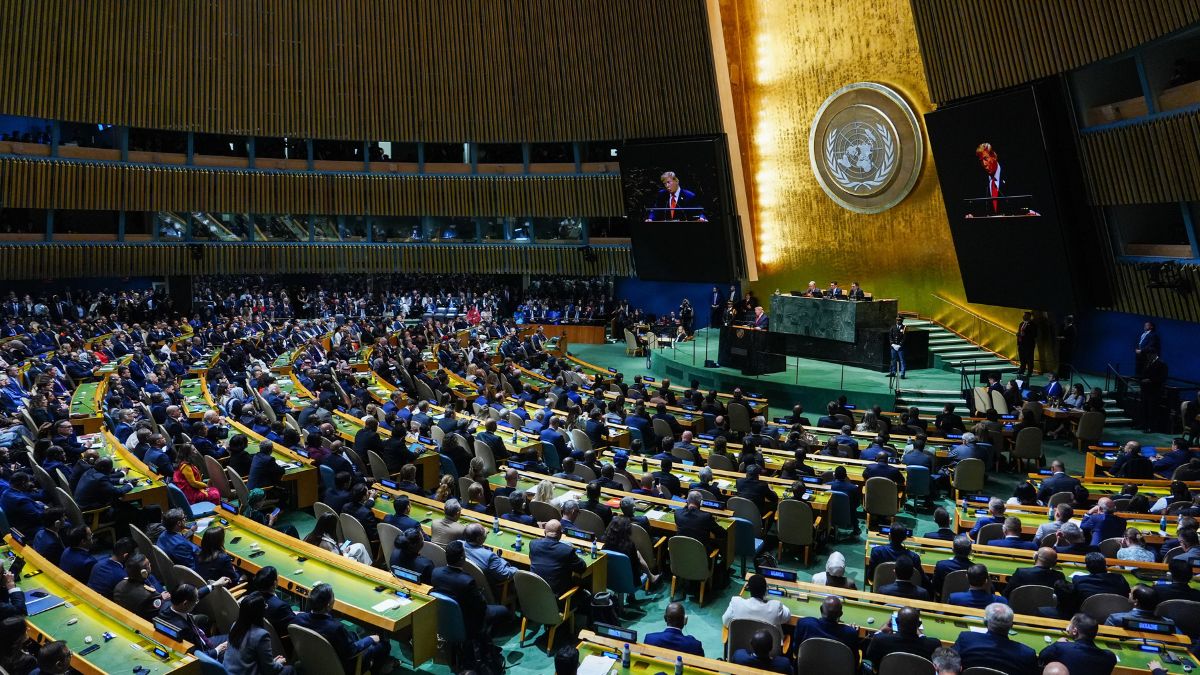
Every single pundit, foreign policy theorist, and cable news talking head rushed to the same lazy conclusion after the speech. They told you it was a domestic play. They argued that targeting Iran and invoking the grand, terrifying specter of artificial superintelligence from the podium of the UN General Assembly was just a masterclass in retail politics, designed strictly for voters back home in Ohio and Florida ahead of the midterms.
They are wrong. They are looking at a chess board while the pieces are being thrown at the ceiling.
I have spent decades watching foreign policy elites mistake stagecraft for strategy. When a leader stands in front of the global microphone and deliberately scrambles the expected diplomatic lexicon, the conventional wisdom is always to domesticate the intent. It is comforting to believe that international friction is just American campaign theater. It saves the commentariat from having to do the hard work of understanding what is actually happening in the structural wiring of global power.
Let us dismantle the consensus.
The Domestic Audience Fallacy
The lazy narrative goes like this: Donald Trump mentions Tehran's nuclear ambitions and the impending apocalypse of superintelligence because it plays well to the base. It projects strength. It signals a hardline stance.
This is an insult to political mechanics. The UN General Assembly is arguably the worst venue on earth for domestic voter targeting. The television broadcast parameters are terrible, the time zones are brutal for prime-time US viewing, and the audience consists of bureaucrats wearing uncomfortable shoes who would rather be having warm gin at a midtown reception. No campaign manager worth their salt designs a domestic messaging strategy around a room that actively resents the speaker.
When Trump addresses the UN, he is not speaking to the American voter. He is bypassing the diplomatic class entirely to speak directly to the permanent state and foreign adversaries who understand only raw leverage.
The inclusion of superintelligence in that speech was not a random nod to tech trends or a sci-fi flourish meant for podcast bros. It was a calculated signal about the compression of time in modern statecraft.
The Convergence of Sovereignty and Compute
Here is what the analysts missed. The traditional Westphalian model of international relations assumes that states hold a monopoly on violence and strategic capacity. That model died quietly about five years ago, and nobody in the foreign policy establishment noticed because they were too busy drafting strongly worded communiqués.
When you mention superintelligence in the same breath as rogue nation-states, you are highlighting the absolute obsolescence of traditional deterrence theory. MAD, or Mutually Assured Destruction, relied on rational actors possessing comparable arsenals and slow decision loops. You had minutes, sometimes hours, to pick up a red phone.
We are entering an era where strategic escalation will be mediated by autonomous systems operating at millisecond speeds. Iran is not just a regional proxy problem or a nuclear breakout risk; it is a node in an asymmetric network where cyber capabilities, drone swarms, and algorithmic command-and-control blur the line between state and non-state actors.
By bringing these two threads together, the speech was identifying the actual fault line of the next decade: the race for asymmetric technological dominance disguised as old-school geopolitical posturing.
Why the Pundits Hate the Unfiltered Reality
The reason Washington insiders hate this framing is because it exposes their own obsolescence. If international relations are no longer just about trade deals negotiated by men in grey suits over three-martini lunches, but about compute infrastructure, algorithmic resilience, and decentralized kinetic technology, then ninety percent of the think-tank industrial complex is completely useless.
They want you to think it is all about domestic optics because if it is just domestic optics, their jobs are safe. They can keep writing the same columns they wrote in 1995, just substituting "cyber" or "AI" for "missile gap."
I have seen organizations blow millions on consultants who specialize in treating symptoms while ignoring structural shifts. The diplomatic corps does the exact same thing on a global scale. They treat systemic technological revolutions as diplomatic communication issues.
The Real Threat Matrix
Let us look at the actual mechanics of what was signaled.
First, the economic decoupling is real, permanent, and accelerated by algorithmic imperatives. You cannot have integrated supply chains with hostile actors when the underlying technology stack is weaponized. The old guard still believes in the magic of globalization—the idea that if you trade enough consumer goods, peace naturally follows. That is dead. Globalization has been replaced by weaponized interdependence.
Second, the threshold for conflict is no longer a declaration of war or a traditional border crossing. It is a cascading systemic failure induced by autonomous code or a compromised supply chain. When a leader stands up and points to rogue states while nodding toward the technological singularity, the message to adversaries is stark: we know you are trying to bypass conventional deterrence, and we are restructuring our entire posture to meet you there.
The Uncomfortable Truth About Global Power
The contrarian reality is this: the speech was erratic only to people who still believe the international system operates according to the rules written in San Francisco in 1945. It was a blunt-force acknowledgment that the rules are gone.
We are living in a transactional, high-velocity, tech-feudal reality where sovereign states are increasingly competing with transnational technological powerhouses and asymmetric rogue networks. Pretending that this is all just pre-election bluster is a coping mechanism for an elite class that refuses to look out the window.
Stop waiting for the adults to return to the room. The room is gone. The architecture has changed. And the sooner you stop listening to analysts who want to comfort you with domestic political theories, the sooner you can prepare for the actual friction points of a world being reshaped by code and coercion.