Donald Trump didn't want to lose another primary endorsement battle, so he decided not to choose. That single tactical retreat completely altered the South Carolina governor's race.
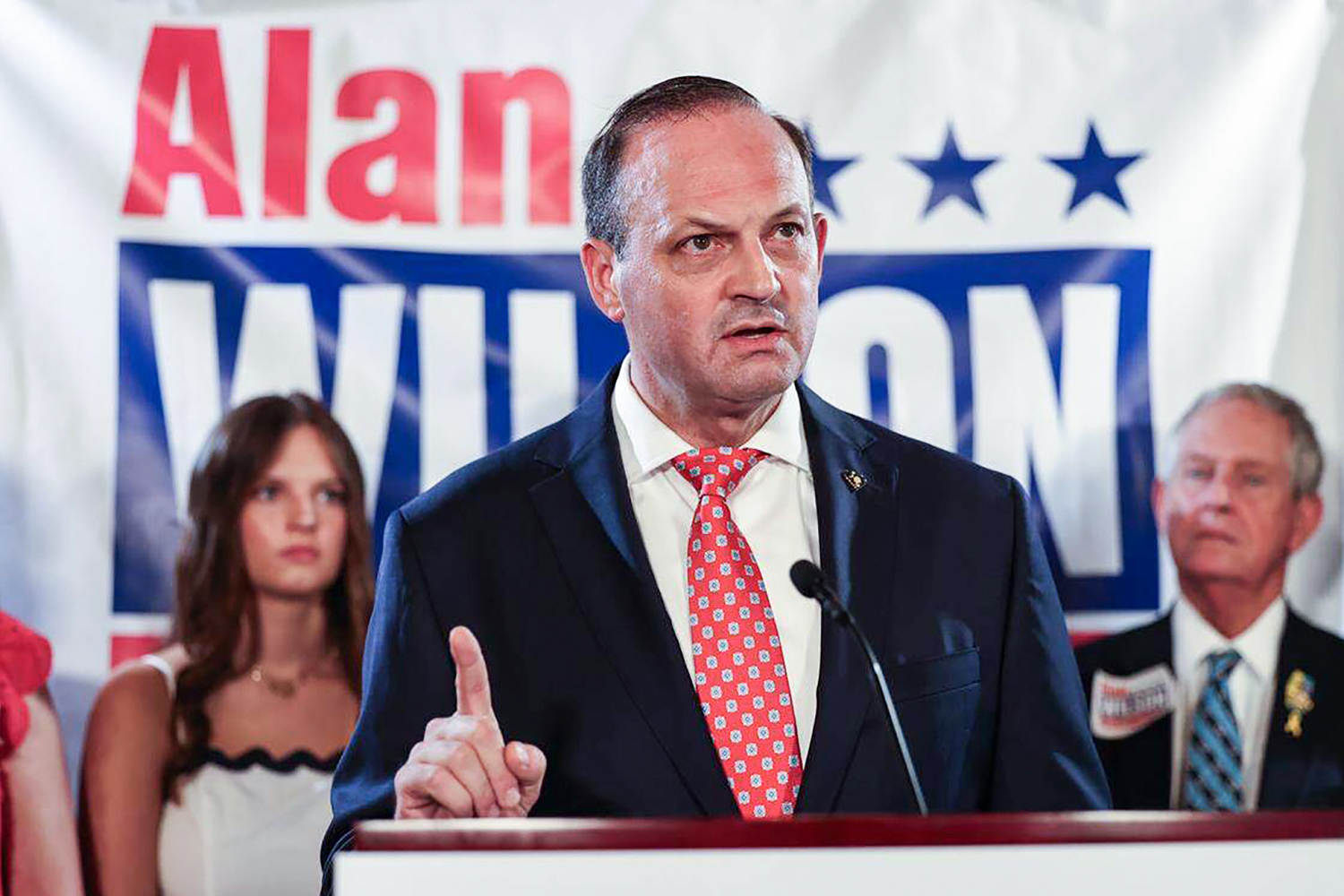
Attorney General Alan Wilson didn't just win Tuesday's Republican primary runoff election. He absolutely crushed Lieutenant Governor Pamela Evette, turning a tight race into a 66% to 34% blowout. It's a stunning reversal from just two weeks ago when Evette held the lead.
Voters looking for a clear signal from the top of the MAGA movement got a curveball instead. When Trump blinked and issued a late dual endorsement on Truth Social, he stripped away Evette's biggest political weapon. Wilson grabbed the opening, united the state's fractured GOP establishment, and secured his path to the governor's mansion.
The Runoff Reversal That Blindsided Evette
Two weeks ago, Pamela Evette looked like the clear frontrunner. In the crowded June 9 primary to replace the term-limited Henry McMaster, Evette finished first with roughly 29% of the vote. Wilson trailed behind her at 26%. Evette had spent months running campaign ads packed with photos and videos of herself standing next to Trump. She even hired Tony Fabrizio, Trump's longtime pollster, to guide her strategy.
Then the race shifted into a head-to-head matchup.
Primary runoffs are brutal, fast, and entirely about momentum. Wilson, a 52-year-old Iraq War veteran who has served as the state's top prosecutor for 15 years, went to work. He built a coalition out of his former rivals. High-profile Republican candidates who failed to make the runoff round, including U.S. Representatives Nancy Mace and Ralph Norman, quickly threw their weight behind Wilson.
Mace had fiercely feuded with Wilson in the past. It didn't matter. They buried the hatchet because they saw the writing on the wall.
By the time the two candidates met for their solitary runoff debate, the atmosphere was toxic. The debate quickly deteriorated into a bitter, back-and-forth screaming match over taxpayer-funded salary bumps and mudslinging. The crowd jeered. The candidates traded personal barbs. Wilson hit Evette hard for coasting on Governor McMaster's record, while presenting himself as a seasoned legal fighter who had personally prosecuted massive cases like the Alex Murdaugh trial. Evette tried to hit back on Wilson's recent state salary increases, but her momentum was already dying.
Anatomy of a Double Endorsement
Trump saw the internal polling shifting toward Wilson and panicked. He had already watched his endorsed gubernatorial candidates tank in Iowa and Georgia earlier this month. A high-profile loss in South Carolina—a state that voted for him by nearly 18 points in 2024—would look terrible for his kingmaker status.
So, on the Friday before the vote, Trump posted a strategic retreat online.
He declared both Wilson and Evette were "MAGA and America First all the way." He claimed he couldn't choose between them because it would hurt one of them. "With either one you can't go wrong," he wrote.
It was a classic hedge. By endorsing both, Trump guaranteed he could claim victory no matter who won. But for Evette, it was a death blow. Her entire campaign narrative relied on being Trump's chosen warrior in the Palmetto State. When Trump elevated Wilson to that exact same status, Evette's primary advantage evaporated overnight.
Wilson capitalized on the confusion instantly. Within minutes of Trump's post, South Carolina Senator Tim Scott officially endorsed Wilson. Scott had been working behind the scenes for days, raising cash for Wilson and quietly lobbying Trump to back away from an exclusive Evette endorsement. Texas Senator Ted Cruz flew into the state on Monday to stump for Wilson. West Virginia Governor Patrick Morrisey added his name to the pile.
Wilson wasn't just the establishment favorite anymore. Thanks to Trump's hedge, he was now an official MAGA favorite too.
What This Means for South Carolina Voting and Policy
Don't expect Wilson to govern as a moderate just because he won the establishment backing. He ran a hard-line campaign focused on a strict "law and order" platform and a promise to make the state affordable by pushing to entirely eliminate the state income tax.
He also brings a highly controversial legal record to the table. As Attorney General, Wilson actively defended restrictive voting laws and backed Trump's sweeping executive orders targeting mail-in ballots. Critics point out that South Carolina Republicans already tried to redraw the state's congressional map earlier this year to target the state's only Democratic-held, majority-Black U.S. House district. That plan failed in the state Senate when a few Republicans jumped ship, but with Wilson in the governor's office, that redistricting fight will almost certainly return next year.
Wilson's opponents warn that his victory cements a deeply partisan approach to election administration in Columbia. Wilson regularly campaigns on proof-of-citizenship voting requirements and tighter rules for absentee ballots. He views these policies as essential for election security, while voting rights groups view them as blatant voter suppression.
The Road to November
Wilson now turns his attention to the general election on November 3, where he faces Democratic nominee State Representative Jermaine Johnson. Johnson is widely seen as a rising star within the state's Democratic party, and he managed to win his primary outright without needing a runoff.
But history is heavily against him. South Carolina hasn't elected a Democratic governor since Jim Hodges won in 1998. The last time any Democrat won a statewide seat of any kind here was 2006. Republicans regularly win these statewide races by double-digit margins. Henry McMaster beat his last Democratic opponent by nearly 18 percentage points.
With the Republican nomination secured in a deeply conservative state, Wilson is the overwhelming favorite to become the next governor.
For conservative donors and activists, the immediate next step is clear. The primary drama is over, and the money is already consolidating around Wilson's camp. If you want to influence the policy agenda for the upcoming 2027 legislative session, you need to align with Wilson's core platform now. Focus your advocacy on his stated priorities: eliminating the state income tax, expanding law enforcement funding, and pushing forward with strict election security bills. The time for intra-party fighting has ended, and the Wilson era in Columbia has effectively begun.